


Wood Ash Absorbs Odors Best
The media serves several purposes in a desiccating toilet. It provides visual cover, draws moisture away from the solids (good wicking and coating are...
Get a Survey, Set Priorities
Here we go again. Apparently enough time (32 years) has passed since I last bought a 50-plus-year-old boat and began restoring it that I’ve...
Even 2020 Yielded Some Great Gear
Once more, the bulk of the past year’s testing focused on maintenance products, safety essentials, and do-it-yourself substitutes for higher priced marine gear. Part...
Online Help for Autumn
Its getting to be that time of year, when many skippers haul out or head south. Fall also heralds the beginning of boat show season. Here are some PS articles from the online archives that are suited for the season.
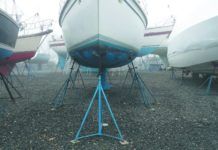
Choosing and Using Jackstands
Were guessing 90 percent of sailors have their boat hauled by a yard. A travel lift or crane plucks the boat from the water, and yard guys block the boat for the winter. Your sole involvement is reading a warning in the lease agreement that you will not touch the stands and that you will not attach anything to them, including tarps. Those are good rules, and nothing we are about to say is meant to contradict them.
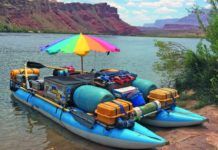
Mailport: Cold Weather Suits
Regarding your recent Inside Practical Sailor blog post Drysuits vs. Survival Suits, I raft the Colorado river in Grand Canyon where water temps are around 50 F, even in the summer. The whitewater down there is furious and sometimes dangerous. I wear a 3 millimeter neoprene wetsuit under a full drysuit. If the drysuit rips, the wetsuit should slow down thermal loss. The problem is heat buildup in the sun. The solution is to jump in the cold water now and then to keep from over heating. On a sailboat that would be harder to do. There have been a few times sailing solo when I wore both garments, but it was pretty clammy inside. There is no perfect solution, just reasonable compromises by which to stay alive. Something to remember is that once a drysuit rips, it will take on hundreds of pounds of water. A high flotation PFD is mandatory, at least 26 pounds I would think.
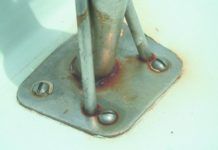
Welds on Your Boat Require Special Care
The irregular shape of welds makes them difficult to inspect using ultrasound technology. Visual inspections can also be deceiving-especially with new welds. The prettiest bead can have internal voids and poor fusion. After a while, that pretty bead will begin to bloom with corrosion and cracks.
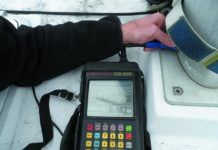
DIY Materials Testing
While many potential failures are easy to spot, some flaws are hidden under paint or within the structure, or are so small that a routine visual inspection wont pick them up. Standing rigging, hulls, decks and hardware fittings are the most common places where hidden structural weaknesses can lead to big repair bills, or even loss of life.
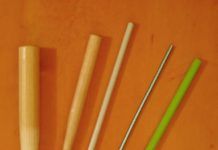
Deft Theft: Make & Find Your Own Marine Gear
With more time than money on our hands, the sailors innate resourcefulness kicks in. Here are a just some of the penny-pinching projects tech editor Drew Frye has undertaken to improve his sailing life.
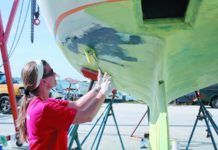
The Penny-Pinching PhD Sailor
A key principle, at least from my perspective as an engineer, is knowing your boat. In 30 years of boat ownership, Ive only used contractor services for major sail work, new canvas (only because Ive never taken the time to learn), and hauling out. As a result, I know my boat inside out; thats a good feeling, an important part of seamanship, a blessing when something goes bust on a cruise, and a big help when time is available but funds are thin.
Latest Logbook

Practical Sailor Logbook – September 2026
This month we tour the Hans Christian 48T — the offshore cruiser many sailors call the holy grail — walk the custom Antigua 60...

Video: Morgan 44 Review – The Catalina Cruiser Everyone Forgot
The 1989 Morgan 44 is a big center-cockpit cruising sailboat with Catalina DNA—but it may be one of the most overlooked boats of its...



Latest Sailboat Reviews
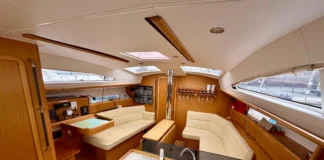
Jeanneau Sun Odyssey 42 DS Used Boat Review
This boat is dangerous for one simple reason—it looks like the answer. It’s big enough, pretty enough, modern enough, and suddenly, somehow, almost affordable...