


Mailport: June 2010
The June 2010 issue featured letters on subjects such as: spiders, addition of color to handheld electronics, DIY boatyard recommendation and propane fridges.
Weather Radar for Windows Phones
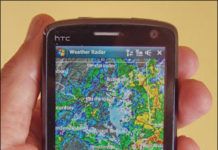
We know the drill now. If we feature a Mac product, we have to appease the PC crowd, and vice versa. Otherwise, the earth spins off its axis and our inbox starts smoking. So while the iPhone crowd gets their fill with our review of navigation apps (page 24), heres a morsel for readers using Windows Mobile devices. After testing several navigation programs for Windows Mobile handhelds in December 2009, we had the opportunity to evaluate Memory-Maps Weather Radar for Windows Mobile cellphones.
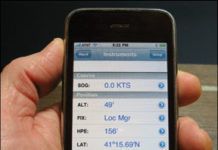
Testing Navigation Applications for the iPhone
After testing navigation applications for Windows-based smartphones and PDAs, Practical Sailor focuses on three apps available for the iPhone. iNavx, Memory-Map, and Navionics can each be downloaded for a reasonable price and used as backup to primary navigational aids such as a chartplotter or handheld GPS. Cellphone-based programs are not recommended as a standalone approach to navigation, but the iPhone apps are a great way to investigate, plan routes, and set and send waypoints at a very low cost for cartography.
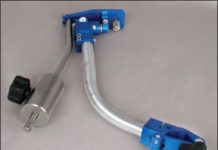
Stabilizing Cameras and Video Cameras Underway
Anyone who has tried to steady a camera aboard a boat knows how difficult it can be to keep the equipment dry, compose the shot, and level the horizon, all the while keeping yourself and your camera on board. Given hull vibrations, wave action, and the unevenness of the deck, setting up a stable work platform presents challenges that marine photographers try to solve using a variety of camera mounts. Practical Sailor recently tested three types of camera mounts: a beanbag camera mount from Omnipod, the Camo-Pro 7; two flexible devices from GorillaPod, the heavy-duty GorillaPod Focus and the GorillaPod SLR Zoom; and specialized, self-leveling camera mounts from Horizon True.
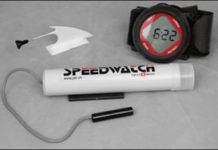
Portable Sailing Tools for Tracking and Tuning Boat Speed
Practical Sailor recently spent a week experimenting with three handheld products geared toward performance sailors. These portable tools are for tracking and improving sailboat speed. Unlike conventional portable GPS units, which have relatively small displays and deliver a wide range of navigational data, these products display large digits that can be read from a distance, and the view options are limited to those that relate exclusively to speed and racing performance. Practical Sailor tested the Speedwatch and two GPS units, Velocitek SC-1 and SpeedPuck. These instruments make good training tools for young sailors and will give all around-the-buoy sailors the ability to quickly quantify performances.
Mailport: February 2010
The February 2010 issue of Practical Sailor has letters on the following topics: requests for more used boat reviews, foggy electronics, hard varnishes, propane fridges and Iphone apps.
Multiplexing Marine Electronics
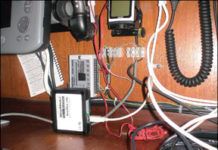
In an effort to find an inexpensive, reliable way to connect a PC (or Mac) to our onboard electronic navigation system, Practical Sailor testers scouted basic NMEA 0183 multiplexers with good track records. We zeroed in on the easy-to-install MiniPlex Lite from Holland-based ShipModul. This multiplexer was one of the first high-speed NMEA 0183 multiplexers capable of handling the data rates required for some of the newer electronics like AIS receivers. With very little effort, the Mini Plex Lite allowed us to network our Dell Latitude D620 laptop, AIS, GPS, and chartplotter, and it handled the data transfer without a glitch. Our chief gripe: This entry-level model uses the laptop for its power source.
GPS Receivers for Smart Phone Navigators
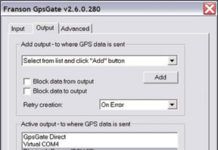
During our testing of pocket navigators for the December 2009 issue, we examined other approaches to propagating a GPS signal around the boat and found some viable alternatives. Several aftermarket options can turn smart phones or PDAs into handheld navigation tools by supplying or sharing reliable GPS data. Practical Sailor looked at a Bluetooth-enabled Globalsat BT-338 GPS receiver with the SiRFStarIII chipset and Franson Technology’s GPSGate software for Windows and Windows Mobile, which was designed specifically for the task of sharing GPS data. Testers found both utilities to be good choices for the job, however, we still caution against relying solely on a PC-based navigation network onboard.
New Waterproof Handheld VHFs Enter Crowded Market
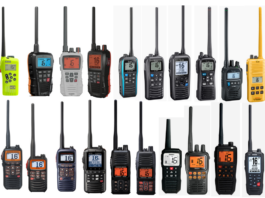
Electronics is the most rapidly changing category of marine products, and the steady stream of VHF radios is an example of how fast the market changes. Since our reports on VHF radios earlier this year, two new waterproof handheld VHF radios have entered the market. Practical Sailor compares the new, inexpensive Standard Horizon HX28OS to the 2009 Best Choice, the Cobra HH325VP. Testers compared the new floating handheld from Icom, the M36, to the high-end Best Choice, the Standard Horizon HX85OS, a floating VHF that also offers full DSC capability and has a built-in GPS.
Testing Smart Phones at Sea
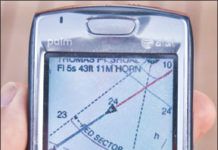
Practical Sailor tests a cross-section of PDAs, pocket PCs, and smart phones between $100 and $800. Palm OS and Windows Mobile software were included. Readability, functionality and practical application were foremost considerations. Reliability, weather resistance, and batteries were also considered. We evaluated Palm Phones Palm Treo, Hewlett Packard iPAQ, Palm PDA Palm TX, Active Captain MobileSource, Memory Map Navigator, and Ozi Explorer CE. Testers compared the mobile devices to a handheld GPS specifically designed for navigation, the Garmin Oregon 400C.
Latest Logbook

Practical Sailor Logbook – September 2026
This month we tour the Hans Christian 48T — the offshore cruiser many sailors call the holy grail — walk the custom Antigua 60...

Video: Morgan 44 Review – The Catalina Cruiser Everyone Forgot
The 1989 Morgan 44 is a big center-cockpit cruising sailboat with Catalina DNA—but it may be one of the most overlooked boats of its...



Latest Sailboat Reviews
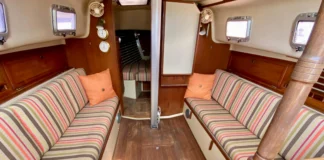
Bayfield 32 Used Boat Review
At first glance, the Bayfield 32 looks less like a fiberglass production boat from the 1980s and more like somebody shrank a traditional sailing...