




Reading the Wind Series, Part 3
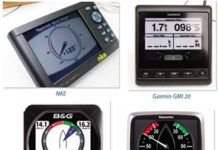
Whether youre contending with the violence of an abroholos or the gentle puff of a zephyr, it helps to have an idea of wind intensity. For the last several months, testers have been closely examining the tools sailors use to measure and display wind information. This article wraps up our review of mechanical vane sensors and displays, focusing specifically on choosing the best combination to meet your needs. Future reports will look at ultrasonic wind sensors, which have no moving parts, and a build-it-yourself wind sensor that uses an Arduino open-source electronics platform.
Wired vs Wireless
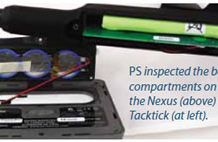
To wire, or not to wire? This is a good question, and there are certainly some pluses and minus to consider. For sailors with wiring-unfriendly masts, the wireless approach is a good one. These include wooden spars, ones with conduits that are already full with other wiring, and masts that are regularly unstepped. The downside of going wireless is that the batteries will need to be changed on occasion, and in some cases, signal interference is possible.
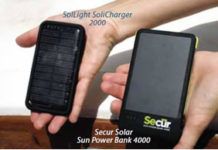
Gadgets Powered by the Sun
Testers recently took a look at two portable solar-powered chargers for small electronics-one of them is new to the market, the Secur Solar Sun Power Bank 4000, and the other, Davis Instruments SolLight SoliCharger 2000, is an updated version of a product we reviewed a few years ago.
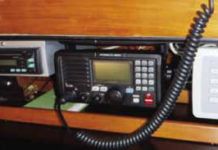
VHFs for Hearing Challenged
Like an increasing number of senior sailors, I require hearing aids to effectively communicate. However, in the cockpit of a sailboat-with the wind blowing or the engine running-hearing aids are not helpful when trying to carry on a VHF radio conversation. What I need is a VHF marine radio that will accept headphones (preferably noise cancelling). Of the many VHF radios that you have evaluated, have any been wired for headphones?
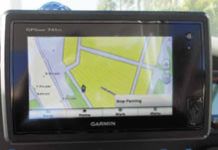
Garmin 741xs Goes Wireless
Planned obsolescence is probably the most irksome way to keep manufacturing costs down and inspire us to buy stuff. Each time a new or updated line of multi-function devices appear, we ask ourselves if the new version represents real value, or are the engineers just adding another tower to their Lego castle, while the marketing folks ponder adding an umlaut or X to the product name.
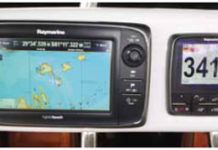
Ray e7 Gets Makeover
For a more detailed look at the product, see our initial report in the July 2012 issue online. Heres a quick recap. The e7D is part of Raymarine eSeries HybridTouch line of multifunction displays (available in 7-, 9-, 12.1- or 15.4-inch display sizes) that combines touchscreen interface with a joystick-like unicontrol and features Bluetooth and WiFi connectivity. After our first report, Raymarine identified a touchscreen issue with some e7 and e7D plotters (see PS March 2014 online). A campaign to replace problematic devices with refurbished units is ongoing.
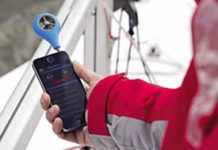
WeatherFlow: A Smart Wind Meter
WeatherFlow, a leader in the private-sector weather industry, recently introduced its first hardware product for the wind- and weather-addicted community: the WeatherFlow wind meter. Similar to the Vaavud from Ronstan International that we reviewed last year (see PS November 2013 online), the pocket-size WeatherFlow wind meter plugs into the audio port of a smartphone or tablet and records wind speeds using a proprietary app.

Wireless Multiplexers
Before we plunge headfirst (again) into the world of multiplexers with this test report, heres a quick review of what exactly were talking about. If you have older instruments or a GPS networked to send information to other devices (a multi-function display, laptop, etc.), the information is likely in NMEA 0183 format and is sent in sentences in a set order. For example, the NMEA sentence $GPAAM,A,A,0.10,N,WPTNME*32 is an arrival alarm sentence sent by a GPS to various networked devices upon arrival at a waypoint.
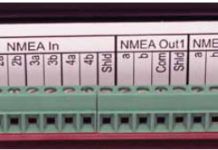
A NMEA 2000-and Beyond-Survival Guide
NMEA 2000 (aka NMEA 2K or N2K) is the communication standard replacing NMEA 0183. It is a technical standard (IEC 61162-3) used for connecting marine sensors and display units within a boat. The major differences from NMEA 0183: NMEA 2K operates at 250 kilobits-per-second, about 100 times faster than the 4,800 baud of NMEA 0183.
Wind Systems Part 2: Data Display and User Interface
Its dusk on an overcast, gusty day, and raw data is pouring into your wind display from the masthead, GPS, and the knotlog. Can you clearly see the information on the display, and more importantly, is it meaningful? Can your gloved fingers push the buttons? Can you easily change the way wind data is collected, processed, and displayed so that it best reflects the conditions? These are among the things testers examined for this report, Part 2 of our wind-sensor evaluation, which focused on the display and user interface. In Part 1 (PS, March 2014) we focused on accuracy and durability of the anemometer and vane sensors that feed into the displays.

Small Boat, Big Keel Why This 27 Footer Works
What makes a small sailboat truly seaworthy? In this video, we take a deep dive into the Pacific Seacraft Orion 27, a rugged, long-keel...



Latest Sailboat Review
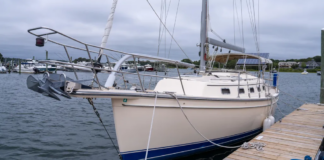
Island Packet Estero Used Boat Review
Florida-based Island Packet targets a relatively narrow niche, so the toughest competitors to its new boats are often older Island Packets. Introduced in 2010, the 36-foot, shoal-draft Estero is the company’s latest attempt to introduce a distinctive model that doesn’t stray too far from the company’s proven formula for success: moderate displacement, full-keel cruisers designed to be lived on, sailed far and in comfort, and endure the bumps, scrapes, and storms that cruising boats inevitably encounter. After sailing the Estero on Florida’s Sarasota Bay and inspecting its interior, construction, and systems, Practical Sailor testers noted that the shoal-water cruiser will appeal strongest to Island Packet fans who’ve been waiting for a shoal-draft, easy-to-sail boat that compares to the IP37 in terms of interior space. These strengths will be most apparent on intracoastal or riverine adventures like the Great Loop.