



Wind Systems Part 2: Data Display and User Interface
Its dusk on an overcast, gusty day, and raw data is pouring into your wind display from the masthead, GPS, and the knotlog. Can you clearly see the information on the display, and more importantly, is it meaningful? Can your gloved fingers push the buttons? Can you easily change the way wind data is collected, processed, and displayed so that it best reflects the conditions? These are among the things testers examined for this report, Part 2 of our wind-sensor evaluation, which focused on the display and user interface. In Part 1 (PS, March 2014) we focused on accuracy and durability of the anemometer and vane sensors that feed into the displays.
When Choosing Pilots, Err on Side of Caution
In a nutshell, autopilots have one main function: to assume control of a vessels steering and control its heading, be it a specific course or on a selected route or to a waypoint. As with any crucial piece of gear (anchors being a great example), cost should not be the primary consideration in the selection process. Its crucial to select a unit that has both the power and ability to steer your boat effectively in all sea conditions youre likely to encounter.
Rotary-Drive Autopilot for Worm Gear Steering
Autopilots are one piece of electronics gear that truly has something to offer every sailor-from gunkholer to bluewater cruiser. Having this extra crewmember onboard not only eases the burden of shorthanded sailing, but also helps prevent helm fatigue. An autopilot allows solo sailors to use the head, more easily raise sails, or grab a bite to eat. Crewmembers can enjoy a passage, passing the time reading a book or watching the scenery without being a slave to the helm.
The New Bad Boy
Since we last looked at onboard Wi-Fi antennas/boosters (PS, April 2010), there have been no notable newcomers to the field, but there have been some technological advancements, particularly by the Canadian company Bitstorm. In 2010, we favorably reviewed the Bitstorm unit, so we decided to check out the latest version of the device to evaluate the improvements. Testers put the 2014 Bitstorm Bad Boy into long-term testing during an extended cruise along the Florida Gulf Coast.

An Experiment in Boosting Wi-Fi the DIY Way
In November 2010, Practical Sailor posted a Reader Workbench article written by subscriber Ed Mini of Mystic, Conn., on a do-it-yourself Wi-Fi booster/antenna assembled from parts ordered primarily from Data Alliance and Home Depot. The system did a good job of boosting the distance users could connect with onshore hotspots, and the cost was under $100, not counting labor. About a year later, PS tester Ron Dwelle decided to put together a similar system, but he used the components that commercial vendors use. Heres a rundown of his system, which has stood up well for three years.
Testing Telemedicines Limits
Early into the 645-mile race between Marion, Mass., and the island of Bermuda in 2009, trouble brewed aboard the C&C 40 Corsair. The bizarre situation that the crew of Corsair faced is described in detail in a 2011 article, Lost at Sea, written by Diane Kelly in Ocean Navigator magazine. It all began when the navigator, 75-year-old Ron Chevrier, started acting strangely.

Wind Sensor Testing
For better or for worse, the modern cruising sailor is becoming more like an airplane pilot. Safely ensconced out of the wind, the helmsman relies on instrumentation to provide him with information about our environment. Should he bear off for more speed, set the screecher, or tuck in a reef? Increasingly, were seeking these answers in digital display rather than strips of yarn in the rigging and the hair on the back of our neck.
When Technology Catches the Wind
A lot can be learned from really small boats that carry no crew. In fact, sailing robotics-SailBot for short-is attracting sailors and engineering students from universities across North America and Europe. These competitive research programs are a proving ground for on-the-water autonomous craft, and they give us a glimpse of what the future of marine electronics may have in store.
Performance Racing App for Sailors
Two racing sailors from Charleston, S.C., got together last spring to develop an economical alternative to electronic compass devices like the $340 to $500 Velocitek (PS, May and September 2011), the $460 to $735 Tacktick (PS, November 2009), and the $600 Sailcomp. The result? The Regatta Recon performance sailing app for Android and iOS devices.
The SPOT Sat Phone
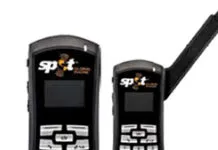
SOS buttons and two-way texting are handy, but nothing beats being able to actually speak with someone in the event of an emergency. This is the great appeal of owning a satellite phone, but the prices of both sat phones and service plans have stubbornly remained above the pain threshold most sailors are willing to bear, even though theyve certainly become more affordable over the last decade.
Lithium Batteries on Sailboats: The 3 Mistakes Everyone Makes
Lithium batteries are one of the most popular sailboat upgrades today—but they’re also one of the most misunderstood. In this Practical Sailor Saturday episode,...



Latest Sailboat Review
Island Packet Estero Used Boat Review
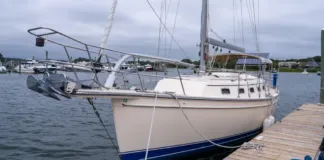
Florida-based Island Packet targets a relatively narrow niche, so the toughest competitors to its new boats are often older Island Packets. Introduced in 2010, the 36-foot, shoal-draft Estero is the company’s latest attempt to introduce a distinctive model that doesn’t stray too far from the company’s proven formula for success: moderate displacement, full-keel cruisers designed to be lived on, sailed far and in comfort, and endure the bumps, scrapes, and storms that cruising boats inevitably encounter. After sailing the Estero on Florida’s Sarasota Bay and inspecting its interior, construction, and systems, Practical Sailor testers noted that the shoal-water cruiser will appeal strongest to Island Packet fans who’ve been waiting for a shoal-draft, easy-to-sail boat that compares to the IP37 in terms of interior space. These strengths will be most apparent on intracoastal or riverine adventures like the Great Loop.