

Updating Onboard Electronics with N2K
A sailboat is no place for unnecessary complexity, which was the direction PS contributor Dan Corcoran was headed on his Beneteau 393, when it came to how data was passed between various marine electronics. The worst offender was a spaghetti network of point-to-point wiring that utilized the familiar National Marine Electronics Association (NMEA) 0183 standard. A few years ago, he embarked on a gradual replacement of NMEA 0183 wiring and components with the new standard, NMEA 2000. Here he offers his account of the upgrade and answers the oft-asked refit question: Was it worth it?
Weather4D iPad App Review
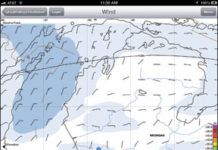
As a followup to our April 2012 report on useful iPad apps for sailors, we recently sea-trialed the new Weather4D app, comparing it to the older WeatherTrack app. Both enable users to view GRIB weather files, but which one does it the best and which one offers the best value?
Nautilus Lifeline VHF
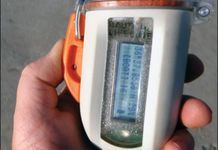
During our recent test of man-overboard electronics (PS, May 2013)-alarms, beacons, and self-rescue devices-we came across a rescue communication product thats been making waves in the diving community: the Nautilus Lifeline marine rescue radio. Being lost at sea is one of the fears that divers and sailors share-remember the 2004 movie, Open Water? The Nautilus Lifeline is a handheld VHF radio that has GPS and DSC capabilities.
Where Credit Is Due: August 2013
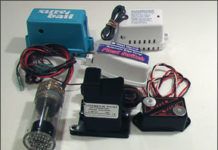
Two years ago, I purchased a Water Witch bilge pump switch. When it developed a glitch, I called Kathleen at Water Witch Inc.s San Diego office (www.waterwitchinc.com). She asked me a couple of questions, then assured me the replacement part would be shipped the following day. It was, followed by an email saying it had shipped. It arrived 10 days later (international), complete with a personal note. Does it better than this? I think not.
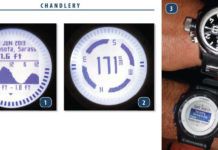
Quatix Superwatch
There is no shortage of sailing watches on the market, and weve reviewed our fair share. So when Garmin released its first mariner-specific GPS watch, we were interested to see what features, if any, set it apart from the crowd. After nearly six months of testing Garmins Quatix watch on and off the water, we can report that it is not your ordinary sailing watch. It bundles multiple miniature marine electronics into one small, impressive, hands-free package that is made to withstand life at sea.
Mailport: August 2013
On strolling through Port Townsend (Wash.) Boat Haven, while I was having some work done on my boat, I saw this boat (photo at right) and the owners attitude written on a sign in front of the boat. It reminded me of your June 18, 2013 blog, Dont Let Refit Pitfalls Derail Your Cruising Plans.
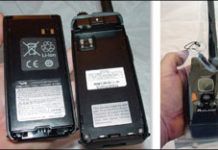
Marine Handheld VHFs Test
Testers evaluated handheld VHF radios from three leading marine electronics makers. From Icom, we tested the M92D and M24. Standard Horizon submitted the HX290, HX300, and HX400, and from Midland Radio, we reviewed the Nautico 2. The VHFs in our test group ranged in price and features from a $50 basic, budget-friendly model to a $299, feature-rich handheld with DSC and GPS capabilities. All offered channel scanning, channel 16 quick select, NOAA weather radio, and weather alert. Unique features among the group included scrambler capabilities and remote microphone options.

Navigation Software for Macs
There are still not as many marine navigation programs for Mac computers as for there are for PCs, but their quality often matches that of PC software, and their cost tends to be lower. The Mac software programs we tested were MacEnc, GPSNavX, Polar View, and OpenCPN. Testers have used MacEnc and GPSNavX extensively while cruising, and we evaluated OpenCPN during two three-month cruises and Polar View for a little over a month during another cruise. Prices range from $180 for MacEnc, to free for OpenCPN, an open-source, non-commercial software created by volunteers.
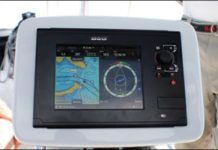
A Look at B&Gs New Zeus Touch
Sailing and tactical software has long been B&Gs strong suit. The Zeus Touch is the first time the Navico companys high-end racing software has been tweaked for mainstream use and bundled along with normal chartplotter and GPS functions. At first blush, it appears to be a dressed-up version of the Simrad NSS. The big difference between the two is the software. It uses the boats set sailing characteristics to calculate tacking or jibing points to most efficiently reach a given destination. Many of these functions are simple measurements that any skipper can predict or calculate using a paper chart and simple arithmetic, but the Zeus Touch delivers this information instantaneously and continuously, and removes the chance of human error.
Where Credit Is Due: July 2013
After reading your article, A Sailor's Guide to Marine Insurance, I wanted to give a shout-out to Progressive Insurance (www.progressive.com), which has insured our Stiletto catamaran and our dinghy, outboard motors, and trailers. Customer service is extremely friendly and efficient on the phone any time we want to check or change our policy. And when lightning struck the mast of our catamaran, they sent an adjuster out within two days, took care of the paper work, and had a payment sent to us within two weeks. Thats an incredible turn-around time.
Latest Logbook

Practical Sailor Logbook – September 2026
This month we tour the Hans Christian 48T — the offshore cruiser many sailors call the holy grail — walk the custom Antigua 60...
Video: Morgan 44 Review – The Catalina Cruiser Everyone Forgot
The 1989 Morgan 44 is a big center-cockpit cruising sailboat with Catalina DNA—but it may be one of the most overlooked boats of its...


Latest Sailboat Reviews
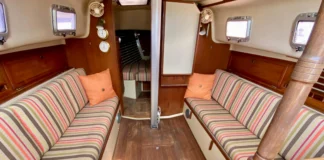
Bayfield 32 Used Boat Review
At first glance, the Bayfield 32 looks less like a fiberglass production boat from the 1980s and more like somebody shrank a traditional sailing...