



PS Reviews Cheap and Free iPad Navigation Apps
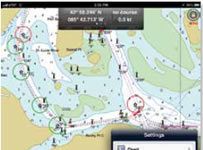
This article is the second part of three-part series on marine-related iPad applications. Our first part covered the high-end nav apps, while this one looks at relatively inexpensive or free apps. Over the course of three years in the Great Lakes and Florida, sailors put to the test a dozen applications that convert iPads into portable-although less robust-chartplotters. Testers used each one to carry out a series of navigation tasks, evaluating performance and available features. The third part of the series, which will be in next months issue, will look at weather, tide, and other sailing-relative apps.
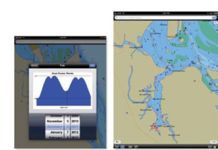
PS Sea-trials the iPad and Nav Apps
With many of the 38-million-sold iPads winding up on board boats, it’s no wonder there are hundreds of iPad apps that are well suited for the sailing life. This begins Practical Sailor’s three-part series on those apps. Part 1 of the series reports on PS’s field tests of multiple navigation apps—using raster and vector charts—to see how well they perform and how they compare to traditional navigation software. They review looks at the top performers: iNavX, iPad Navionics, and Charts & Tides.
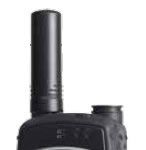
Practical Sailor Reviews Iridium and Inmarsat Satphones
If you are considering buying a satellite phone, much depends on how long you will need it, how you will use it, where you are going and what your cost limitations are. As with cell phones and other communication services, total costs can get complicated with setup charges, access fees, service plans, features packages, and air time bundles. Today’s satphones offer cruising sailors the peace of mind to keep in touch with the office, family, and friends with a private conversation while anywhere on the high seas and open ocean. Practical Sailor looked into the availability, features, functions, limitations, and pricing of the handheld portable satellite phones on the market today. We reviewed the Iridium 9555, Iridium 9575, and Inmarsat Isatphone Pro.
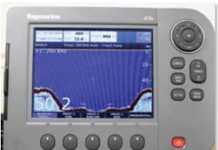
PS Tests the Fish-finding Factor of Compact Plotter-sounders
In the November 2011 issue, we compared the chart-plotting features of four small-screen plotter-sounders from Garmin, Humminbird, Lowrance, and Raymarine. In this article, we look at the fundamental sounder functions of five plotter-sounders, priced from $700 to $1,500. The high-end products in this test, the Raymarine A70D and the Garmin 740S, have larger, high-resolution screens, can handle 3D charts, and are designed to network with wind instruments and autopilots. The smaller units were the Lowrance Elite-5, the Humminbird 788ci, and the Humminbird 798ci SI, which has side-imaging capability; these are marketed mostly to anglers. Units were tested for screen visibility, sounding capabilities, and user-interface.
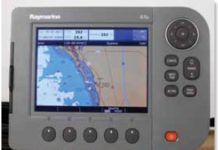
PS Tests Small-screen Plotter-sounders
Practical Sailor tested four small-screen chartplotter-sounder combo units priced from $700 to $1,500: Raymarine A70D, Garmin 740S, Lowrance Elite-5, and the Humminbird 798si. While there was a disparity in what features the units offer, the plotter-sounders were similar in terms of the GPS-based functions. Testers looked at ease of installation, ease of use, screen visibility, resistance to fogging, and water/spray resistance. They also compared features including price, man-overboard functions, waypoint and route storage, available charts, chart interface, and user interface. This article focuses on the electronics' chartplotter capabilities. The December issue will include the report on the devices' sounder functions.

Plotter-sounders Undergo a Battery of Tests
Fogging screens, water intrusion, poor visibility in bright sunlight, and slow redraw rates are the most common complaints we get regarding plotter-sounders. Better construction, new screen technology, and faster processors in our current crop of units seems to have addressed these issues. None of our products experienced serious problems during our environmental testing. Our tests focused on four key elements:

Chandlery: October 2011
Practical Sailor Chandlery: October 2011. This month reviews a pocket video, new mastclimber, and belowdeck comfort.
USCG Safety Alert Concerning DSC-equipped VHFs
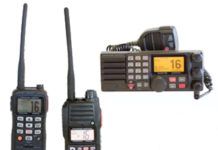
Most of today’s fixed VHF marine radios come equipped with Digital Selective Calling (DSC) capability, and many high-end handheld VHFs do as well. For years, Practical Sailor has recommended that buyers select a model with this capability—and for good reason: As the U.S. Coast Guard’s new marine radio network Rescue 21 becomes operational, rescue centers are able to receive instant distress alerts from DSC-capable VHF radios. However, spending the extra money to have a feature-loaded, DSC-capable VHF offers little benefit if you do not have the radio properly registered and set up. The Coast Guard recently issued a safety alert, warning that mariners were endangering their lives and those of their crew by having a DSC-capable VHF that lacks identifying information.
Local Loft Versus Web-based Service
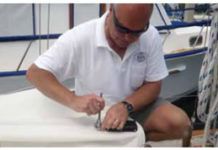
Not every sailor has a selection of local sailmakers to choose from. He or she must instead rely on Internet research and phone conversations to find the best sail for the best price. As most of the world’s sail production takes place in a handful of high-volume production lofts abroad (China, Sri Lanka, and Africa), U.S. sailmakers have taken on the role of sail designers—rather than sailmakers.

Chandlery: August 2011
Practical Sailor Chandlery: August 2011. This month reviews a tiller, tool toter, and smart-phones.

Small Boat, Big Keel Why This 27 Footer Works
What makes a small sailboat truly seaworthy? In this video, we take a deep dive into the Pacific Seacraft Orion 27, a rugged, long-keel...



Latest Sailboat Review
Island Packet Estero Used Boat Review
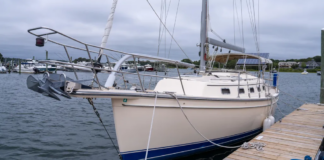
Florida-based Island Packet targets a relatively narrow niche, so the toughest competitors to its new boats are often older Island Packets. Introduced in 2010, the 36-foot, shoal-draft Estero is the company’s latest attempt to introduce a distinctive model that doesn’t stray too far from the company’s proven formula for success: moderate displacement, full-keel cruisers designed to be lived on, sailed far and in comfort, and endure the bumps, scrapes, and storms that cruising boats inevitably encounter. After sailing the Estero on Florida’s Sarasota Bay and inspecting its interior, construction, and systems, Practical Sailor testers noted that the shoal-water cruiser will appeal strongest to Island Packet fans who’ve been waiting for a shoal-draft, easy-to-sail boat that compares to the IP37 in terms of interior space. These strengths will be most apparent on intracoastal or riverine adventures like the Great Loop.