

PS Tests the Fish-finding Factor of Compact Plotter-sounders
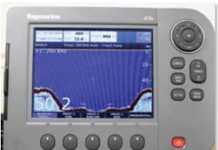
In the November 2011 issue, we compared the chart-plotting features of four small-screen plotter-sounders from Garmin, Humminbird, Lowrance, and Raymarine. In this article, we look at the fundamental sounder functions of five plotter-sounders, priced from $700 to $1,500. The high-end products in this test, the Raymarine A70D and the Garmin 740S, have larger, high-resolution screens, can handle 3D charts, and are designed to network with wind instruments and autopilots. The smaller units were the Lowrance Elite-5, the Humminbird 788ci, and the Humminbird 798ci SI, which has side-imaging capability; these are marketed mostly to anglers. Units were tested for screen visibility, sounding capabilities, and user-interface.
PS Tests Small-screen Plotter-sounders
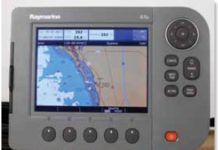
Practical Sailor tested four small-screen chartplotter-sounder combo units priced from $700 to $1,500: Raymarine A70D, Garmin 740S, Lowrance Elite-5, and the Humminbird 798si. While there was a disparity in what features the units offer, the plotter-sounders were similar in terms of the GPS-based functions. Testers looked at ease of installation, ease of use, screen visibility, resistance to fogging, and water/spray resistance. They also compared features including price, man-overboard functions, waypoint and route storage, available charts, chart interface, and user interface. This article focuses on the electronics' chartplotter capabilities. The December issue will include the report on the devices' sounder functions.

Plotter-sounders Undergo a Battery of Tests
Fogging screens, water intrusion, poor visibility in bright sunlight, and slow redraw rates are the most common complaints we get regarding plotter-sounders. Better construction, new screen technology, and faster processors in our current crop of units seems to have addressed these issues. None of our products experienced serious problems during our environmental testing. Our tests focused on four key elements:

Chandlery: October 2011
Practical Sailor Chandlery: October 2011. This month reviews a pocket video, new mastclimber, and belowdeck comfort.
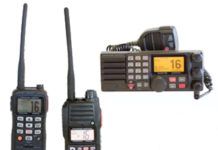
USCG Safety Alert Concerning DSC-equipped VHFs
Most of today’s fixed VHF marine radios come equipped with Digital Selective Calling (DSC) capability, and many high-end handheld VHFs do as well. For years, Practical Sailor has recommended that buyers select a model with this capability—and for good reason: As the U.S. Coast Guard’s new marine radio network Rescue 21 becomes operational, rescue centers are able to receive instant distress alerts from DSC-capable VHF radios. However, spending the extra money to have a feature-loaded, DSC-capable VHF offers little benefit if you do not have the radio properly registered and set up. The Coast Guard recently issued a safety alert, warning that mariners were endangering their lives and those of their crew by having a DSC-capable VHF that lacks identifying information.
Local Loft Versus Web-based Service
Not every sailor has a selection of local sailmakers to choose from. He or she must instead rely on Internet research and phone conversations to find the best sail for the best price. As most of the world’s sail production takes place in a handful of high-volume production lofts abroad (China, Sri Lanka, and Africa), U.S. sailmakers have taken on the role of sail designers—rather than sailmakers.
Chandlery: August 2011
Practical Sailor Chandlery: August 2011. This month reviews a tiller, tool toter, and smart-phones.
Pros and Cons of Lowrance’s BR24 Broadband Radar
Practical Sailor reports on its test of the new Lowrance BR24 broadband radar. Unlike conventional radar, the BR24 transmits a low-power, frequency-modulated continuous wave (FMCW) signal that varies in tone and frequency. It has low power consumption and is very quiet with very low emissions from its transmit power. It has a high resolution at close range, but can be less effective than conventional radar at picking up distant storm cells and difficult shorelines and has an overall limited range.
Pros and Cons of Lowrances BR24 Broadband Radar
Practical Sailor reports on its test of the new Lowrance BR24 broadband radar. Unlike conventional radar, the BR24 transmits a low-power, frequency-modulated continuous wave (FMCW) signal that varies in tone and frequency. It has low power consumption and is very quiet with very low emissions from its transmit power. It has a high resolution at close range, but can be less effective than conventional radar at picking up distant storm cells and difficult shorelines and has an overall limited range.
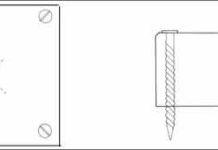
Design for: Through-Deck Fittings for Coaxial Cable
Sealing the holes in decks where Loran and VHF antenna cables penetrate is a fairly common problem on modern boats. If there were only the cable to be considered, a hole of the appropriate size plus a dab of sealant would do an adequate if tacky looking job. But these cables inevitably include sizable end connectors which require holes much larger than those required for the cable itself. Solutions include removal and reinstallation of the connector each time the cable is removed during storage or servicing, and any number of commercially available through-deck fittings or plugs. None of these solutions is simpler or better than the wood fitting shown here. It is attractive and can be made in a few minutes for a few cents.
Latest Logbook

Practical Sailor Logbook – September 2026
In September we tour the Hans Christian 48T — the offshore cruiser many sailors call the holy grail — walk the custom Antigua 60...

Video: Morgan 44 Review – The Catalina Cruiser Everyone Forgot
The 1989 Morgan 44 is a big center-cockpit cruising sailboat with Catalina DNA—but it may be one of the most overlooked boats of its...



Latest Sailboat Reviews
Bayfield 32 Used Boat Review
At first glance, the Bayfield 32 looks less like a fiberglass production boat from the 1980s and more like somebody shrank a traditional sailing...