





Sealing Pesky Wire Holes
While the wireless trend has eliminated some wires, we’re still stuck with plenty of copper poking through our decks. For those of us installing new external Wi-Fi antennas or simply tired of replacing our VHF coaxial every three years because it chafes at the lousy deck fitting that came with the boat, the British hardware manufacturer Scanstrut has introduced a new waterproof deck seal. PS installed a stainless-steel version at the bottom of a test tank filled with water. Nary a drop leaked through.
Marine Electronics: Build an Inexpensive Wireless Network
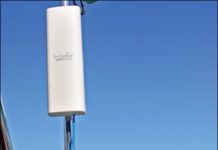
Practical Sailor contributor and bluewater cruiser Joe Minick details the benefits of an onboard Wi-Fi computer network on a cruising boat, and explains the easy DIY setup that connects multiple electronics to the Internet via a client router. Beyond the usual benefits, one that is particularly useful to sailors is that an onboard network allows networked devices to share GPS, NMEA instrument information and other navigation data using software like GPSGate from Franson Technology and Handheld for Mariners. Minick used the Engenius EOC2610 from Keenan Systems and the D-Link DWL G700AP in his setup, which has served his crew well as they cruise the Med. The ethernet-based system is similar to the the Bullit2 systems PS tested from Bitstorm and Wave Wi-Fi.
Update on 10 Long-term Practical Sailor Tests
As a publication that strives to give readers a thorough look at similar items competing in the marketplace, Practical Sailor's long-term testing is vital to determining product durability. Over the years, weve found various ways to update our views. Occasionally run a column called Gear Graveyard, and once in a while, we just round up products that have or havent stood the test of time. This is one of those roundups. All of the items mentioned are, or have been, in use aboard either a 26-foot biodiesel-powered inboard powerboat or a 32-foot Union cutter test boat. They are among quite a few items aboard that undergo testing and abuse, formal and informal, intentional and unintentional. The 10 items included in this report are the Plastimo flexible water tank, Seoladair Easystow inflatable fender, Garmin GPSMap 545s chartplotter, Coleman thermo-electric cooler, Jabsco oil changer, ACR Firefly 2 strobe light, Force 10 Seacook single-burner propane stive, FilterBoss, Aere inflatable fender, Boatsense systems alarm.

Icom GM1600 Handheld VHF Test
Although the Icom GM1600 marine VHF handheld radio is not meant for use as a recreational marine VHF, Practical Sailor was interested in determining whether the unit’s survival-oriented design might make it a good choice for inclusion in a life raft or ditch bag. We were also interested in comparing its specs to another marine electronics product, the Standard Horizon HX850S VHF handheld, one of the top picks from our most recent series of tests (April 2009, July 2009, October 2009, December 2009).
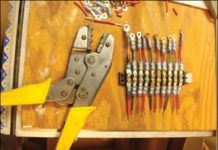
Marine Systems: Wire Exposure Test Update
There are a variety of wire types that exceed government and industry standards for onboard wiring. Because these types of wire can be 10- to 15-percent less expensive than high-quality boat cable, Practical Sailor wanted to determine whether any of these other options would be acceptable for the cost-conscious sailor.Using a moisture chamber designed to mimic years of use in a harsh marine environment such as a bilge, PS's test focuses on the durability of tinned wire, non-tinned wire, and various wire connectors. It also examines whether using a corrosion-inhibiting product could help extend the life of these wires and connections. The test led to some definitive conclusions on which wire types are best in specific onboard uses, and also showed that long-term wire protection begins with well-sealed connections. Our July 2010 issue reported the six-month results, and here, we offer the one-year update.
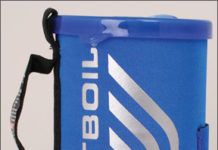
Chandlery: Practical Sailor Holiday Gift Ideas 2010
Every November, Practical Sailor editors celebrate the impending holiday season by reviewing gift ideas for the sailors on your list-or to add to your wishlist. This years wrap-up covers a range of interests and includes something to fit every budget. Looking for a new gizmo for the gadget junkie? Check out solar-powered, water-resistant Eton Soulra sound system, which can play most MP3 players and iPods, iTouch and iPhones while charging them. Or take a look at the SolarTech SolarPulse, a solar-powered device that charges and maintains a ship's batteries. The featured galley goodies from Galleyware and JetBoil will make practical gifts for those galley goddesses, and the Sailor's Solutions wireless remote switch for 12-volt devices is a good stocking-stuffer for creative boat owners and those looking for convenience.
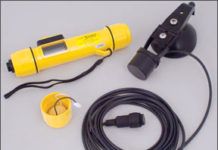
Marine Electronics: Practical Sailor Tests Portable Depth Sounders
Ordinarily Practical Sailor is loathe to apply a $100 battery-operated solution to a problem easily solved with a chunk of lead and some 3/8-inch line. However, portable depth sounders take the leadline to the next level. Resembling small flashlights, these handheld sounders are designed to be portable, easy to use, and reliable. They are good tools for probing creeks and narrow passes in a dinghy, and also can serve as backups to a primary sounder. This series of tests took a look at the Hawkeye 22PX from Norcross Marine and the Speedtech Depthmate SM-5A. On-the-water testing comprised a series of six tests in specific locations. Each unit was tested in murky shallow waters with a soft mud bottom; moderately clear waters with grass bottom; and clear waters with sand bottom. Testers also evaluated whether the sounders could read through hull materials, their durability and waterproofness, and whether their digital displays could be read in bright sunlight and at night.
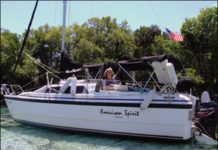
Mailport: October 2010
Letters to Practical Sailor, October 2010. Subjects include an owner's comments about MacGregor boats, digital maps, teak cleaners, props and adhesives.

Marine Electronics: AIS Gets Ocean Tested Near Dardanelles Strait
Joe and Lee Minick added an Automatic Identification System (AIS) receiver to the nav station of their Mason 43, Southern Cross, and have used it for several years in some of the most heavily traveled waters of the world. Required on large commercial vessels, AIS devices add a whole new dimension of collision avoidance, transmitting dynamic information about a vessels speed, course and position plus static information including a vessels name, call sign and Mobile Marine Service Identity (MMSI). With a Class A AIS and a more recent Class B AIS system for small craft, AIS changes the landscape in marine navigation. The Minicks report in Practical Sailor proves how useful AIS can be for cruisers and other small boaters.
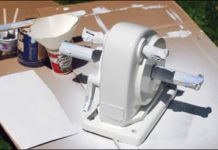
PS Advisor: Resurrecting a Windlass
I’ve got an old manual anchor windlass with a badly corroded gypsy that needs to be replaced. There is a 1:1 bronze "cross" on the outside of the gypsy—where the lever fits to turn it when not using the geared mechanism. Unfortunately, I can’t figure out how to get the bronze cross off, which needs to happen in order to replace the gypsy. There’s a grease zirk/fender washer on the outside of the cross, but unscrewing it still doesn’t get the cross off.
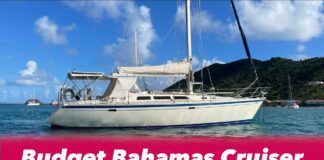
O’Day 40 – A Budget Cruiser for the Bahamas
The O’Day 40 (1986) is one of those cruising sailboats that somehow slipped through the cracks of sailing history. Built during the final years...


Latest Sailboat Review
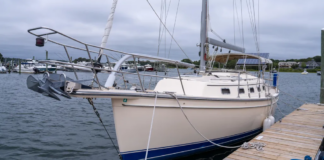
Island Packet Estero Used Boat Review
Florida-based Island Packet targets a relatively narrow niche, so the toughest competitors to its new boats are often older Island Packets. Introduced in 2010, the 36-foot, shoal-draft Estero is the company’s latest attempt to introduce a distinctive model that doesn’t stray too far from the company’s proven formula for success: moderate displacement, full-keel cruisers designed to be lived on, sailed far and in comfort, and endure the bumps, scrapes, and storms that cruising boats inevitably encounter. After sailing the Estero on Florida’s Sarasota Bay and inspecting its interior, construction, and systems, Practical Sailor testers noted that the shoal-water cruiser will appeal strongest to Island Packet fans who’ve been waiting for a shoal-draft, easy-to-sail boat that compares to the IP37 in terms of interior space. These strengths will be most apparent on intracoastal or riverine adventures like the Great Loop.