




Stabilizing Cameras and Video Cameras Underway
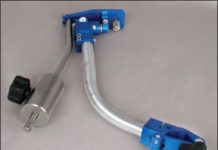
Anyone who has tried to steady a camera aboard a boat knows how difficult it can be to keep the equipment dry, compose the shot, and level the horizon, all the while keeping yourself and your camera on board. Given hull vibrations, wave action, and the unevenness of the deck, setting up a stable work platform presents challenges that marine photographers try to solve using a variety of camera mounts. Practical Sailor recently tested three types of camera mounts: a beanbag camera mount from Omnipod, the Camo-Pro 7; two flexible devices from GorillaPod, the heavy-duty GorillaPod Focus and the GorillaPod SLR Zoom; and specialized, self-leveling camera mounts from Horizon True.
Marine Inverter-Chargers Test Part 2
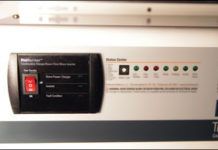
The Practical Sailor February 2010 issue launched our test of marine inverter-chargers with a look at the inverter capabilities of units from six manufacturers. This report compares the battery charger functions of the inverter-chargers from Charles Industries, Magnum Energy, Mastervolt, ProMariner, Tripp Lite, and Xantrex. Our recommendations differ based on an owners needs. One unit is excellent for sailboat owners with larger AGM or gel-cell batteries who plan to expand their systems down the road, while another is better suited for those who have no expansion plans, offering a combination of lower price, features, and sophistication.
Mailport: March 2010
The March 2010 issue of Practical Sailor features letters from readers on such subjects as: household adhesives, Union 36s, foggy electronics, digital freezer controls and converting a boat from gas to electric.
Portable Sailing Tools for Tracking and Tuning Boat Speed
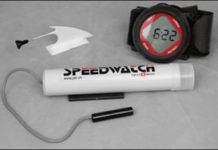
Practical Sailor recently spent a week experimenting with three handheld products geared toward performance sailors. These portable tools are for tracking and improving sailboat speed. Unlike conventional portable GPS units, which have relatively small displays and deliver a wide range of navigational data, these products display large digits that can be read from a distance, and the view options are limited to those that relate exclusively to speed and racing performance. Practical Sailor tested the Speedwatch and two GPS units, Velocitek SC-1 and SpeedPuck. These instruments make good training tools for young sailors and will give all around-the-buoy sailors the ability to quickly quantify performances.
Which is the Best Marine Inverter-charger for Your Boat?
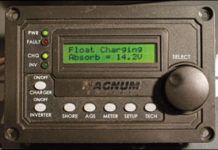
To decide which marine inverter-charger best meets your onboard power demands, first consider how it will used, how and where it will be mounted and what is required to fit with your electrical system. After testing multiple marine inverter-chargers, Practical Sailor offers this report on the units’ inverter capabilities and a follow-up review will report on the units’ charger functions. There are two classes of marine DC inverters: true sine wave (TSW) and modified sine wave (MSW). Each uses a different method to produce AC voltage. Practical Sailor evaluated modified sine wave units from Charles Industries, Magnum Energy, ProMariner, and Tripp Lite, and true sine wave units from Magnum, Mastervolt, ProMariner, and Xantrex.
Practical Sailor Tracks Down the Best LED Tri-color Light
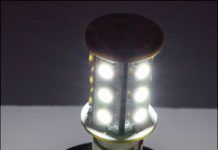
Practical Sailor found that the full brightness that LEDs offer, coupled with a huge energy savings, a wide tolerance to voltage changes, and a very long expected lifespan, make LED a great alternative to incandescent lights for masthead tri-color. The tradeoff is the considerable heft of the price tag. Practical Sailor tested LED tri-color lanterns from Orca Green Marine (OGM), Signal Mate, and Lopolight. We also evaluated LED tricolor bulbs designed to replace those in the popular Aqua Signal Series 40 tri-color light. Those were bulbs from Lunasea, Dr. LED, and LED Shop.
Mailport: February 2010
The February 2010 issue of Practical Sailor has letters on the following topics: requests for more used boat reviews, foggy electronics, hard varnishes, propane fridges and Iphone apps.
Multiplexing Marine Electronics
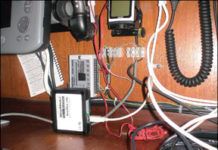
In an effort to find an inexpensive, reliable way to connect a PC (or Mac) to our onboard electronic navigation system, Practical Sailor testers scouted basic NMEA 0183 multiplexers with good track records. We zeroed in on the easy-to-install MiniPlex Lite from Holland-based ShipModul. This multiplexer was one of the first high-speed NMEA 0183 multiplexers capable of handling the data rates required for some of the newer electronics like AIS receivers. With very little effort, the Mini Plex Lite allowed us to network our Dell Latitude D620 laptop, AIS, GPS, and chartplotter, and it handled the data transfer without a glitch. Our chief gripe: This entry-level model uses the laptop for its power source.
GPS Receivers for Smart Phone Navigators
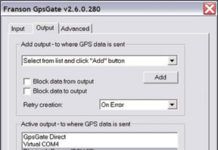
During our testing of pocket navigators for the December 2009 issue, we examined other approaches to propagating a GPS signal around the boat and found some viable alternatives. Several aftermarket options can turn smart phones or PDAs into handheld navigation tools by supplying or sharing reliable GPS data. Practical Sailor looked at a Bluetooth-enabled Globalsat BT-338 GPS receiver with the SiRFStarIII chipset and Franson Technology’s GPSGate software for Windows and Windows Mobile, which was designed specifically for the task of sharing GPS data. Testers found both utilities to be good choices for the job, however, we still caution against relying solely on a PC-based navigation network onboard.

Mariner Resources on the Web
Practical Sailor’s roundup of practical boater websites covers all topics related to sailing, boat owning, and boat maintaining. From weather forecasting and navigation sites to boat-owners’ groups and social networking sites, these links to online sailing resources are editors’ and readers’ top picks from the world wide web.
O’Day 40 – A Budget Cruiser for the Bahamas
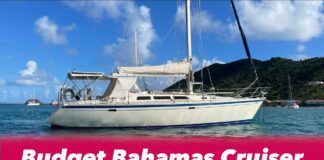
The O’Day 40 (1986) is one of those cruising sailboats that somehow slipped through the cracks of sailing history. Built during the final years...


Latest Sailboat Review
Island Packet Estero Used Boat Review
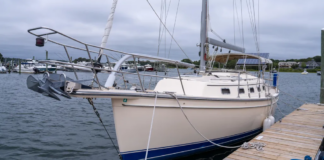
Florida-based Island Packet targets a relatively narrow niche, so the toughest competitors to its new boats are often older Island Packets. Introduced in 2010, the 36-foot, shoal-draft Estero is the company’s latest attempt to introduce a distinctive model that doesn’t stray too far from the company’s proven formula for success: moderate displacement, full-keel cruisers designed to be lived on, sailed far and in comfort, and endure the bumps, scrapes, and storms that cruising boats inevitably encounter. After sailing the Estero on Florida’s Sarasota Bay and inspecting its interior, construction, and systems, Practical Sailor testers noted that the shoal-water cruiser will appeal strongest to Island Packet fans who’ve been waiting for a shoal-draft, easy-to-sail boat that compares to the IP37 in terms of interior space. These strengths will be most apparent on intracoastal or riverine adventures like the Great Loop.