





Practical Sailor Takes Interphases New Forward-Looking Sonar for a Spin
Charts and GPS help sailors stay out of harms way. But for navigation in those more remote destinations that may not be well-charted, relatively small and affordable forward-looking sonar is added security. Longtime cruising sailors Andy OGrady and Ulla Norlander sea-trialed Interphases new SE-200 Sonar Engine aboard their 42-foot sailboat Balaena. They used the sounding equipment primarily in Brazils muddy rias and shallow rivers. After six months of forward-looking sonar tests, OGrady and Norlander found that getting the most out of the device had a big learning curve. Sailors need to master the art of reading the sonar, adjusting the equipment, and determining false echoes. Common problems testers had with the sonar included interference and false echoes, the inability to set an alarm area on the radar screen, and a lack of space aboard to install the sonar where it wont be subject to interference. In spite of the SE-200s limitations, testers found it to be integral to their navigation. They use it regularly and reported that theyd feel lost without it.
Happily Aground Again
Im not sure why this months Ocean Tested review of the new forward-looking sonar from Interphase Technologies, the SE-200 (page 14), gives me the creeps, but it does. The technology, which promises a digital representation of the seafloor ahead, is impressive, but I can't help but feel like were opening Pandoras box. Imagine that the SE-200 always worked as its promotional literature suggests, giving us adequate time to react to underwater obstacles ahead. Should the technology become affordable and widely accepted, groundings may become so rare that the worlds bays and estuaries will be populated by sailors whove never been humbled by the sudden heel of their boat as it wallows onto a mudflat. Part of what distinguishes sailors is that our affliction-this incurable addiction to wind and water-requires that we confront our own limitations. Each time we clear the bell buoy, we are embarking on an act of submission, surrendering ourselves and our good little ship to whatever the ocean might deliver.

VHF Exterior Speakers Test: Can You Hear Me Now?
Practical Sailor tested a dozen external speakers compatible as add-ons to cabin-bound VHF radios. Testers looked at the overall performance, including the sound quality and maximum output, of each unit along with cost and warranty. All speakers were also subjected to a spray test to determine corrosion resistance. We tested three models from marine audio system experts Poly-Planar and three from antenna giant Shakespeare. Standard Horizon had two entries, and Speco One had two. We rounded out the field with one speaker from SeaBowld and one from Icom. We selected a top pick in both the conventional and horn-style exterior speakers.
Xantrex Battery Accessories
We found that in order to evaluate the wind generators performance effectively, we had to be able to monitor and log the cumulative amp hours each produced during the entire test period. The XBM Battery Monitor enabled us to do this. The XBM monitor uses microprocessor technology to provide complete battery status information and features a lighted, easy-to-read digital LCD readout showing volts, amps, amp hours consumed, and operating time remaining. Another handy feature is a bar graph that displays the batterys current state of charge in a simple graphical format. Historical information such as charge efficiency, deepest discharge, and average discharge are available at the touch of a button-buttons that are splash proof, allowing the meter to be flush-mounted in a semi-exposed location.
Icom Updates VHF
We last reported on handheld VHF radios in an October 2006 review of eight units priced under $175. The Uniden MHS350 ($150) took top honors, while the Standard Horizon HX270S ($100) was selected as the Practical Sailor Budget Buy. Two Icom radios-the IC-M32 and the IC-M2A-were also tested, but their short battery lives kept them out of the winners circle. Since that review, Icom has replaced the IC-M32 with a totally redesigned handheld that floats: the IC-M34. We put it through the same tests as the handhelds reviewed in 2006, following the required 14-hour charge with the supplied AC charger.

Practical Sailor Editors Pick the Best Sailing Gear of the Year 2007
Over the last year, weve reviewed everything from thermo-electric coolers to snatch blocks, navigation software, PBO rigging, and even sunscreens. The 2007 Practical Sailor Gear of the Year winners list is no less varied. The general gear winners include the Superwind 350 wind generator, the Fujinon TS 1040 Techno-Stabi and Bushnell Stableview image-stabilized binoculars, the Mercury Big Foot 9.9-horsepower outboard engine, the Force 10 propane galley stove, Digital Antennas 3-dB VHF antenna, Harkens 1609 snatch block, the Kestrel 4000 and Speedtech Skymaster handheld weather instruments, the Norcold 60-quart and Engel 35-quart thermoelectric coolers, and both the Lewmar and Dax Onetouch winch handles. The marine safety gear standouts included the Elliot SOLAS-6 life raft, Mustangs automatic inflatable PFD/harness combo (MD 3184), West Marines Basic harness, the Mustang Integrity float coat, and the Mustang Ocean Commander survival suit. The marine maintenance products that topped our list include Interluxs Micron 66 bottom paint, West Marines CorrosionPro Lube metal protectant, the TC-11 corrosion-inhibiting spray, and the Star brite One-Step Cleaner Wax.

Going Overboard With Remote Controls
Recently, I had the exercise of chasing my two sons, Ben and Jake, around one of the many fall boat shows that again left me penniless this year. The nice thing about having kids later in life is that you have the opportunity to see the world through their eyes and feel young again. (Many chiropractors have built lucrative careers around this phenomenon, I am certain.) Being boys, they were instantly drawn to the aisles of electronics, and before long, both were fiddling with whatever gizmos they could get a hold of. Since tiny, wireless devices are the current rage, not only could they fondle a variety of gadgets, they could walk right off with them, which, of course, endeared them to the ever-watchful vendors.
Six Remote Mics for VHF Radios Are Put to the Test
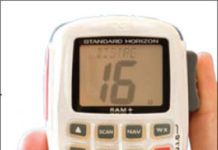
As single-handers and anyone sailing fogbound coastal waters traversed by high-speed ferries can attest, a reliable radio at the helm often becomes an essential safety item. A good remote mic fits this need, and as bonus, a cockpit mic usually allows two-way communication between the helm and the cabin. The latest remote mics allow complete radio control from the cockpit, however, in some cases, you must match these mics with the newest model VHF radios. The six units testers picked apart were Icoms CommandMic II and CommandMic III, Raymarines RayMic, Standard Horizons RAM and VH-310, and the wireless Uniden WHAMx4.
Can You Hear Me Now? Mariner 500 Communication Aid
One of the many challenging aspects of on-board life is exchanging information between the helmsperson and the crew at the other end of the boat. While anchoring or docking, for instance, wind and engine noise can present formidable hurdles. Thats why many resort to hand signals to be more effective in these tasks. But an even more effective approach exists. Voice communication aided by wireless headsets is not new technology, but its a fitting solution to the problem. In the last Americas Cup in Valencia, Spain, wireless headsets were du rigueur for bowmen, headsail trimmers, and tacticians. But PS considers those high-tech gadgets cost-prohibitive (from $600 to $1,000 each), which is why we were pleased to discover Cruising Solutions Mariner 500 headset (www.cruisingsolutions.com) ($60).
Speed Reader – Velocitek Marine Electronics
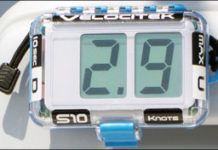
Handheld marine electronics can provide an essential backup to permanently mounted gear. That aspect is certainly part of the appeal for a product called Velocitek S10 http://www.velocitek.com/, a portable, waterproof-but not entirely economical ($250)-speed gauge that can measure a vessels speed over the ground or its velocity made good toward a waypoint using an internal Trimble GPS receiver and processors. And [IMGCAP(1)]the S10s more expensive sibling, the SC-1 ($399), purports to deliver a vessels speed, heading, and velocity made good with the information updated every half-second. We say "purports" as we havent tested the SC-1.
O’Day 40 – A Budget Cruiser for the Bahamas
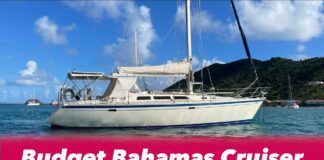
The O’Day 40 (1986) is one of those cruising sailboats that somehow slipped through the cracks of sailing history. Built during the final years...


Latest Sailboat Review
Island Packet Estero Used Boat Review
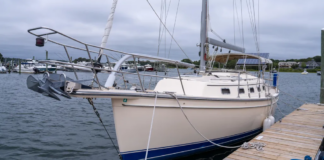
Florida-based Island Packet targets a relatively narrow niche, so the toughest competitors to its new boats are often older Island Packets. Introduced in 2010, the 36-foot, shoal-draft Estero is the company’s latest attempt to introduce a distinctive model that doesn’t stray too far from the company’s proven formula for success: moderate displacement, full-keel cruisers designed to be lived on, sailed far and in comfort, and endure the bumps, scrapes, and storms that cruising boats inevitably encounter. After sailing the Estero on Florida’s Sarasota Bay and inspecting its interior, construction, and systems, Practical Sailor testers noted that the shoal-water cruiser will appeal strongest to Island Packet fans who’ve been waiting for a shoal-draft, easy-to-sail boat that compares to the IP37 in terms of interior space. These strengths will be most apparent on intracoastal or riverine adventures like the Great Loop.