

Signal Mate Review
Compliance is signaling in restricted visibility. This is why we became interested in Signal Mate and its approach to automating sound and light signaling, a big plus for short-handed sailors. The companys console-mount controller and its portable emergency signaling kit offer great capability and quite a bit more. The easy-to-operate push-button console actuates digital switching circuitry that controls light, and sound signals are pre-programmed to indicate anchoring and making way in low visibility, as well as designating emergency and distress situations. Theres also a capacity to manually control the signaling process, and to select sound, light, or both as signaling options. The unit can connect to the boat horn or other audible device or can be wired to a mast-mounted maneuvering light.
Practical Sailor Tests the Alado Jib Furler
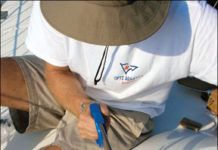
Practical Sailor finds the Alado Nautica headsail furler to be easy to install and a worthwhile sail-handling tool. One feature that sets the Alado apart from other jib or genoa furlers is its staggered slotting of five-foot foil sections that slide together and interlock over a conventional wire or rod headstay. This design allows the do-it-yourselfer to fit each foil section over an attached headstay, and simply push the formed furler up the wire or rod. Mainstream headsail furlers tend to be assembled on the ground and installed with the mast horizontal. The Alado furlers design uses integral halyards to place a compression load on the foil, eliminating the need for Loctite, set screws, and a top swivel. We tested the Alado over five months of coastal cruising and daysailing.
Field and Bench Tests Determine the Best Full-Feature VHF Radio for About $175
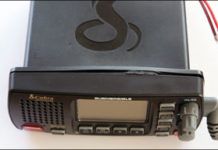
Practical Sailor tested 10 new mid-priced marine VHF radios. All VHFs tested are waterproof, can be interfaced with a GPS, and have Digital Select Calling (DSC) capability. The marine radios were run through a series of tests including VHF transmitter power output, frequency accuracy and frequency stability, and receiver sensitivity to determine which was the best marine radio in the group. The display on each radio was rated based on the size and readability of the information, the quality of the information displayed, and the backlighting. The test radios had a lot to offer in the way of extras with everything from hailers to remote microphone capabilities and voice recorders. Ratings were based on overall performance and features. The VHF radios tested in this price category were the Cobra F75, Cobra F80, West Marine VHF550 (made by Uniden), West Marine VHF650 (made by Uniden), Raymarine 49, Raymarine 55, Standard Horizon Quest X GX1500S, Standard Horizon Matrix GX3000S, Icom M304, and Uniden UM425.
Heavy Weather Sailing Gear
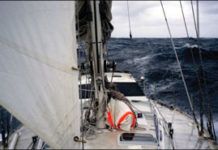
From sea anchors, drogues, and trysails to forereaching and heaving to, tactics and gear for surviving a storm at sea vary greatly. During a high-latitude circumnavigation, Evans Starzinger and Beth Leonard, aboard their 47-foot Van de Stadt sloop, had several opportunities to test heavy-weather sailing tactics. The couples main storm gear was a Galerider sea drogue, made by sailmakers Hathaway, Reiser and Raymond, is a webbing bowl with a wire hoop. Deploying the drogue involved a bridle of strong nylon lines connected to the Galerider rode via an oversized galvanized swivel. Starzinger and Leonard used the Galerider when running before the wind in gale-force conditions. The drogue helped slow the boat, kept it from surfing down the face of a wave, and provided directional stability, which allowed their autopilot to maintain control. Drogues and other storm-survival gear and tactics are particularly necessary for short-handed crews and boats that tend to surf in heavy weather. Other storm gear for sailboats that Practical Sailor looked at included the Jordan Series drogue and the Seabrake drogue.
Looking to Boost Your Onboard Computers Internet Connection?
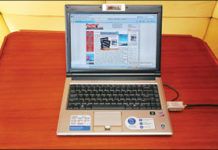
Internet access onboard is increasingly popular but achieving a reliable wireless connection can be difficult in a marina or on the water. A laptop with a built-in Wi-Fi system is a common starting point, but marinas can be a difficult place for low-power, high-frequency radio signals. Practical Sailor tested 5MileWi-Fi, a system that utilizes an external antenna to extend the Wi-Fi range beyond that of normal Wifi devices.

Mailport: 01/09
In the December 2007 Practical Sailor Advisor, you requested feedback on Ultimate Sole, a product for coating cabin soles. Two years ago, I added a -inch teak-holly veneer plywood covering to my sole and used Ultimate Sole as the finish. I first put on a sealer and then two coats of Ultimate Sole. It went on very easily and performed better than I expected. It is a hard, glossy finish that truly does offer nonskid properties. You look at the finish and think you will slide all over the place, but you don't! It is a wonderful product, and I wouldnt use anything else.
EarthNC Software
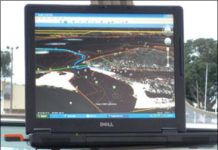
On a recent boat delivery from Michigan to Florida, I had the opportunity to try out some new computer-based planning software from EarthNC. EarthNC uses Google Earth images to present marine chart data by overlaying the charts on Google Earth satellite images. For $50, EarthNC provided 757 vector-format charts (raster format charts and other packages are also available) for the continental U.S., Alaska, Hawaii, and parts of the Caribbean. These charts can be used online or offline. When combined with a USB-connected GPS-and the ooPs (www.goopstechnologies.com) GPS software for Google Earth-EarthNC provides a real-time, moving map experience similar to modern chartplotters. EarthNC also has automatically updating weather maps with data supplied by NOAA.
Practical Sailor Tests Two New Handheld GPS Units from Garmin
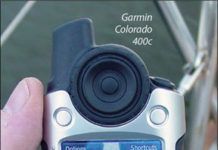
Garmin’s new scroll-wheel Colorado 400c and touchscreen Oregon 400c offer some unique features, but their multi-sport focus falls short in satisfying all of a mariner’s needs. Although both new units are high-quality handhelds, testers preferred an older-generation GPS, the Garmin GPSMap 76CSx, which was the Practical Sailor Best Choice in a previous test. Practical Sailor tests compared the units’ features, performance, ergonomics, and price, along with how well they meet sailors’ needs.
Practical Sailor Names 13 Products Best Gear of the Year
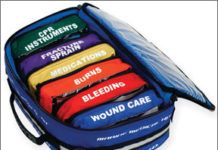
Practical Sailor’s annual wrap-up of the year’s best sailing equipment looks at our favorite top-rated products from November 2007 to November 2008, including the Facnor furler for light-air sails, Scad Solo external holding-tank sensor, Pelican Recoil LED flashlight, and Adventure Medical’s first-aid kit for coastal cruisers. In the boat maintenance category, Interlux’s Micron 66 bottom paint and Spray Nine’s waterline stain remover garnered Editors’ Choice picks. Foulie sets (jacket and bibs) by Gill and Helly Hansen were tapped as Practical Sailor Editor’s Choice in apparel, and a host of marine electronics made the list, including the Icom CommandMic III remote mic and Garmin GPSMap 545s 5-inch chartplotter sounder. Jeppesen was recognized for its top-notch electronic chart updating services. Other top gear picks were the Acco proof coil mooring chain and the Achilles HB315-LX fixed-transom inflatable dinghy.
The Hunt is on for a Quality, Well-placed Emergency Tiller
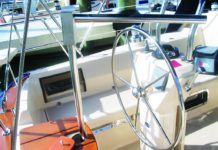
A decade ago, Practical Sailor editors began scouring boat shows for the perfect emergency tiller and an ideal stowage system for it. Little more than a simple lever arm that attaches to the head of the rudder stock, the emergency tiller is the device a sailor relies on in the event a steering cable parts or theres some other steering system failure. Our seemingly simple search turned out to be a nearly fruitless enterprise. Boat after boat fell far short of delivering even an average emergency tiller. Heres a look at our favorites and favorite offenders as well as our criteria for a good emergency tiller and where to keep it.
Latest Logbook

Practical Sailor Logbook – September 2026
This month we tour the Hans Christian 48T — the offshore cruiser many sailors call the holy grail — walk the custom Antigua 60...
Video: Morgan 44 Review – The Catalina Cruiser Everyone Forgot
The 1989 Morgan 44 is a big center-cockpit cruising sailboat with Catalina DNA—but it may be one of the most overlooked boats of its...


Latest Sailboat Reviews
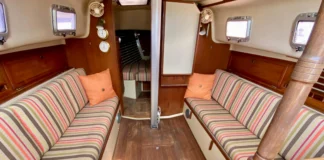
Bayfield 32 Used Boat Review
At first glance, the Bayfield 32 looks less like a fiberglass production boat from the 1980s and more like somebody shrank a traditional sailing...