




The Multitasking Standard Horizon CPV350 Challenges Top-Performing Chartplotters and VHF Radios
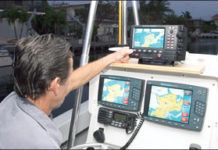
The CPV350 has a long list of features that go beyond the ability to transmit and receive. It has an integral 30-watt hailer with automatic and manual foghorn capability, sophisticated DSC capabilities with a second receiver for receiving channel 70 digital signals, an easy-to-access menu, and a large rotary knob for channel selection that doubles as a range and zoom tool for the chartplotter. It is WAAS and AIS capable (when coupled with an AIS receiver). Its 7-inch, high-resolution (800-x-480), color display is comparable to that of the Navman Trackfish 6600, Practical Sailor s Best Choice among tall screen plotter/sounders reviewed in the June 2006 issue. The main drawback we see in the CPV350 is that by having one device that handles multiple duties, system redundancy is lost.

The Solar Stik
Solar panels have proven themselves a valuable ally in the never-ending battle to keep batteries charged and todays power-hungry systems fed. A common sight aboard world cruising sailboats and weekend warriors alike, solar panels have many pros backing them up: Theyre noiseless, have no moving parts, and provide free electricity for years with minimal maintenance, all without producing harmful emissions or using up valuable natural resources. Despite all the benefits, solar panels have issues other than their high purchase price. Their mounting location must not eat up limited cockpit or deck space (an issue in all but the smallest installations); they require adequate air flow to avoid heat buildup (which can seriously reduce power output); and they reach optimal output only when facing the sun, a limiting proposition for fixed-mount installations.
Ocean Tested: Must-have Software for Cruisers
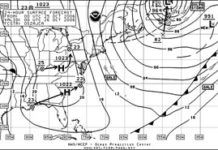
Software for downloading e-mail, weather information, and tide information from the Internet over a high-seas radio or a satellite phone gets used most frequently aboard cruising boats. Because of the slow e-mail transmission rates on the high seas, data-compression software is a must to keep communication cost-effective, whether youre using a ham radio, cell phone, or satellite phone. Some of the more popular software packages for offshore e-mailing are Airmail, Winlink, XGate, UUPlus, and SailMail. Once high-seas e-mail has been set up, users can download weather information from a variety of sources, including NOAAs GRIB file system, Saildocs, and ViewFax. Weather fax is still important despite the increasing popularity of GRIBs (Gridded Binary files), but youll need a software program that can read the charts. Some our testers have tried include Xaxero and Mscan Meteo.
Tankless Scuba Diving
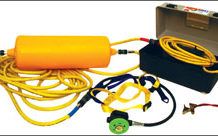
The last few years, weve used a neat, 12-volt battery-powered "snuba" rig-a snorkeling-scuba hybrid-to inspect our test boats hull. We first reported on this rig, the SurfaceDive Deck Snorkel, in the Aug. 15, 2004 issue. A Canadian company, Scu-Buoy Products Inc., recently sent us a very similar product called the Sea Breathe Electric Snorkel. Both use similar components: a 12-volt compressor mounted inside a plastic container. The compressor pumps air through a hose to a floating air reservoir. A second hose connects the reservoir to a scuba regulator attached via a belt (Sea Breathe) or chest harness (SurfaceDive).

Handheld Weather Instrument Test
For this test of hand-held weather stations, Practical Sailor had three principal objectives. First, we wanted to determine which weather instruments gave cruising sailors the information they need in the most accessible format. The second quality we were interested in was ease of use. Third, we wanted to test for consistency of readings among the various instruments. The models we tested include the Skywatch Eole, Skywatch Meteos, Skywatch Atmos, Skywatch Xplorer2, Skywatch Xplorer4, Skywatch Geos11, Kestrel 1000, Kestrel 3500, Kestrel 4000, Speedtech Skymate, Speedtech Skymaster, Speedtech Eco Edge. One thing is clear: fiddling with them in the store doesn't nearly give you the full picture.
Ocean Tested: Automated Identification System (AIS) for Recreational Boats
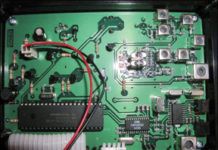
Starting in 2002, the SOLAS regulations (chapter V, regulation 19) required that all ships over 300 gross tons carry and operate at all times an Automated Identification System. The shipboard AIS sends brief broadcasts on a VHF radio frequency with the ships information, including the vessels name, latitude and longitude, course over ground, speed over ground, heading, status, and Maritime Mobile Service Identity (MMSI) number. The broadcasts happen every few seconds. Last summer, we got a chance to try an AIS receiver on a 2,500-mile trip from Baltimore, Md., to Bermuda, Nova Scotia, Maine, and back to Baltimore. For the trip, we installed the Nasa Marine AIS Radar. In this case, Nasa Marine is not NASA (the U.S. space agency), but is instead a British company known for low-cost marine instruments.
Marine VHF Antenna Test
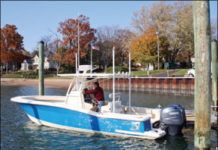
For this test of 8-foot and 16-foot fiberglass pole antennas, Practical Sailor contacted the three most popular manufacturers of marine recreational VHF antennas-Comrod, Digital Antenna, and Shakespeare-and requested their participation in our at-sea evaluation. While the distance test produced some interesting numbers (like 23 miles of range for a deck-mounted VHF antenna), a hacksaw revealed some of the most telling details. Digital and Comrod score high for durability, while Shakespeares antennas offer good performance at a good price.
OneTouch Makes Winch Work a Cinch
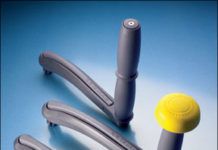
Fast and easy two words rarely used to describe sailing or sailing gear. But Lewmar’s new OneTouch locking winch handle makes sheet tweaking just that.The OneTouch’s unique quick-release button, which runs the length of the handle arm, allows users to grab anywhere on the arm to release or set the locking mechanism.

SeaPack Desal System Turns Salt Water into Sweet Water
Options for securing water at sea during emergency situations have traditionally been limited to solar stills, catchment systems, portable reverse osmosis units, or pre-staging water jugs and jerry cans.
3dB VHF Antenna Test
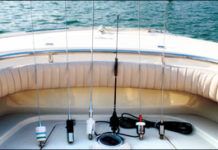
We compare a cross section of 36-inch, 3 dB VHF antennas, including the Shakespeare 5215, the Metz Manta 6, the Digital 222-VW, the GAM SS-2, and Comrod AV53BI-3. None has a convincing performance edge in our test, but for the cruising sailor who doesn't mind putting a few extra ounces aloft we like the Digital 222-VWs rugged construction best.

O’Day 40 – A Budget Cruiser for the Bahamas
The O’Day 40 (1986) is one of those cruising sailboats that somehow slipped through the cracks of sailing history. Built during the final years...



Latest Sailboat Review
Island Packet Estero Used Boat Review
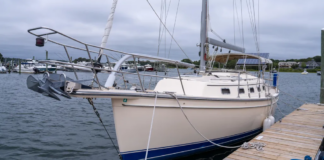
Florida-based Island Packet targets a relatively narrow niche, so the toughest competitors to its new boats are often older Island Packets. Introduced in 2010, the 36-foot, shoal-draft Estero is the company’s latest attempt to introduce a distinctive model that doesn’t stray too far from the company’s proven formula for success: moderate displacement, full-keel cruisers designed to be lived on, sailed far and in comfort, and endure the bumps, scrapes, and storms that cruising boats inevitably encounter. After sailing the Estero on Florida’s Sarasota Bay and inspecting its interior, construction, and systems, Practical Sailor testers noted that the shoal-water cruiser will appeal strongest to Island Packet fans who’ve been waiting for a shoal-draft, easy-to-sail boat that compares to the IP37 in terms of interior space. These strengths will be most apparent on intracoastal or riverine adventures like the Great Loop.