





Mailport: Propane Hose Chafe, Multihull Prices, Farrier F33XC
WATCH PROPANE HOSE CHAFE
Another boat owner told our owners’ group that he discovered his LPG hose at the stove went almost to the point...

Test Driving Furuno’s Cutting Edge Compass
Did you know the accuracy of your electronic compass significantly affects features of your Furuno, B&G, Raymarine, Garmin, and similar multifunction display (MFD) to...
A New Era in Weather Forecasts
Benjamin Franklin is credited with the quote “the weatherwise and the otherwise.” It remains savvy advice for all sailors, and thanks to modern oceanographic...
Solar Panel Self-destruction?
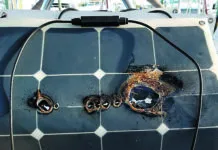
Solar power has become ubiquitous on sailboats, first on cruising boats, but now even on sport boats, where a small solar panel is the...

Green Boating From a Practical Perspective
Before diving into the topic of responsible boating, we’re required to say something about global warming and carbon. Primordial carbon was sequestered by several...
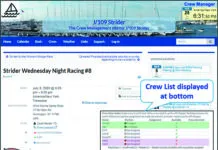
Online Crew Management Software Compared
If you are familiar with how coaches, parents, and kids coordinate details of their team sports with each other through software, you may have...

2 Weather Routing Apps Go to Sea
During a recent delivery from Punta Gorda, FL to St. Augustine, FL I had the opportunity to compare two routing apps, one of them...
Weather Routing with Iridium Go
Last month, in part one of this report on portable weather routing options, I described why I selected Iridium Go to help guide my...

Getting Weather Data at Sea
As a USCG Master who does offshore deliveries, I rely on accurate and current weather forecasts. After exploring several options, I finally settled on...
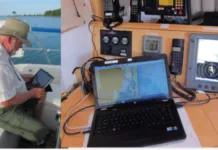
Networking the Old and New
Over the years Practical Sailor has done many articles analyzing VHF radios, chart plotters, etc. This article will discuss how to get various brands of electronics that use different communication protocols to work together seamlessly. It is proven to work on my 39-year-old personal boat and parts of this process has been used on boats I have delivered for my customers.

Bahamas for $5000? The Watkins 27 foot Sailboat
Is the Watkins 27 the ultimate small cruising sailboat? In this video, we take a deep dive into the Watkins 27 — a classic...



Latest Sailboat Review

Tartan 30: An Affordable Classic
The early 1970s was the heyday of the Tartan 30' racer/cruiser. In all, no less than two dozen boats of a similar size and type were introduced in just three years, many of them to become highly successful among sailors eager for the performance and amenities of big boats at a modest price. Among the most noteworthy and enduring of the 30-footers from this era has been the Tartan 30.