


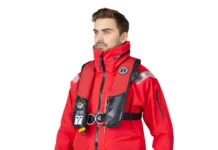
Inflatable PFDs: Know the Ins and Outs
Some sad news this past weekend from the 2018 Chicago-Mackinac race prompted me to update, and repost this advisory from 2015 regarding the care and use of personal flotation devices. It's a relatively long post, but if you depend on inflatable PFD, the text and accompanying links are worth reviewing.
Form Won’t Matter if it Doesn’t Fit
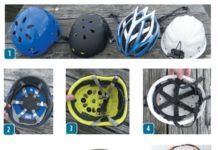
Even the best helmet will fail if poorly fitted. Expect this to take some time. Measure your head and get the right size. Loose is no good, and too small will sit high or give you a headache.

Protecting the Sailors Pumpkin
Head protection has become a hot topic among sailors. Volvo Ocean Race helmsman wear surf helmets with retractable visors. Americas Cup crew wears them, along with body armor and breathing equipment. Amateurs in high performance beach catamaran and dinghy classes are adopting them in big numbers, and some youth, college, and Olympic sailing programs have made them mandatory, like PFDs. Even cruisers are beginning to wonder about trips up the mast, heavy weather sailing, and even routine bumps. Is it the new thing, or just transition period until we work out where they make sense?
Inflatable PFDs Wont Save You Without Proper Care and Use
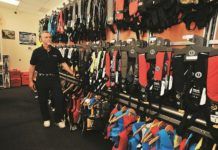
I recently interviewed Mark Bologna of Landfall Navigation. Hes a safety expert, major supporter of safety training and has decades worth of experience selecting and servicing inflatable PFDs. The first thing I asked Mark was whether or not I was overly concerned about the inflatable lifejacket issues mentioned above. His unequivocal No, and follow up advocacy for training and regular gear inspections paralleled most of the opinions above.
Rethinking the Use of Inflatable PFDs
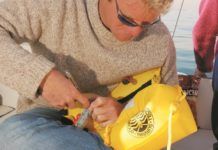
In the early 1800s Norwegian sailors started wearing cork filled vests dubbed the Seamans Friend. And over the next two centuries, life jacket design and the materials used have continued to evolve. One of the most promising offshoots has been the inflatable personal flotation device (PFD)-invented and patented by Peter Markus and one thats drawn our interest for over three decades.

Luck and the Urge to Duck
At night, when only the counted seconds between the lightning flash and thunder-crack offer any clue of what is to come, the intertropical convergence zone seems otherworldly.
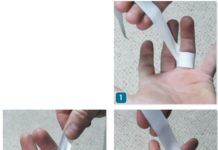
Prevention Plan for Finger Tendon Injuries
As an avid climber I pay attention to my aches and pains. To blindly ignore them puts myself and others at risk. The same is true for sailing.

Anchoring Legal Responsibility
We often get questions about anchoring rights. While it is commonly understood that the first boat arriving in an anchorage has privileges, many see this as a matter of etiquette, but it is also a legal issue. The below citations are from the case Juniata 124 F. 861 US Admiralty Court, E.D. Virginia, 1903. Other rulings we reviewed generally agree.]
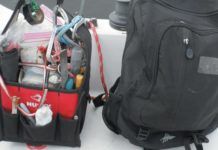
Ditch Kit for Small Sailboats
When we had a larger boat and made offshore hops, conventional ditch bag thinking made sense. But when I downsized to a 24-foot trimaran, it dawned on me that with just a little adjustment, my day bag could ably serve my near-shore sailing needs. (See What to Pack in a Ditch Kit, PS May 2014, Abandon Ship Bags: Dont Leave the Boat Without Them, PS March 2001, and Bags Fit for Sea Life, PS December 2012, and The Get Home Toolkit, October 2018.)
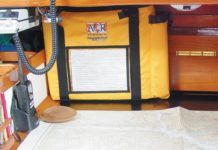
Ditch Bag for the Daysailer
A closer look inside a ditch bag for the coastal daysailer
How Long Do Sails Last?
How long do sails actually last? Sailmakers often say cruising sails last around 10–15 years, but what happens when you discover a sail that’s...



Latest Sailboat Review

Jeanneau 55 Boat Review
This recent sailboat from Jeanneau may as well be a spaceship. They’ve taken all the time-honored designs of a monohull aft cockpit and turned...