

Giving Back to the Sea
In a moment of exasperation last month, I chipped in a few bucks to a charity group that promised to blow 100 vuvuzelas for a full day outside BPs corporate office. Four-foot-long African trumpets that produce an ear-piercing moan, vuvuzelas were responsible for that annoying buzz you might of heard on ESPN during the World Cup soccer action last month. My donation didnt save the planet, but I slept a little better. The scheme, dubbed the Experimental Vuvuzela Exhalation Procedure in London and organized through www.kickstarter.com, ended up raising more than $7,000 for the Gulf Disaster Fund.
Mailport: August 2010
Letters from the August 2010 issue of Practical Sailor. Subjects include: Shore anchoring, feathering props, earth-friendly cleaning products, staying hydrated and dink repairs.
PSs Summer Reading List Picks
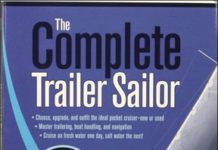
Whether youre celebrating this sailing season with weekend cruises, offshore voyages, or simply plotting for your escape, Practical Sailors 2010 summer reading list has a pick youll enjoy. This sampling of some of the latest salty reads includes destination guides, marine maintenance and boat search resources, and a true-life account of survival at sea. Featured authors include Don Casey, Chris Doyle, Roger Marshall, and Michael Tougias.

E-Learning for Sea Captains
Currently, the U.S. Coast Guards National Maritime Center has authorized more than 200 online captains schools. The courses help mariners meet the classroom and exam requirements for various credentials, ranging from the OUPV to Master Unlimited. These courses can also help them fulfill the requirements for specialized endorsements such as towing, sailing auxiliary, radar, etc. For this article, Practical Sailor examined Web-based captains courses from two companies: Explorers Guide and the Mariners Learning System. At the time PS began researching this article in late 2009, these were the only schools that offered Coast Guard-approved versions of the entry-level OUPV course, the 100-ton masters license upgrade, and the sailing auxiliary endorsement. If you are a self-motivated learner who doesn't have time or an affinity for the classroom, online courses are an excellent route through the Coast Guard OUPV testing and licensing process. In our view, Web-based courses are not the ideal. We prefer a well-paced classroom run by an exceptionally effective teacher, offering individual attention, but realize that e-learning better meets the needs of some students. For a more in-depth look at one students experience with the Mariners Learning System, check out our blog at www.insidepracticalsailor.com.
Mailport: July 2010
Letters to the editors of Practical Sailor in July 2010 include questions and comments about mildew, galley blenders, teak cleaners, online captains courses and personal hydration.

Making Captains Lives Easier
Ive always held that sailors are a different breed. Whether time on the water instills admirable traits, or good people simply gravitate to the ocean, I don't know. But even I was surprised by some new proof that the world would be a better place with more sailors. This months comparison of online captains schools (page 18) turned up an unexpected back story. Every marine education leader we spoke with praised the National Maritime Center (NMC), an entity that had once been loudly criticized for its irritating bureaucracy.
PS Advisor: Thermal-Imaging vs. Radar
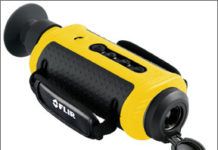
Practical Sailor tested the FLIR system (www.flir.com) in the June 2008 issue, and we tried out the company’s new First Mate recently (look for that report in an upcoming issue). While the FLIR images are impressive and offer some information not available with radar or even night-vision gear, infrared thermal imaging is no replacement for radar. FLIR bases its readings on thermal contrast, and objects that are the same temperature as their surroundings remain invisible. Take for example, a steel buoy or granite ledge that’s the same temperature as the sea surface at night. Another drawback: FLIR doesn’t offer any range or bearing information.
Are Mildew Preventers the Best Defense?
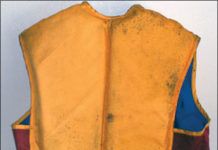
In January 2009, Practical Sailor tested 14 mold and mildew cleaners, and two household products stood out: the super-chlorinated Klean-Strip Mildew Stain Remover and Spray Nine, a chlorine-free household cleaner. After that test, several readers asked about products to prevent mold. One product in particular, Concrobium Mold Control, was repeatedly suggested for testing. We found Concrobium at Home Depot, and to make things interesting, we included two other mildew preventers that readers suggested: 3M Marine Mildew Block, a treatment formulated to follow the 3M Mildew Cleaner tested in January, and Mold Off, a product billed as an eco-friendly commercial-grade cleaner and protectant.
Backyard Boatbuilding: A Father-Son Odyssey
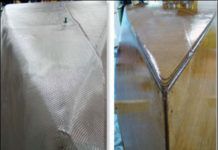
For many sailors, boatbuilding can be the ultimate do-it-yourself project. The skills derived pay off as extra dividends when it comes to repairs or fitting out projects aboard larger sailboats. And as Matt Zephry and his 12-year-old son Alex found out, sharing the boatbuilding process with a loved one is like passing along an important piece of family history. The father-son duo began their boatbuilding project without any plans. Their intention was to create a boat that was easy to row and could double as a sailing skiff for father-and-son fishing trips. Their dream boat-and first boatbuilding project-was a success, and the Z&S team launched Odyssey in time for a Fathers Day sail.
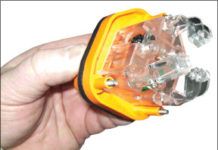
SmartPlug: Safer Power
According to multiple reports, most AC electrical fires occur at the boats shorepower inlet. To address this and other shortcomings of the standard twist-type boatside connection, SmartPlug Systems developed a new AC shorepower system that the company hopes will become the new marine standard. Loose and corroded connections are most often the culprits when overheating occurs. Corrosion typically results when moisture gets in at the plug-inlet connection, while arcing-which in turn leads to pitting, scorching, and heat build-up-is partially due to the shape and small contact area of the connector pins.
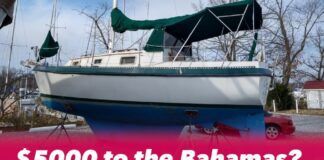
Bahamas for $5000? The Watkins 27 foot Sailboat
Is the Watkins 27 the ultimate small cruising sailboat? In this video, we take a deep dive into the Watkins 27 — a classic...



Latest Sailboat Review

Jeanneau 55 Boat Review
This recent sailboat from Jeanneau may as well be a spaceship. They’ve taken all the time-honored designs of a monohull aft cockpit and turned...