



Inflatable Boat Coatings Long-term Test Launched
Topside paints for inflatable boats, in general, have a poor reputation for durability. Practical Sailor checked out a selection of coatings for Hypalon and PVC fabrics to see which one would best stand up to the tests of time on the water-and under the sun. Testers coated PVC and Hypalon panels with dinghy paints from MDR-Amazon, Synergy Research Corp. (Tuff Coat), Inland Marine, Polymarine (Flexithane and Superflex), and Flexdel Corp. (Flexabar Buoy Coating).

Shedding Light on Safety
A recent ocean race-aboard a Cape Dory 25 sans lifelines in 30- to 40-knot winds and 5- to 10-foot seas-presented a good opportunity to sea-trial Wichards LyfSafe jackline kit. Wichard Inc., which is based in France and has an office in Vermont, has been making marine hardware and accessories for more than 30 years. Its LyfSafe kit offers a ready-to-go jackline setup and comes with everything needed to install the system.
Seascoopa Man-Overboard Recovery Gear Tested Against Lifesling2
Practical Sailor tests the Seascoopa man-overboard device and compares it to our top pick in the previous man-overboard device test, the horseshoe buoy Lifesling2. Seascoopa solves many of the problems of other parbuckle-type devices in that it is compact, lightweight and has an interlocking three-piece carbon-fiber whisker pole that holds the trapezoid-shaped net out at right angles to the boat. The ultimate goal of the device is to make it possible for a single person to safely secure and lift a much heavier person aboard with minimal effort. In addition to reducing the risks associated with a vertical lift, the Seascoopa aims to simplify making contact with the victim. Because it can be employed while the vessel is slowly making way, the recovery involves less stationary bobbing, when the boat is at the mercy of wind and waves.

Mailport: May 2010
Letters to the editor in May 2010 included topics: lightning, tsunami warnings, MOB retrieval and cam cleats.
Testing Navigation Applications for the iPhone
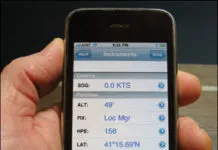
After testing navigation applications for Windows-based smartphones and PDAs, Practical Sailor focuses on three apps available for the iPhone. iNavx, Memory-Map, and Navionics can each be downloaded for a reasonable price and used as backup to primary navigational aids such as a chartplotter or handheld GPS. Cellphone-based programs are not recommended as a standalone approach to navigation, but the iPhone apps are a great way to investigate, plan routes, and set and send waypoints at a very low cost for cartography.

TruPlug is a Handy Emergency-kit Tool
Spring is here, and that means its time for systems and safety checks. Among the items that should be on your to-do list are checking your seacocks and making sure essential safety gear is on board. For us, that has always included keeping an inventory of soft wood thru-hull plugs for plumbing emergencies, but this year, we decided to also add a few of Forespars new closed-cell foam TruPlugs.
Weather Radar for Windows Phones
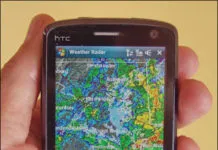
We know the drill now. If we feature a Mac product, we have to appease the PC crowd, and vice versa. Otherwise, the earth spins off its axis and our inbox starts smoking. So while the iPhone crowd gets their fill with our review of navigation apps (page 24), heres a morsel for readers using Windows Mobile devices. After testing several navigation programs for Windows Mobile handhelds in December 2009, we had the opportunity to evaluate Memory-Maps Weather Radar for Windows Mobile cellphones.
What is the Best Backup for a 406 EPIRB?
Maritime search and rescue missions prompted by distress alerts from emergency position indicating radio beacons (EPIRBs) have topped 6,000, and that number continues to grow. Although Practical Sailor recommends having a GPS-equipped 406-MHz EPIRB (GPIRB) on board, two means of satellite signaling for help is definitely better than one, and a few hundred dollars invested in a secondary tracker or beacon is worth it. In this article, we examine supplemental emergency signaling and tracking devices, including government-supported systems such as the ACR AquaLink Personal Locator Beacon, and private-network systems such as SAT phones and The Spot Messenger.
Mailport: April 2010
Letters to Practical Sailor's April 2010 issue include: MOB drills, tethers, nav lights, cleats, no-buff shines and tankless water heaters.
PS Advisor: Fires at Sea and Raft Stowage
I need to buy a marine offshore life raft, and I’ve been considering stowage spots. I considered a deck-mounted canister. But I’m concerned that my wife would not be able to deploy the raft safely. The canister-packed rafts are typically too heavy for her to lift, and I seriously doubt she’d be able to control one on a wet, heaving deck in heavy weather. I was all set to store the raft in one of our lazarettes, and then it occurred to me that the raft might be particularly vulnerable to an engine-room fire, because the genset and propulsion engine compartments are located underneath the cockpit sole, inboard of the lazarettes. Both engines are diesel, and I have an automatic fire extinguisher. Nonetheless, the fact that a fire would likely start in one of those engine rooms has me rethinking my idea about stowing the raft in the lazarette. Do you have any information on raft fire resistance?

Morgan 382 – The $30K Boat Nobody Talks About
The Morgan 382 might be one of the most overlooked cruising sailboats ever built. Designed by legendary naval architect Ted Brewer and produced between...


Latest Sailboat Review

Jeanneau 55 Boat Review
This recent sailboat from Jeanneau may as well be a spaceship. They’ve taken all the time-honored designs of a monohull aft cockpit and turned...