

Funding the Dream
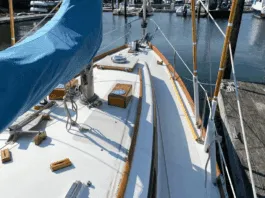
In the June 2001 issue, Practical Sailor looked at financing boats and recommended that prospective boat buyers “stick with the pros.” We recently set out to see what had changed in boat financing since the 2008 U.S. financial crisis. After interviewing industry experts and related organizations on the state of the marine lending and boating industries, we assumed a boat-buyer’s role and sought financing help from marine loan specialists, large banks, and small lenders. We looked at cash versus financing, borrowing against your home, finance products, rates on boat loans, collateral on the loans, insurance issues, pre-approvals, repossession, and borrower qualifications.

A Practical Look at Sailboat Cockpit Design
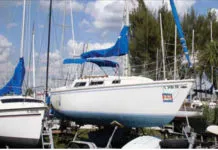
A sailboat cockpits design and layout can determine the process of boat-handling tasks, including everything from steering and sail trimming to what goes on when its time to reef. Weve found that many cockpits are optimized for at-anchor enjoyment instead of underway usability, so boat shopping should include close scrutiny of how essential sailing and boat-handling tasks will be accomplished. Make sure that the cockpit of the boat you are about to buy is in keeping with the mission of the rest of the boat-whether youre a marina hopper, a club racer, or an offshore cruiser. Our recent survey of cockpits covers the highs and lows of cockpit design for various types of sailboats, and also includes a DIY guide to rating cockpit ergonomics to help your boat-shopping process.
Build Your Own Fender Boards
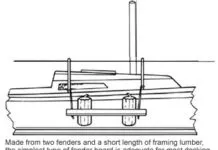
Fender boards are almost a necessity when docking against pilings because without them, no matter how you position and secure your boat and fenders, movement of tide and boat will displace the position of the fenders relative to the piles. The result dinged topsides.
Boat Review: Marshall 22 Catboat
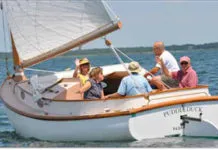
The stout Marshall 22, in production since 1965, rekindles the romance of shoal-water sailing. As a weekender or coastal cruiser, the Marshall has much to recommend it, especially to those who can fully exploit its shallow draft. Drawing less than 6 feet, the Marshall opens up new cruising grounds for those willing to put in a little extra effort. New boat prices range from the base $76,900 to around $90,000. Used boats range from around $18,000 to $70,000. Practical Sailor recommends a survey for the purchase of all used boats.
Mailport: June 2011
Letters to Practical Sailor, June 2011. This month's letters cover subjects such as: Barnacle Barrier Success, Pump Switches, Antifouling Field Report and more!
Wooden Anchor Chocks
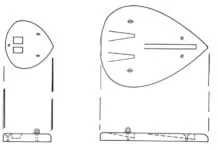
Conventional commercially available anchor chocks, though convenient, can be nasty metal toe stubbers and not particularly attractive. In contrast, wooden chocks are easy to make, handsome, and relatively snag- and toe-proof.
Upgrading the Tartan 27: The Small Cruiser as Durable Investment
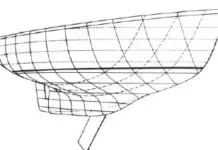
When a boat stays in production for 18 years, it is safe to assume that the builder is doing something right, and that the original design had more than a little merit. The Tartan 27 was one of the early small production fiberglass cruisers, entering production in 1961. About 700 27 s were built before construction stopped in 1979.
PS Reviews the Presto 30 Trailer-sailer
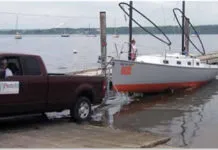
Rodger Martin’s Presto 30 is clearly a descendant of the round-bilge sharpies made famous by Ralph Munroe’s Presto and Egret. The origins of the hull and rig date back to a classic American oyster-tonging boat, the New Haven sharpie, which first appeared in Long Island Sound around 1850. Martin wanted the Presto 30 design details to include trailerability and shallow draft. The Presto is 30 feet long and 8 feet, 6 inches wide. With the centerboard up, it draws just 13 inches; with the centerboard extended, it draws 5 feet, 6 inches. The 320 feet of sail area is evenly divided between two sails set on wishbone booms, and while the designer calls it a schooner rig, the maker, Ryder Boats, has deemed it a cat-ketch rig. The Presto’s 1,000 pounds of lead shot in the keel help address this shoal-draft weekener's tender handicap, but like any shallow-water boat, the Presto will need to be actively sailed in a blow.

Construction Details Presto 30
Built by Ryder Boats in Bucksport, Maine, the Presto 30 is a lightweight performance craft built with modern composite construction and assembly techniques.

Where Credit is Due: June 2011
Letters to Practical Sailor, June 2011. This month's letters cover subjects such as: Precision Boat Works, Groco, and More!

Lithium Batteries on Sailboats: The 3 Mistakes Everyone Makes
Lithium batteries are one of the most popular sailboat upgrades today—but they’re also one of the most misunderstood. In this Practical Sailor Saturday episode,...



Latest Sailboat Review
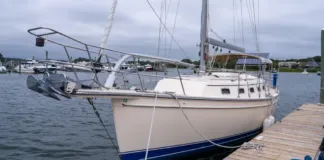
Island Packet Estero Used Boat Review
Florida-based Island Packet targets a relatively narrow niche, so the toughest competitors to its new boats are often older Island Packets. Introduced in 2010, the 36-foot, shoal-draft Estero is the company’s latest attempt to introduce a distinctive model that doesn’t stray too far from the company’s proven formula for success: moderate displacement, full-keel cruisers designed to be lived on, sailed far and in comfort, and endure the bumps, scrapes, and storms that cruising boats inevitably encounter. After sailing the Estero on Florida’s Sarasota Bay and inspecting its interior, construction, and systems, Practical Sailor testers noted that the shoal-water cruiser will appeal strongest to Island Packet fans who’ve been waiting for a shoal-draft, easy-to-sail boat that compares to the IP37 in terms of interior space. These strengths will be most apparent on intracoastal or riverine adventures like the Great Loop.