



Tips for Riding Out the Storm in Your Marina
Practical Sailor has covered storm preparation on several occasions. The two most extensive articles appeared in July 2008 Gear for Battening Down Ahead of Storms, and Tropical Storms Dos and Donts, from November 2011. We also have an online article How to Help Your Boat Survive a Major Storm. What follows are just a few tips relevant to securing your boat in a marina when you have exhausted all other safer alternatives.
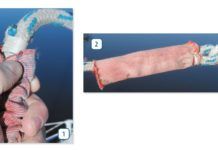
Sewn Splices Two-Year Followup
The true test of marine gear is not whether it works when installed, but rather how it functions after years in the field. To that end, we have left samples of sewing materials and sewn test samples in the sun, wind, rain, and snow for two years, and have also sailed with sewn samples in service on our test boat.
The No-sew Webbing Strap with Link Buckle
Weve sewn our fair share of eyes in nylon webbing, but heres an easy no-sew alternative for creating a webbing strap with a buckle (shackle) that can be used for easily lashing down the dinghy, a battery, or even holding up your pants in a pinch. It is based on stuff a sailor has on hand-webbing, a chain link, and a shackle-and is as strong as professionally sewn ends, plus it can be untied after loading. It has tested at greater than 85-percent breaking strength and 100 percent of minimum rate strength, and it works on both nylon and ultra-high strength materials like Vectran webbing.

Hitches to Grip Anchor Chain
When researching Changing Views on Chain Hooks (see PS, March 2016 online), we were surprised to discover that some chain hooks greatly reduced the breaking strength of a chain. Unless the hook itself broke, we assumed its effect on chain strength would be very minor.
New Mantus Swivel
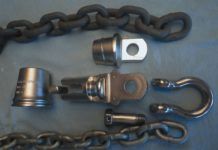
In our recent article on anchor swivels (see PS September 2015 online), we reiterated our view that swivels are unnecessary in most anchoring situations. For those who insist on using one, we suggested staying away from cheap varieties, and using only load-tested designs that exceed the rating of the anchor chain from every angle of pull. (None of the ones we have found that meet this criteria are cheap.) Shortly after that article, Mantus Anchors, a relatively new maker of anchors and anchoring accessories, introduced its swivel, which it claims is as strong as an ordinary shackle and priced in a range that ordinary cruisers can stomach.

How Well Do Swivels Reduce Twist?
We know the theory behind using anchor swivels: The swivel releases any twists in the chain when an anchored boat swings through 360 degrees or more. Still, we question the logic of using them. Our skepticism is supported by our own experience, previous testing, and input from long-term cruisers, but we wanted to devise a test to investigate chain twisting.
Changing Views on Chain Hooks
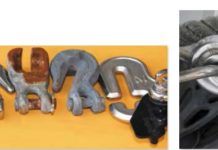
There are a number of ways to attach a snubber to an anchor chain. A gripping hitch, a soft-shackle, or a chain hook are the most common. Of the three, Practical Sailor has a strong preference for a camel hitch or similar gripping knot, but for the many who seek a faster, simpler way to attach a snubber, here is a look at chain hooks.
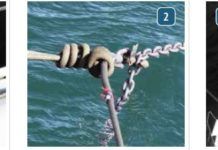
A Different Approach to the Catamaran Bridle
When it comes to snubber sizes and diameters, catamarans present special challenges, and usually require a bridle, with separate lines leading from the hook to each hull. Heres an example of the bridle-type snubber that PS contributor Jonathan Neeves uses on his seven-ton, 38-foot catamaran that he lives aboard and cruises in Australia.
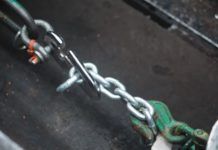
Testing the Effects of Chain Hooks
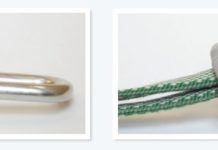
During our research, nearly every maker of industrial chain offered the same caution: Using a generic chain hook can reduce the link strength by 20 to 25 percent. The generic style of chain hook, familiar to most sailors, resembles an elongated fish hook. As we found in this test, some other hook types are potentially more harmful.

Dinghy Anchors: Big Anchor Tech Scaled Down
Sailors spend considerable time pondering their anchoring arsenal for the mothership, but what about the dinghy? With the new Mantus Dinghy Anchor, it seems that all of the design schools are now represented in small sizes. We were interested to determine which of these might offer the best performance.
Latest Logbook

Practical Sailor Logbook – September 2026
In September we tour the Hans Christian 48T — the offshore cruiser many sailors call the holy grail — walk the custom Antigua 60...

Video: RIB vs Inflatable Catamaran Dinghy
For decades, the standard cruising setup has been something like a 10-foot RIB with a 15-horsepower outboard, but lightweight cat dinghies are challenging that...



Latest Sailboat Reviews
Learning by Doing on a $5,000 Catalina 30 Mk II
When Davis’s mother started talking about wanting to do something “big” for retirement, Davis and Gloria half-jokingly threw out an idea that seemed suitably...