To provide the best experiences, we use technologies like cookies to store and/or access device information. Consenting to these technologies will allow us to process data such as browsing behavior or unique IDs on this site. Not consenting or withdrawing consent, may adversely affect certain features and functions.
The technical storage or access is strictly necessary for the legitimate purpose of enabling the use of a specific service explicitly requested by the subscriber or user, or for the sole purpose of carrying out the transmission of a communication over an electronic communications network.
The technical storage or access is necessary for the legitimate purpose of storing preferences that are not requested by the subscriber or user.
The technical storage or access that is used exclusively for statistical purposes.
The technical storage or access that is used exclusively for anonymous statistical purposes. Without a subpoena, voluntary compliance on the part of your Internet Service Provider, or additional records from a third party, information stored or retrieved for this purpose alone cannot usually be used to identify you.
The technical storage or access is required to create user profiles to send advertising, or to track the user on a website or across several websites for similar marketing purposes.


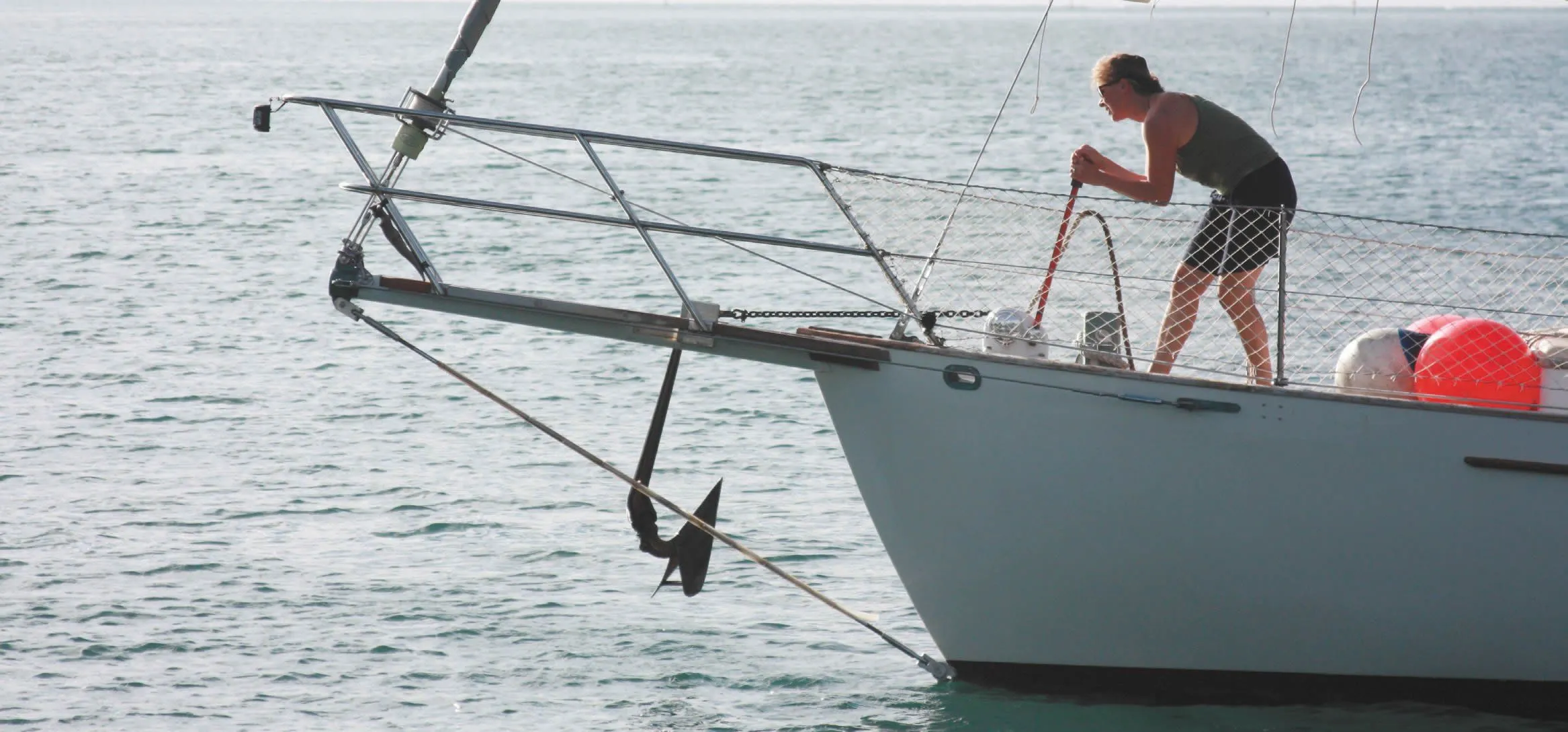






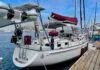


This interesting article concurs with the choices I made about 20 years ago for my 30′, 8800lb (loaded) yacht: 8mm (5/16″) galvanized chain, 16mm (5/8″) 8-plait Nylon line and 10mm shackles.
As I often sail in the western part of the English Channel where tides regularly exceed 12m (40′), I wanted to have about 75m (~250′) of rode, to be able to anchor comfortably with 5:1 scope and not be aground at low tide.
But I took an additional precaution: the chain is 30m (~100′) long, for protection against chafe on the bottom when the tide or the wind turns. When anchoring in less than 6m (~20′) at high tide (not frequent in Brittany), I insert a snubber.
My storm anchor has 50m (164′) of chain and 45m (~150′) of line.
Thanks for your comments and sharing these real-life, proven-by-experience details.
Hi, love your stuff. Of all the anchoring recommendations you all have given, what about anchoring in a fast river, such as the Columbia? Muddy bottom and fast current. For a 29 foot 8500 pound sailboat I use 3 size too large real Danforth, 30 feet 3/8 chain, and 5/8 3 strand nylon. Comments?
Would like to see an article of fast rivers
Thanks!
Danforths are good for mud, and the use in consistent river currents would somewhat mitigate the tendency of Danforths to break free and drag in shifting conditions. Sizing up also helps in fast currents. So it sounds like you’ve made good decisions, but if you are having trouble, you might try a sized-up modern scoop anchor, like a Mantus or Rocna. Search “Drew Frye” here on Practical Sailor for his latest advice articles on anchors and anchoring.
Tre Rocna anchor site has an alternative recommendation, Maybe anchors designed in the last 30 years are different.
Rocna.com>FAQs>Anchor Installation & Setup>Scope vs Catenary: What Really Matters when Anchoring with a Rocna
(PS does not allow URLs)
Their recommendation is to use only enough light weight chain to account for bottom chafe and the rest nylon rope. Rocna says that scope is more important than catenary. I’ve been successful using a similar Spade anchor with 80-100 feet of chain spliced to 250 feet of nylon rode on a 40 foot, 20,000 pound boat.