



Getting to the Top
There are times when getting to the top of a mast is a far easier solo proposition than hunting for help. The first time I saw a middle-aged man go it alone, he hoisted a 3:1 block and tackle, rigged with 5/8-inch line, up a jib halyard. At the bottom end of the rig, he attached a bosuns chair. He simply pulled on the haul line, hand over hand, to the elevation he needed, then doubled the haul line through a convenient part of the chair and tied it off. With the 3:1 purchase, he was muscling one-third of his weight.
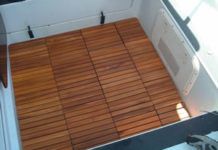
Chandlery: October 2014
The typical production sailboat comes with a molded fiberglass tub for a cockpit well, complete with an uncleanable nonskid sole. It looks dirty an hour after cleaning and debris grates under foot. Some boat owners install Dri-Deck or something similar, which can be torture to barefeet and makes the cockpit look like a shower stall. A more attractive option is beautiful owner-built teak grating; unfortunately, fabricating one of these requires considerable effort and skill. We found a more practical solution for us non-carpenters: do-it-yourself decking that costs about $7 per square foot and takes about an hour to install. The DIY Patio Deck company sells pre-assembled, snap-together tiles that resemble traditional grating. For our test boat, we chose eight-slat acacia plantation hardwood exterior tiles; many wood types and styles are available.

Mainsail Halyard Shackles
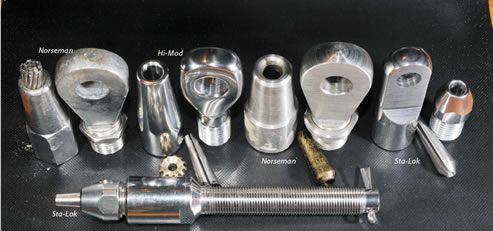
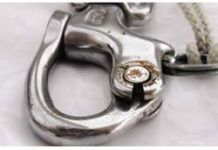
A mainsail halyard shackle needs to be as reliable as an on/off switch on a table saw. Its a one-act pony thats counted on to perform perfectly each and every time. These essential shackles fly under the radar and have become so much a part of every sailors routine that they are simply taken for granted. They terminate mainsail, mizzen, and foresail halyards aboard sailboats ranging from dinghies to mega yachts. We become so familiar with the hardware, that idiosyncrasies like a slightly bent clevis pins, damaged threads, or a misshapen stamped fork opening are tolerated.
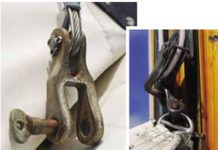
A Look at Silicon Bronze Versus Stainless Steel
Brass is a pretty poor marine metal. An amalgam of copper and the much less costly and corrosion-prone zinc, brass reign afloat, at least in load bearing hardware, was short lived. But when copper is alloyed with less corrosion-prone metals, the result can be quite different. And although brass and bronze sound confusingly similar, their attributes tell very different stories.
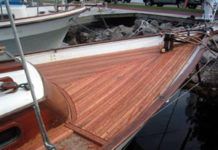
Reasons to Stick with Teak
About two miles up the Lumut River in western Malaysia, a local entrepreneur known simply as Mr. Chan ran a small mooring field with a tin-roof club house and a railway slipway. It was inexpensive, and Chans hospitality was renowned. People went to Chans for the camaraderie, for the potlucks, for a haulout . . . When we were cruising, we went for the teak. A modern teak plantation is like an M.C. Escher painting; you stare, mesmerized, down the rows of evenly spaced trees that seem to stretch forever. The ground sponges under your feet, and the branches overhead seem pruned to cast identical shadows on the ground.

The Media on the Bounty
The Oct. 29, 2012, sinking of the HMS Bounty off the coast of North Carolina during Superstorm Sandy left 14 crewmembers injured and shaken, one crewmember dead, and the captain missing, presumed dead. The 108-foot ship, designed and built for the 1962 movie Mutiny on the Bounty, sank before dawn about 130 miles southeast of Cape Hatteras, N.C., after being battered by Sandys 30-foot seas and 100 mile-per-hour winds. Several hours after the sinking, Coast Guard helicopters rescued the crew members.

Tylaska Tops in Snap Shackles
Snap shackles have become as familiar to sailors as pots and pans are to a harried chef. From dinghies to mega yachts, the function of these ubiquitous bits of hardware remains consistent. Each affords a quick and reliable means of making that all-important halyard-to-sail junction. The absolute minimalist might say that a bowline can do the same, afterall, isn't it the favored means of attaching sheets to the clew of a sail? The knots-for-snap shackles debate loses out, however, when it comes to hasty halyard swaps, not to mention the release of a loaded spinnaker guy. And even if youre not quite ready to label these shackles as essential hardware, they certainly do make life on the foredeck a whole lot easier.
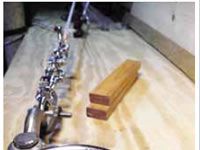
Testers Compare Swivels, Look for Pin Creep
For this evaluation, each shackle was visually inspected, component parts were measured, and stainless-steel alloys were noted. During this initial inspection, we tested how easy each snap shackle could be closed with one hand; we also repeatedly measured how easily the un-clipping process could be executed using a simple tension spring-test on the piston-pin versions and by using a height scale on the Tylaska push-to-release latching model. We recognize the importance of pin security under load and felt that the reluctance of a shackle pin to be easily pulled under load was, in many cases, an attribute.
Stainless Steel: Advantages and Ailments
When it comes to stainless steel, nothing seems more baffling than the latest array of alloys that have migrated into the marine market. Not so long ago, stainless steel was referred to as 302, 304, and 316. These differing grades of stainless varied according to chrome and nickel content and the corrosion resistance they afforded.
Looking into High Test Myth
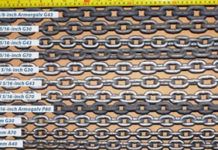
In recent years, our chain tests (see PS September 2006, July 2007, July 2008, and October 2012 online) were limited to G30 and G43 (high-test) chain. Our conclusions were pretty straightforward: We would avoid stainless steel for several reasons, the most persuasive being its tendency to fail without warning-as our test sample did. Recognizing that corrosion is what ends the life of most chains, we were not convinced that shelling out more money for the extra strength of G43 chain made sense. It lasted no longer than G30.

Lithium Batteries on Sailboats: The 3 Mistakes Everyone Makes
Lithium batteries are one of the most popular sailboat upgrades today—but they’re also one of the most misunderstood. In this Practical Sailor Saturday episode,...



Latest Sailboat Review
Island Packet Estero Used Boat Review
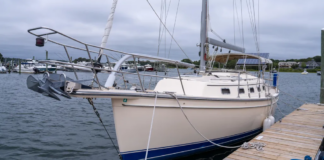
Florida-based Island Packet targets a relatively narrow niche, so the toughest competitors to its new boats are often older Island Packets. Introduced in 2010, the 36-foot, shoal-draft Estero is the company’s latest attempt to introduce a distinctive model that doesn’t stray too far from the company’s proven formula for success: moderate displacement, full-keel cruisers designed to be lived on, sailed far and in comfort, and endure the bumps, scrapes, and storms that cruising boats inevitably encounter. After sailing the Estero on Florida’s Sarasota Bay and inspecting its interior, construction, and systems, Practical Sailor testers noted that the shoal-water cruiser will appeal strongest to Island Packet fans who’ve been waiting for a shoal-draft, easy-to-sail boat that compares to the IP37 in terms of interior space. These strengths will be most apparent on intracoastal or riverine adventures like the Great Loop.