


Financing Good Ole Boats
Here is a question that has puzzled me for a long time. Many financial institutions offer financing on mature vessels but have a boat age limit of 15 to 20 years. But, if a 1978 classic-plastic boat underwent a major refit in, say 1999, does that make the boat a 1999 in the eyes of the financiers? Id like to hear tales on how others may have gotten around this rule.
All is Lost and Found
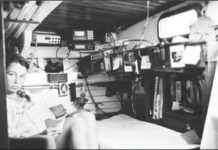
A photographer friend stumbled upon this photo of my wife, Theresa, from our cruising days. It was taken in Fiji around 1995. She doesn't usually look this serious; it probably had something to do with having two guests on board a cramped 32-foot Atkin ketch for a couple of weeks. I thought the image illustrated well something that Ive been thinking about lately: the value of resourcefulness while cruising. This notion of the self-sufficient sailor came to mind most recently while watching the movie trailer for All is Lost, in which a single-handed sailor (played by Robert Redford) tries to keep his beloved Cal 29 afloat.
Where Credit Is Due: September 2013
Alpenglow I would like to take this opportunity to express my gratitude to (and recommendation of) the folks at Alpenglow Lights (www.alpenglowlights.com). We have many of their fixtures and have contacted the company on numerous occasions for new sales, upgrades, and technical questions. Without fail, they have exceeded our expectations, from offering to perform upgrades at minimal cost, to telling us secret workarounds that enabled us to use locally sourced parts and supplies to re-invigorate their excellent lighting units.
Mailport: September 2013
In response to Whats in the Practical Sailor Toolbag? (PS, January 2012): How about a list of tools that a live-aboard cruiser should carry? Given storage, power, and workspace limitations, many of the suggested tools are not feasible and may require alternatives. For instance, I carry a major Dremel toolkit, and it cuts the very occasional holes I need for switch installation, etc., plus helps me with sanding and minor refinishing work. I use my Dewalt 18-volt right-angle drill probably twice a month for repairs and upgrades. I also use my cordless screwdriver several times per year, especially when removing and reinstalling my headliner while chasing wires. Most others are tools that don't require electricity, but there are many.
Spreader Light Test
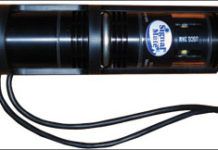
Sailors often have a love-hate relationship with spreader lights. They can turn a dark deck into broad daylight, making foredeck tasks much easier, but the downside is the pitch-black abyss that extends beyond the deck. Testers reviewed 10 LED and xenon lights designed for mast, deck, and spreader mounting. We considered useful light output, power draw, durability, and price. The test field included lights from Dr. LED, Forespar, Hella, Scandvik, and Signal Mate.
Seeing the Light on Night Vision
A few weeks ago, I found myself in the desert at night and reflected upon how much the wide expanses of sand and rock in the American Southwest resemble the sea-especially after the sun has set. Away from the loom of the lights of Moab, Utah, my wife and I stood in an empty parking lot looking to the east, where the pyramid peaks of the La Sal mountains were silhouetted by the light of the full moon, still invisible below the horizon. Wed arrived to Arches National Park at night, driving through the blackness, following our headlights to the third or fourth pullout on the winding road into the park. We missed the sign identifying the pullout, so the geographical feature that the viewpoint was meant to serve remained a mystery.
Rope vs. Wire Lifelines
Three years ago, I bought a 1968 Hinterhoeller HR28 from a local junkyard that had paid $250 for it with plans to salvage the lead keel and Sawzall the rest. Ive spent almost three years on an amateurs refit. Now, I need new lifelines. I know that plastic-coated wire is out-of-favor and that race-sanctioning bodies now approve of high-tech (and high-priced) ropes. What risks am I taking if I just use a cheaper and thicker rope-something like Samson LS 3/8-inch with a tensile strength of 3,700 pounds? Stainless-steel 3/16 lifeline wire is rated at 3,700-pounds breaking strength. Are tensile and breaking strength the same?
Mailport: July 2013
A few issues ago, you had a short article on deck hardware (blocks, traveler, cars, etc.) that included Garhauer, and you mentioned that the manufacturer offered individual parts and complete systems that allow conversion from on deck to cockpit adjustment of the car position. We recently installed the EZ adjustable genoa car system from Garhauer and are very pleased with the results. This equipment fits on existing traveler tracks, is easy to install, and performs as advertised.
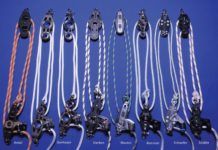
Mainsheet Tackle Bench Test
Stroll through your local marina, and youll likely see plenty of resurrected, vintage sailboats sporting fresh paint and new rigging, but all too often, antique mainsheet blocks have somehow escaped the upgrade. Part of the reason for this oversight is that the sheaves get only an occasional, no-load test spin, and all but the most severely deteriorated pass the scrutiny. A mainsheet tackle upgrade can be a relatively inexpensive investment that pays high dividends in improved sail efficiency. Practical Sailor tested eight 4:1 mainsheet tackle systems sized for 20- to 30-foot sailboats to find out which is the best. The test field included fiddle blocks and fiddle blocks with cams from Antal, Garhauer, Harken, Ronstan, and Selden.
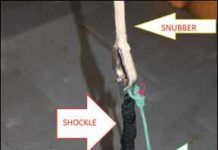
Shockles Snubber Test
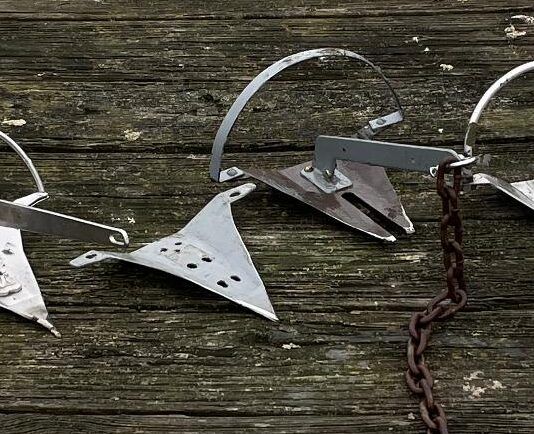
The string of anchor tests weve carried out in the last year presented a good opportunity for us to also test an anchor accessory: the Shockles anchor snubber. Makers claim it helps your anchor stay set by reducing the constant shock loads during strong winds or in rough seas. We did some real-world testing aboard a 6-ton Lightwave 38 catamaran in a range of conditions and anchorages, and we also bench-tested the snubber, using a load cell and chain winch.
Latest Logbook

Practical Sailor Logbook – September 2026
In September we tour the Hans Christian 48T — the offshore cruiser many sailors call the holy grail — walk the custom Antigua 60...

Video: RIB vs Inflatable Catamaran Dinghy
For decades, the standard cruising setup has been something like a 10-foot RIB with a 15-horsepower outboard, but lightweight cat dinghies are challenging that...



Latest Sailboat Reviews
Learning by Doing on a $5,000 Catalina 30 Mk II
When Davis’s mother started talking about wanting to do something “big” for retirement, Davis and Gloria half-jokingly threw out an idea that seemed suitably...