

In Search of the Snag-free Clew
A smooth tack can be a thing of beauty, until a sheet hangs up and ruins it. A crew member must run forward to...
Seven Lessons From a Dockside Dismasting
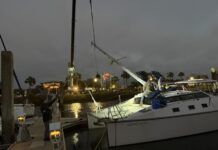
Valentine’s Day is not my favorite holiday. Now it will remain the anniversary of my dismasting rather than the day with romance, roses, chocolates...

Keeping Canvas in Tip-top Shape
Canvas dodgers and biminis are the hallmark of a cruising yacht, but they arent cheap to come by. We wanted to find the best way to protect the investment and get the most life out of the canvas. Sunbrella makers recommend that routine maintenance include frequent freshwater rinsing, plus spot cleaning, and applying a treatment to restore the fabrics repellency. In this article, we take a look at treatments designed to keep on-board canvas water repellent and looking its best. We tested seven: Aquatech, Marykate, 3M, 303 Products, NikWax, Star brite, and Iosso.
SNADs: Snaps Without Screws
No one likes drilling holes in their boat, and to drill holes for a simple snap seems like overkill. I love snaps for window...
Rope Clutches Tighten Their Grip
Like the character Jaws in the old James Bond movie, rope clutches grab hold with a ferocious bite. This month we take another look at these toothy devices and how changes in materials and design are reshaping the art of clamping down. Since our last test (see Practical Sailor March 2009 online), several manufacturers have improved their existing designs to grip better than ever. Others have unveiled completely new approaches.
Handling Anchors on Boats Without Anchor Lockers
How do you keep an anchor and its rode at the ready if you don’t have an anchor locker up at the bow? It’s...
Bluewater Design: Weight and Dynamic Stability
It is not enough for the boat to be able to handle the conditions, she also has to carry a crew and everything they...
Schaefer SnapFurl: Gear Graveyard
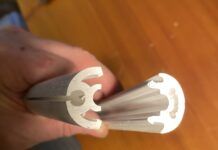
Sailors looking to add or replace a headsail furling system on a daysailer or small cruising boat in the 16-foot to 28-foot range will...
Advice on Buying a Pre-Owned Anchor
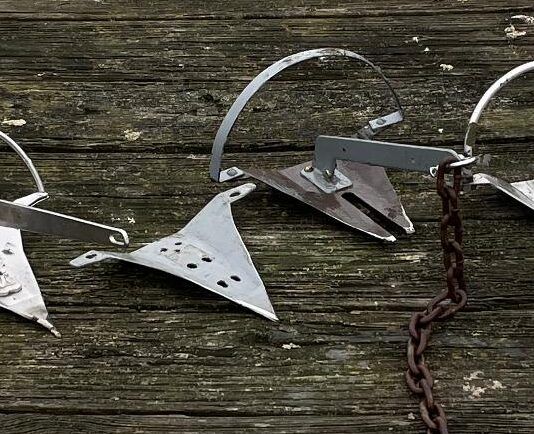
Since defects are usually obvious, anchors is one category of gear in which “what you see is what you get.” Certainly, there are counterfeits and home-welded one-offs that you’ll want to avoid, but the fakes and do-it-yourself anchors are usually easy to distinguish.
Before you buy a used anchor, you should have a very clear picture of the size, type, and brand of anchor will best suit your needs. Depending on the specific anchor you seek, you can save 30 to 50-percent on cost by purchasing a pre-owned anchor instead of a new one.
Mud Anchoring Wisdom
For as long as I can remember, and probably for generations, it has been Chesapeake Bay lore that the longer an anchor soaks the...
Latest Logbook

Practical Sailor Logbook – September 2026
In September we tour the Hans Christian 48T — the offshore cruiser many sailors call the holy grail — walk the custom Antigua 60...
Video: The BEST Sailboat You Can Buy for $35,000 – Catalina...
If you’re searching for a mid-30-foot sailboat, affordable cruising sailboat, liveaboard sailboat, first sailboat, or a capable used sailboat for coastal cruising, the Catalina...


Latest Sailboat Reviews
Learning by Doing on a $5,000 Catalina 30 Mk II
When Davis’s mother started talking about wanting to do something “big” for retirement, Davis and Gloria half-jokingly threw out an idea that seemed suitably...