


Diesel Additives
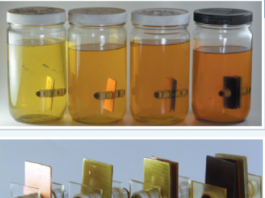
Whether by condensation, through a deck fill leak, or contamination at the fuel dock, water inevitably finds its way into our diesel tank. How much damage it does over time depends on our tanks design, material, and maintenance regimen. Can fuel additives help? We tested seven diesel additives to determine which is the best at battling tank corrosion: Hammonds Biobor JF, Valvtect Bioguard, Fuel Right, Stanadyne, Sta-Bil Diesel, Star brite Star Tron Enzyme, and Sea Foam.
Stainless-steel Hose Clamps
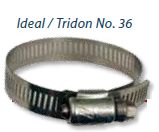
Practical Sailor evaluated stainless-steel hose clamps from 11 manufacturers, including Shields, ABA, Murray, AWAB, Breeze, American Valve, Ideal/Tridon, Trident, Koehler, and Norton. The test clamps, both T-bolt and worm-drive designs, were all size 28 (for hose sizes 1 5/16 to 2 1/4 inches) and 32 (for hoses 1 1/2 to 2 1/4 inches). Bench tests included torque to compression and torque to failure tests, and a magnet test and long-term saltwater bath test to determine corrosion resistance. All clamps were closely examined for quality of construction and workmanship, and price was considered in final ratings.
EPA Mandate Sparks Fuel-vent Filter Test
Every day, as the temperature rises and falls, gases inside your fuel tank expand and contract. The emissions released during this diurnal breathing have raised concerns at the U.S. Environmental Protection Agency, and in July 2011, the agency mandated passive carbon canister filters on all installed gasoline-tank vent lines to collect fuel evaporation emissions. While older boats are not required to retrofit, we wondered how such a filter would affect fuel quality and engine performance-and whether carbon is the most effective filter media-so we launched tests using E10, gasoline, and diesel to find out.

Engine Maintenance: Keeping Your Fuel Clean
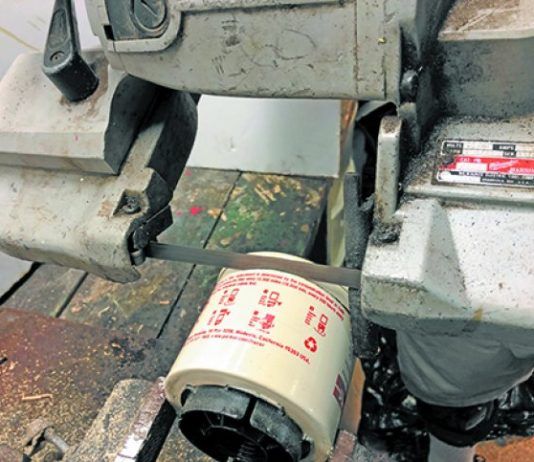
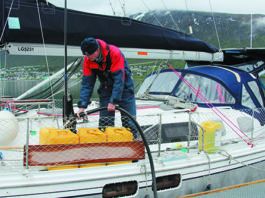
No good ever comes of fouled diesel fuel. One of the best ways to keep fuel free of contamination issues like condensation buildup—and the bacteria growth it promotes—is fuel polishing. Fuel polishing in its most basic form is the act of circulating the diesel in your tank through a filter. The Parker FPM-050 diesel fuel polisher is designed to be plumbed into the fuel supply line between the existing primary fuel filter and the engine. Testers plumbed the FPM-050 to recycle fuel into a container for several days. Testers looked at flow rates, contamination, sludge, ease of installation, and price.
Additives for ULSD Fuels
I just read an editorial in another magazine stating that next year, only low-sulfur diesel will be sold at fuel docks. They went on to say that you can kiss your old diesel goodbye and re-power. I really don’t want to do that. Our 27-year-old M-30 Universal is running just fine. It seems to me that an additive should take the place as a lube that sulfur did for the engine. What is your opinion?
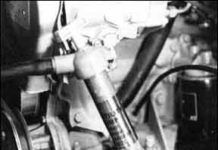
Winterizing the Engine: Maintenance that Is Truly Preventive
Winterizing an inboard engine installation means a lot more than filling the cooling system with antifreeze and stuffing a rag in the exhaust outlet. It means taking care of the exhaust system, the fuel system, the engine controls, and other components of the drive train, such as the shaft and prop. If you want to do these things yourself — none of them is difficult, only time consuming — plan on a long day of work, or perhaps a leisurely weekend. It's work that will pay off, however, both in improved understanding of your boat's propulsion system, and in money saved. At $25 per hour, the simple projects described here will save you about $200. Few special tools are required, and the only skill necessary is a modicum of common sense.

Winterizing the Engine: Maintenance that Is Truly Preventive
Winterizing an inboard engine installation means a lot more than filling the cooling system with antifreeze and stuffing a rag in the exhaust outlet. It means taking care of the exhaust system, the fuel system, the engine controls, and other components of the drive train, such as the shaft and prop. If you want to do these things yourself none of them is difficult, only time consuming plan on a long day of work, or perhaps a leisurely weekend.
Upgrading the C&C 33 Part I
In July 1990 we bought a 1975 C & C 33 to function as a test platform for Practical Sailor. We chose it above others for several reasons: The design seemed typical of many modern sailboats, with a fin keel and spade rudder and moderate displacement; C & C had a good reputation; and the price was right.
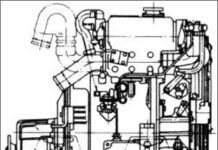
Hard-to-Find Mercedes Parts – Knotmeter Fouling
Given the number of Mercedes diesels you see on the highway, its amazingly difficult to find parts for the marinized versions of these engines. Part of the difficulty is the origin of the marine versions of the various Mercedes engines. Mercedes, like several other engine manufacturers, doesn't make marine diesels. They do, however, license other companies to do marine conversions using their engine blocks.

Practical Sailor Compares 3 Electric Outboards
When it comes to the development of electric drive systems large and small, there’s a double-headed challenge. The first is the propulsion system itself, a combination of electric motor and drive train that efficiently turns watts into speed through the water. The second part is the acquisition of power to run the motor. Electric propulsion, in our opinion, is a good fit for daysailors and marina-to-marina cruisers, so we tested a few options available to recreational boaters looking for an electric outboard: the Torqeedo T-801, which we previously reviewed; the new Torqeedo T-1003, a beefier iteration of the T-801; and the Electric Paddle, a less-expensive option.
Latest Logbook

Practical Sailor Logbook – September 2026
In September we tour the Hans Christian 48T — the offshore cruiser many sailors call the holy grail — walk the custom Antigua 60...

Video: The BEST Sailboat You Can Buy for $35,000 – Catalina...
If you’re searching for a mid-30-foot sailboat, affordable cruising sailboat, liveaboard sailboat, first sailboat, or a capable used sailboat for coastal cruising, the Catalina...



Latest Sailboat Reviews
Learning by Doing on a $5,000 Catalina 30 Mk II
When Davis’s mother started talking about wanting to do something “big” for retirement, Davis and Gloria half-jokingly threw out an idea that seemed suitably...