



S/V Balaena Skipper Andy O’Grady Offers Advice on Extending the Life of Wet-Cell Batteries
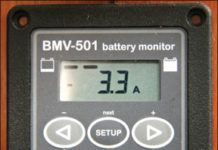
S/V Balaena Skipper Andy O’Grady has taken his double-ended cutter rig to every climate between the Southern Ocean and the Artic. O’Grady explains that imperative to onboard power management and extending battery life is keeping batteries charged and avoiding deep discharges. His tips for long-lasting batteries include keeping the discharge above 50 percent, tracking sulfation, and equalizing the battery bank. Equipment O’Grady uses are Trojan 6-volt T105 batteries, Xantrex XAR Smart alternator regulator, 85-amp Bosch alternator, BEP voltage sensing relay, a Solarex 55-watt solar panel, 75-watt Shell solar panel, and a Rutland wind generator.
S/V Balaena Skipper Andy OGrady Offers Advice on Extending the Life of Wet-Cell Batteries
S/V Balaena Skipper Andy O’Grady has taken his double-ended cutter rig to every climate between the Southern Ocean and the Artic. O’Grady explains that imperative to onboard power management and extending battery life is keeping batteries charged and avoiding deep discharges. His tips for long-lasting batteries include keeping the discharge above 50 percent, tracking sulfation, and equalizing the battery bank. Equipment O’Grady uses are Trojan 6-volt T105 batteries, Xantrex XAR Smart alternator regulator, 85-amp Bosch alternator, BEP voltage sensing relay, a Solarex 55-watt solar panel, 75-watt Shell solar panel, and a Rutland wind generator.
Troubleshooting AC Units
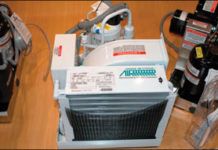
I have an air-conditioning unit with more than 14,000 BTUs. Here in Florida, with a 38-foot boat, that just doesn’t hack it. The unit’s been checked for efficiency by a technician. My prior boat (also 38 feet) had two units totaling over 20,000 BTUs. Those were effective, but that output is enough to cool a small store ashore. How are boat A/C BTUs determined? I suspect the temperature of coolant water is a major factor. Also, what is the effect when coolant water is suppressed by a clogged filter? Are they built to automatically shut down the compressor?
Solo Sailor’s Gear Box
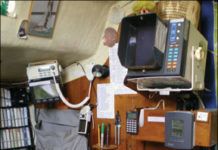
First sailed in 1978, the Singlehanded TransPac (SHTP) crosses 2,120 miles of Pacific Ocean from San Francisco Bay, Calif., to Hanalei Bay, Kauai. Practical Sailor contributor and SHTP competitor Skip Allan took time out from his race preparations onboard Wildflower—his Thomas Wylie-designed 27.5-foot sloop/cutter—to open his notes on solo sailing. Last month, the veteran offshore racer and singlehanded cruiser discussed his gear, sail inventory, storm tactics, and his approach to provisioning. This month, Allan focuses on the electronics, safety gear, and routing tactics he employs when racing alone. Allan’s onboard systems include two deep-cycle wet-cell batteries that total 165 amp hours, two solar panels, and a 35-amp alternator on Wildflower’s10-horsepower Yanmar single-cylinder diesel. He has a fixed and handheld VHF, an Icom SSB radio, a Pactor modem for weather charts and weather faxes, and Winlink email. Other electronics include handheld GPS, LED lighting, and a small portable radio.
Solo Sailors Gear Box
First sailed in 1978, the Singlehanded TransPac (SHTP) crosses 2,120 miles of Pacific Ocean from San Francisco Bay, Calif., to Hanalei Bay, Kauai. Practical Sailor contributor and SHTP competitor Skip Allan took time out from his race preparations onboard Wildflower—his Thomas Wylie-designed 27.5-foot sloop/cutter—to open his notes on solo sailing. Last month, the veteran offshore racer and singlehanded cruiser discussed his gear, sail inventory, storm tactics, and his approach to provisioning. This month, Allan focuses on the electronics, safety gear, and routing tactics he employs when racing alone. Allan’s onboard systems include two deep-cycle wet-cell batteries that total 165 amp hours, two solar panels, and a 35-amp alternator on Wildflower’s10-horsepower Yanmar single-cylinder diesel. He has a fixed and handheld VHF, an Icom SSB radio, a Pactor modem for weather charts and weather faxes, and Winlink email. Other electronics include handheld GPS, LED lighting, and a small portable radio.
Tinned Wire Myth Busted
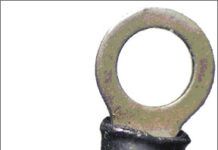
I recently purchased an older boat. Not long before the purchase, the previous owner had the wiring replaced. All the workmanship seems to be in good order, with all connections and terminations made with Ancor crimped connectors and sealed in shrink tubing. All the wiring is the proper gauge (AWG) stranded wire. The only problem is that the wire used was not marine-gauge tinned wire. I am wondering what the risks are to leaving it as it is. Clearly to rip it all out and do it again would be very expensive. I am not using the boat that much and don’t intend a circumnavigation any time soon. If the connections are well made and the wire sheathing remains intact, what is my risk of wire corrosion with the un-tinned wire in a marine environment?
Multi-stage Battery Regulators
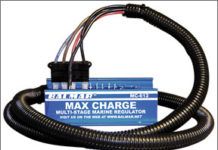
I am building an electrical system that will hopefully support wife and two teenage daughters. With this objective, I am planning approximately 1,000-amp hour battery bank. I see lots of hype about the external three-stage voltage regulators. Do they really provide more amp hours during the limited engine running time? If so, I have not found any definitive side-by-side comparisons that convince me that three-stage regulation is more efficient than a single-stage constant voltage regulator.
A Trio of Sailboat Lighting Options
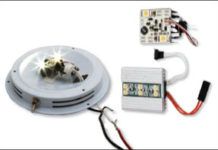
One of the fastest moving targets in boating equipment is LED lighting. While researching products for a larger test, we stumbled across three products that struck us as potential stocking-stuffers worthy of mention this month. The Lightship Solar Light, manufactured in China and introduced by Simply Brilliant in the fall of 2006, weighs only 5.5 ounces and sells for $15. Its powered by the sun, but stores that energy in a rechargeable, nickle-metal hydride (NiMH) battery. The battery, circuitry, 2x2-inch photovoltaic panel, and three LEDs (two white, one red) that produce the light are all mounted to a polycarbonate plate that fits snugly inside a housing of the same material, with a silicone O-ring to keep out moisture. That housing has three legs fitted with small suction cups, enabling the Lightship to stick easily to the underside of a hatch or inside of a portlight. Wed like to see the product modified for easier mounting in more locations.
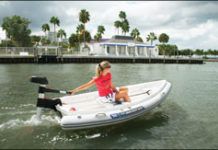
The future of marine propulsion? Practical Sailor sea-trials the portable Torqeedo Travel 801L electric...
Three things attracted us to the long-shaft Torqeedo: It is a light motor; it is a portable motor; and it is an electric motor. The dream of being able to easily tuck the daysailers engine in the cuddy cabin, or tool around silently in our dinghy, is alluring. And the Torqeedos detachable, rechargeable battery makes that possible. Unfortunately, two of the features that we find so attractive are also potential trouble spots.
Practical Sailor Tests Spray-On Protection for Electronics and Electrical Systems
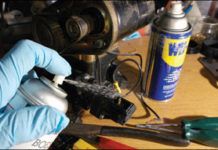
Seawater and electricity love each other with a fatal attraction, and when they break barriers to get to each other, we suffer from the destruction left in their wakes. Enter aerosol corrosion inhibitors. If you spray sensitive electrical circuitry-including printed circuit boards-with the aerosol rust inhibitors we tested, theyll prevent corrosion from interrupting circuits and water from creating circuits where they arent wanted. Our test lineup included Boeshield T-9, Corrosion Block, CorrosionPro Lube, CorrosionX, CRC Heavy Duty Corrosion Inhibitor, CRC QD, LPS 1, Strikehold, TC-11, WD-40. The TC-11 was our top pick.
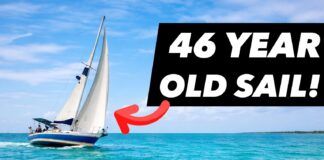
How Long Do Sails Last?
How long do sails actually last? Sailmakers often say cruising sails last around 10–15 years, but what happens when you discover a sail that’s...



Latest Sailboat Review

Jeanneau 55 Boat Review
This recent sailboat from Jeanneau may as well be a spaceship. They’ve taken all the time-honored designs of a monohull aft cockpit and turned...