
Marine Systems: Wire Exposure Test Update
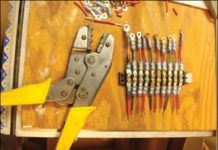
There are a variety of wire types that exceed government and industry standards for onboard wiring. Because these types of wire can be 10- to 15-percent less expensive than high-quality boat cable, Practical Sailor wanted to determine whether any of these other options would be acceptable for the cost-conscious sailor.Using a moisture chamber designed to mimic years of use in a harsh marine environment such as a bilge, PS's test focuses on the durability of tinned wire, non-tinned wire, and various wire connectors. It also examines whether using a corrosion-inhibiting product could help extend the life of these wires and connections. The test led to some definitive conclusions on which wire types are best in specific onboard uses, and also showed that long-term wire protection begins with well-sealed connections. Our July 2010 issue reported the six-month results, and here, we offer the one-year update.

Mailport: December 2010
Letters to the Practical Sailor editors in December 2010 include: paint colors, sailmaker services, bilge pumps, pest control and the Wirie v. a DIY WiFi antenna.
Marine Systems: Low-capacity Electric Bilge Pumps Faceoff
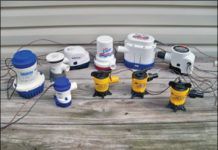
On the heels of its performance evaluation of electric bilge pumps rated at 1,600-gallons per hour (GPH) or more, Practical Sailor bench tests 10 smaller pumps rated at 1,500 GPH or less. These smaller centrifugal pumps are a good fit for small boats or as a primary bilge pump when installed in conjunction with a high-capacity bilge pump. When selecting the best overall pump from such a diverse group, a number of factors have to be considered to make the choice meaningful as it relates to the real world. In addition to performance, all of our top picks rated well for price, wiring, quality of construction, and warranty. Testers evaluated automatic bilge pumps and pumps without float switches from Shurflo, Attwood Marine, Johnson Pumps, and Rule Industries.
The Best Sailing Gear of 2010
Practical Sailor offers the annual selection of Editors Choice products for the Gear of the Year 2010 lineup. We hope the list will guide you through the dizzying array of gear at the fall boat shows, or at least help you whittle down your wishlist for Santa. The roster covers a broad spectrum of products-from gadgets for measuring speed to a performance multihull built for speed-that have bested their peers in our tests. The lineup includes gear from Spinlock, Brion Toss, Lopolight, Selden Mast, DuBarry, Keen, Standard Horizon, and Mastervolt. It covers LED navigation lights, bosun chairs, footwear for sailors, and marine electronics. Boat maintenance products from Polymarine and Interlux also made the list.

Mailport: September 2010
Letters to Practical Sailor from our readers. September 2010's topics include barnacles, teak finish, knots for a bosun chair and LEDs.
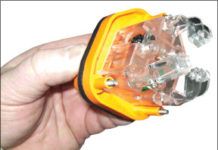
SmartPlug: Safer Power
According to multiple reports, most AC electrical fires occur at the boats shorepower inlet. To address this and other shortcomings of the standard twist-type boatside connection, SmartPlug Systems developed a new AC shorepower system that the company hopes will become the new marine standard. Loose and corroded connections are most often the culprits when overheating occurs. Corrosion typically results when moisture gets in at the plug-inlet connection, while arcing-which in turn leads to pitting, scorching, and heat build-up-is partially due to the shape and small contact area of the connector pins.
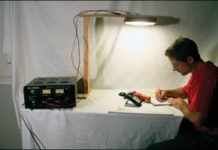
Galley Lighting
When we last dropped in on the realm of interior lighting (Practical Sailor January 2009), we looked at light emitting diode (LED) replacements for incandescent bulbs in a traditional bulkhead-mounted reading light. The test revealed some significant advances in LED technology, and those advances continue today at a lightning pace. Responding to the call for energy efficiency, LED makers are packing more and more luminosity output into smaller and smaller packages. As our reading light test showed, LED technology has developed to a point where finding LED "bulbs" that can provide enough illumination for reading is no longer an issue. Results from that comparison prompted PS to consider whether another key light on our boat-the galley light-could soon go the way of the incandescent reading light. Unlike reading lights, a galley light needs to cast a very wide beam angle to illuminate a large area, something LEDs alone are not very good at.
Details Distinguish the Best Wi-Fi Antenna for a Sailboat
Practical Sailor looked at three Wi-Fi antennas suggested by readers: the Bad Boy Xtreme from Bitstorm, Rogue Waves Wave Wi-Fi from GeoSat Solutions, and The Wirie, developed by cruising couple Mark Kilty and Liesbet Collaert. All three are marketed specifically to boaters, and they represent the two principal types of devices that users will find: USB-type units that plug into computer or laptop USB ports and Power over Ethernet (PoE) bridges that network via your computers Ethernet port to provide a pathway to the Internet.
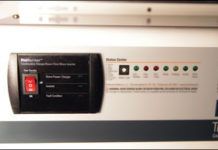
Marine Inverter-Chargers Test Part 2
The Practical Sailor February 2010 issue launched our test of marine inverter-chargers with a look at the inverter capabilities of units from six manufacturers. This report compares the battery charger functions of the inverter-chargers from Charles Industries, Magnum Energy, Mastervolt, ProMariner, Tripp Lite, and Xantrex. Our recommendations differ based on an owners needs. One unit is excellent for sailboat owners with larger AGM or gel-cell batteries who plan to expand their systems down the road, while another is better suited for those who have no expansion plans, offering a combination of lower price, features, and sophistication.
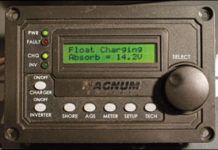
Which is the Best Marine Inverter-charger for Your Boat?
To decide which marine inverter-charger best meets your onboard power demands, first consider how it will used, how and where it will be mounted and what is required to fit with your electrical system. After testing multiple marine inverter-chargers, Practical Sailor offers this report on the units’ inverter capabilities and a follow-up review will report on the units’ charger functions. There are two classes of marine DC inverters: true sine wave (TSW) and modified sine wave (MSW). Each uses a different method to produce AC voltage. Practical Sailor evaluated modified sine wave units from Charles Industries, Magnum Energy, ProMariner, and Tripp Lite, and true sine wave units from Magnum, Mastervolt, ProMariner, and Xantrex.
Latest Logbook

Practical Sailor Logbook – September 2026
In September we tour the Hans Christian 48T — the offshore cruiser many sailors call the holy grail — walk the custom Antigua 60...
Video: The 11.5 Knot Cruiser – Bavaria Match 42 Yacht Tour
Could this be the fastest family cruiser you’ve never heard of? The Bavaria Match 42 is a genuine performance sailboat hiding beneath the interior...


Latest Sailboat Reviews
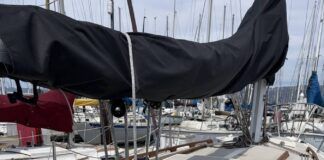
Cal 2-27 Used Boat Review
Our story begins in 1970, with the introduction of the Cal 29. Looking for something similar but a bit smaller, the company asked designer Bill Lapworth for a 27-footer, which at first was the Cal 27, a fin keel, spade rudder design with a convertible pop top; another incarnation of this basic hull was the T/2. But the concept of the 29 found its full expression in the Cal 2-27, which began production in 1975 and continued to 1977, after which it was again modified and called simply the Cal 27...again. Production of it ceased in 1986.