


Where Credit Is Due: July 2013
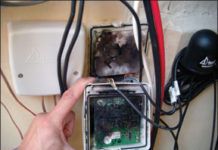
After reading your article, A Sailor's Guide to Marine Insurance, I wanted to give a shout-out to Progressive Insurance (www.progressive.com), which has insured our Stiletto catamaran and our dinghy, outboard motors, and trailers. Customer service is extremely friendly and efficient on the phone any time we want to check or change our policy. And when lightning struck the mast of our catamaran, they sent an adjuster out within two days, took care of the paper work, and had a payment sent to us within two weeks. Thats an incredible turn-around time.
Joker Valves for Marine Heads
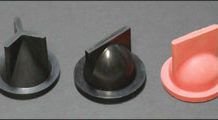
We tested nitrile and neoprene valves from marine toilet makers Groco, Jabsco, and Raritan. The Raritan and Groco are straight duckbill valves, while the Jabsco is a tricuspid valve that opens slightly wider. Bench tests and real-world testing aboard a cruising catamarn helped determine the valves chemical resistance and durability. Each valve was exposed to cleaners, oils, and other liquids that marine toilets are commonly exposed to, including urine and antifreeze.
Summer Sailing Gear
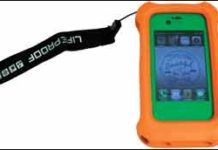
Summers warm breezes and lazy weekends have arrived, so PS testers have put together a lineup of cool toys and tools for the dog days. Tower Adventurer Inflatable Standup Paddleboard: Inflatable SUPs are sprouting up everywhere on the Internet; many boards are identical, made by different brands at the same factories in China. Quality varies. Generally, boards 6 inches or thicker offer better stiffness and stability, making them easier to ride.
Where Credit Is Due: May 2013
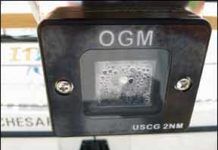
Two years ago, I replaced my incandescent stern light with a waterproof, sealed LED unit from OGM (www.miseagroup.com). This winter, while the boat was on the hard, I noticed that the seal had failed and drops of water fogged the lens. Although the LED continued to work, I was concerned that the moisture would reduce the visibility, or that the light would fail when I needed it most.

Mailport: June 2013
How thick is too thick for the buildup of old layers of bottom paint? This question arises because I have just finished painting the bottom of my boat. Even though I diligently sought out potential flaking spots with my knife, while rolling on the paint (Pettit Ultima Eco), I would frequently get a mess caused by the paint flaking off. I have only owned this boat for three years, so I really do not know how many layers there are.

The Fine Art of Sensing the Wind
The cheapest wind indicators are bestowed at birth: your nose, the back of your neck, and your fingers. Forget digital precision; these wind indicators are dialed in. They even sense changes in temperature that, in squally weather, can signal a sudden backing wind. Even the most sophisticated wind sensors can't compete with a direct skin-to-brain link. The next step up from our dermal cells is a bit of yarn in the shrouds-super light Angora wool, if youre a stickler. Here, the eyes intervene in the process, so the brain must do a bit more exercise. Well call this soft technology.

Portable Marine Toilets for Small Boats
A few steps above the old cedar bucket, portable marine toilets are essentially glorified waste containers, but a good one offers more comfort than a bucket, wont leak, and can be emptied and cleaned with limited hassle. We tested three porta potties made by Thetford-the Porta Potti 260, the Porta Potti 550P, and the Porta Potti Curve-and two West Marine-brand port potties made by Dometic/SeaLand, the Runabout 962 and the Cruiser 976. Testers rated performance, features, and construction quality.

Propane-powered Propulsion
Capt. Bernardo Herzer has been converting small engines from conventional fuels to propane since he was a teenager. In 2012, he introduced his first propane outboards, 2.5 horsepower, 5-horsepower, and 9.9-horsepower models. Practical Sailor recently tested the 5-hp Lehr LP 5.0, a water-cooled four-stroke with an electric ignition-no priming or choke required. It operates at 4,000 to 4,500 rpm at wide open throttle, and the 49.6-pound, short-shaft model pushed our 120-pound test boat at 11-12 knots. The engine can be fueled using a 16.4-ounce propane twist-on bottle like those used with camping stoves or a 5-gallon, 20-pound remote propane tank.
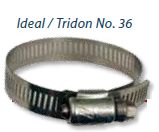
Stainless-steel Hose Clamps
Practical Sailor evaluated stainless-steel hose clamps from 11 manufacturers, including Shields, ABA, Murray, AWAB, Breeze, American Valve, Ideal/Tridon, Trident, Koehler, and Norton. The test clamps, both T-bolt and worm-drive designs, were all size 28 (for hose sizes 1 5/16 to 2 1/4 inches) and 32 (for hoses 1 1/2 to 2 1/4 inches). Bench tests included torque to compression and torque to failure tests, and a magnet test and long-term saltwater bath test to determine corrosion resistance. All clamps were closely examined for quality of construction and workmanship, and price was considered in final ratings.
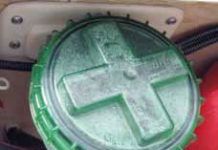
EPA Mandate Sparks Fuel-vent Filter Test
Every day, as the temperature rises and falls, gases inside your fuel tank expand and contract. The emissions released during this diurnal breathing have raised concerns at the U.S. Environmental Protection Agency, and in July 2011, the agency mandated passive carbon canister filters on all installed gasoline-tank vent lines to collect fuel evaporation emissions. While older boats are not required to retrofit, we wondered how such a filter would affect fuel quality and engine performance-and whether carbon is the most effective filter media-so we launched tests using E10, gasoline, and diesel to find out.
Latest Logbook

Practical Sailor Logbook – September 2026
In September we tour the Hans Christian 48T — the offshore cruiser many sailors call the holy grail — walk the custom Antigua 60...

Video: Why Are Tartans So Expensive? Inside the Tartan 3700
If you’re researching Tartan Yachts, looking for the best traditional cruising sailboat, comparing premium used sailboats, shopping for a bluewater cruiser, or considering a...



Latest Sailboat Reviews

Learning by Doing on a $5,000 Catalina 30 Mk II
When Davis’s mother started talking about wanting to do something “big” for retirement, Davis and Gloria half-jokingly threw out an idea that seemed suitably...