
For liveaboard sailors and long-range cruisers, marine insurance has shifted from a routine purchase to a strategic decision. The broader hull and liability market has entered a more competitive phase in 2026. New Lloyd’s syndicates and growth-focused carriers are driving modest rate reductions for well-documented commercial risks, but that relief hasn’t fully filtered down to the cruising and liveaboard segment. Fewer carriers are willing to write full-time offshore risks, and those that remain are doing so on tighter terms. Good coverage is available, but to find it you need to understand how the market actually works.
Essential Coverage
Liveaboards operate in a different risk category than weekend boaters. A policy built for recreational use won’t hold up when the boat is your home and your cruising grounds span multiple states, countries or even oceans. Here’s a run-down of the most essential coverage components to consider when choosing a policy. Talk with a trusted broker through referrals and share your aspirations so you can get the most accurate policy.
Hull: Agreed Value Only
For any cruising boat, especially those with refits or owner-installed systems, agreed value coverage is the standard. That means you and the insurer set the boat’s value upfront, and in the event of a total loss, you’re paid that full amount without depreciation. The alternative, an actual cash value or ACV policy introduces depreciation at claim time, often when the boat is least replaceable and hardest to value accurately. Don’t accept ACV coverage as a cost-saving measure. What might cost less in the beginning could cost you dearly in the event something happens to your vessel.
Liability (P&I)
Most marinas and foreign ports now expect $500,000 to $1 million in minimum liability limits. For liveaboards moving between jurisdictions, lower limits can create real access problems, not just theoretical ones. Some cruisers seek out carriers that can provide a liability only policy, not including the hull coverage, to keep prices low. This type of policy, in reality, is difficult to find. If you’re looking for one, ask your broker or agent about it directly. Keep in mind, if anything happens to your vessel, nothing is covered by your carrier.
Salvage and Wreck Removal
This is one of the most consequential and most overlooked distinctions between policies. More comprehensive policies, commonly seen through specialty markets like Concept Special Risks or YachtInsure placements, treat salvage as a separate limit not deducted from hull value. Lower-tier policies bundle salvage within the hull limit, which can gut your payout after a major loss. For offshore sailors, that difference is not fine print.
Many waterways like the Intracoastal Waterway (ICW) in the U.S. will require the cost of salvage/wreck removal be paid for by the vessel owner. Be sure to check if your insurance policy covers this cost on your behalf.
Navigation Limits
Navigation limits are tightly enforced and frequently misunderstood. Common restrictions include seasonal hurricane boundaries, geographic exclusions (Venezuela and parts of Central America appear as exclusions on many policies), and offshore distance caps. These aren’t negotiating points, they define whether you’re insured at all.
Specialty markets like Global Marine Insurance Agency or YachtInsure tend to offer more flexible cruising ranges, but only when supported by documented experience and current surveys. For example, both State Farm and Progressive have certain areas in the Bahamas that are within their navigational limits, they are not the same. If you have a claim outside of these clearly defined areas it gives the carrier room to decline coverage.
What You Don’t Need
Liveaboards tend to over-insure secondary items while underestimating structural risk. Before adding riders, consider what you’re actually buying.
High-limit Personal Effects Endorsements
Most policies include reasonable allowances already. Unless you’re carrying significant camera equipment, electronics or jewelry aboard, these riders rarely pay for themselves. Are these things you have? Or are they items you plan to purchase? If so, this coverage typically can be added later. But at the start of your policy, leave them off unless you have big ticket items on board.
Specialized Gear Endorsements
Unless you carry high-value dive or fishing equipment by trade, these add cost without proportional benefit.
Excess Towing Coverage
BoatUS or Sea Tow membership provides better value here. Towing endorsements on marine policies are frequently redundant. Furthermore, if you have a towing need, typically it is BoatUS or Sea Tow that responds. Sometimes it is best to get coverage directly from the tow company, which might have priority perks.
Inflated Medical Payment Limits
This covers injuries to other people on your boat at the time of their injury. These do not replace health insurance and are chronically underutilized. Put that premium toward core coverage instead.
In practice, a strong hull and P&I (Liability) policy with fewer add-ons performs better in claims scenarios than a policy padded with endorsements on secondary exposures.
What You Should Expect to Pay
Premiums have stabilized after several years of increases, and the broader commercial marine market is showing modest softening in 2026. For cruising and liveaboard risks, however, pricing remains elevated and the underwriting scrutiny hasn’t eased.
Typical Annual Premium Ranges (Cruising Use /Liveaboard)
Vessel Type Rate (% of Hull Value)
35-45 ft. monohull ~2-3.5%
40-55 ft. catamaran 2.5-4.5%
Bluewater/hurricane exposure Add 25-75%
Liveaboard policies typically run 20 to 40 percent higher than comparable recreational use policies. For a well maintained 40-ft. U.S. cruising sailboat, expect $2,000 to $4,000 annually under standard conditions, more with hurricane zone exposure or offshore routing. These vary with state or region. A Florida hurricane exposure can be more expensive than a Connecticut exposure. Most policies will have an accepted offshore maximum mileage, be sure to know how far offshore you are permitted. These can range from 150 to 250 miles offshore.
Key pricing drivers:
- Survey condition and recency.
- Refit documentation.
- Owner offshore experience. Logged miles matter, sometimes experience with charters matters—do you have a cruising resume?
- Seasonal location (Caribbean vs. U.S. coastal, even Pacific).
When a boat falls outside standard underwriting due to age, usage pattern or ambitious cruising plans, it moves into surplus lines markets, often backed through Lloyd’s of London. Placements through Concept Special Risks, YachtInsure or Global Marine Insurance Agency offer more flexibility in scope but come at higher cost and with more detailed underwriting requirements. For many full-time liveaboards, that’s the only realistic path to coverage.
Bundling with Other Policies
Bundling marine insurance with home and auto is frequently suggested and rarely useful for cruisers.
It can work for trailered boats, inland use or seasonal boaters who also have a home policy. For full-time liveaboards, it’s largely irrelevant: marine coverage is written separately, specialty markets don’t participate in bundling discounts, and your “home” is your boat.
If bundling is offered as a selling point, it’s a signal that the carrier is probably writing your risk as a standard boater rather than a liveaboard. It’s worth clarifying before you bind.
If you are looking to sail around the U.S. coast and have a home covered by a large carrier like Nationwide, USAA, State Farm, or similar, bundling might be an advantage, ask your agent or broker. As noted earlier, some carriers expand their coverage range that might suit your cruising goals.
Broker or Direct?
For liveaboards, this is less a preference and more a practical constraint.
Direct carriers like Progressive, GEICO or State Farm offer fast quotes and competitive pricing for qualifying risks. They generally restrict navigation, decline older vessels, and are not structured to handle full-time liveaboard exposure. If your situation is simple and your boat is newer, they’re worth a quote. If you’re planning extended offshore passages or living aboard full-time, the conversation usually ends early. Be open, advise of your plans and make sure that the agent knows they can change if the weather looks good one way or another.
Marine specialty brokers access standard admitted carriers, specialty Managing General Agents (MGAs) and surplus lines insurers. For offshore cruising, policies are often assembled from layered underwriting with custom navigation approvals, an arrangement that simply isn’t available direct. Without broker access, your options narrow quickly and often dead-end.
One practical note: Specialty marine placements often go through intermediaries who submit vessel details, survey reports, and cruising plans to multiple underwriters, sometimes including Lloyd’s syndicates to secure terms. This process takes longer than a direct quote and requires more documentation, but it’s the process that keeps harder to place boats insurable.
Start the renewal process 60 to 90 days before your current policy expires. Late submissions limit your market access.
Uninsurable Boats
This is where liveaboards feel the most pressure, and where the most confusion exists.
Common reasons for declination:
- Age over 30–40 years without documented refit.
- Outdated or missing survey—most markets require surveys within 3 to 5 years.
- Structural modifications, especially DIY ones.
- Deferred maintenance.
- Limited offshore experience.
- Full-time liveaboard status on an older vessel.
Catamarans, particularly older production models, face increased scrutiny due to claims history and repair complexity. That trend has continued into 2026.
An important distinction: “Uninsurable” almost always means “not eligible” for standard carriers. It does not mean no coverage exists. Specialty markets will often still offer terms, but with higher premiums, larger deductibles, and more restrictive conditions. Working with a broker who works these markets regularly is often the difference between finding coverage and concluding incorrectly that none exists. Talk with fellow boaters, get on your boats social media network. There are fellow boaters that have had great experiences with brokers and also not so great experiences. Take everything with a grain of salt and make some calls.
Best Policy Types by Situation
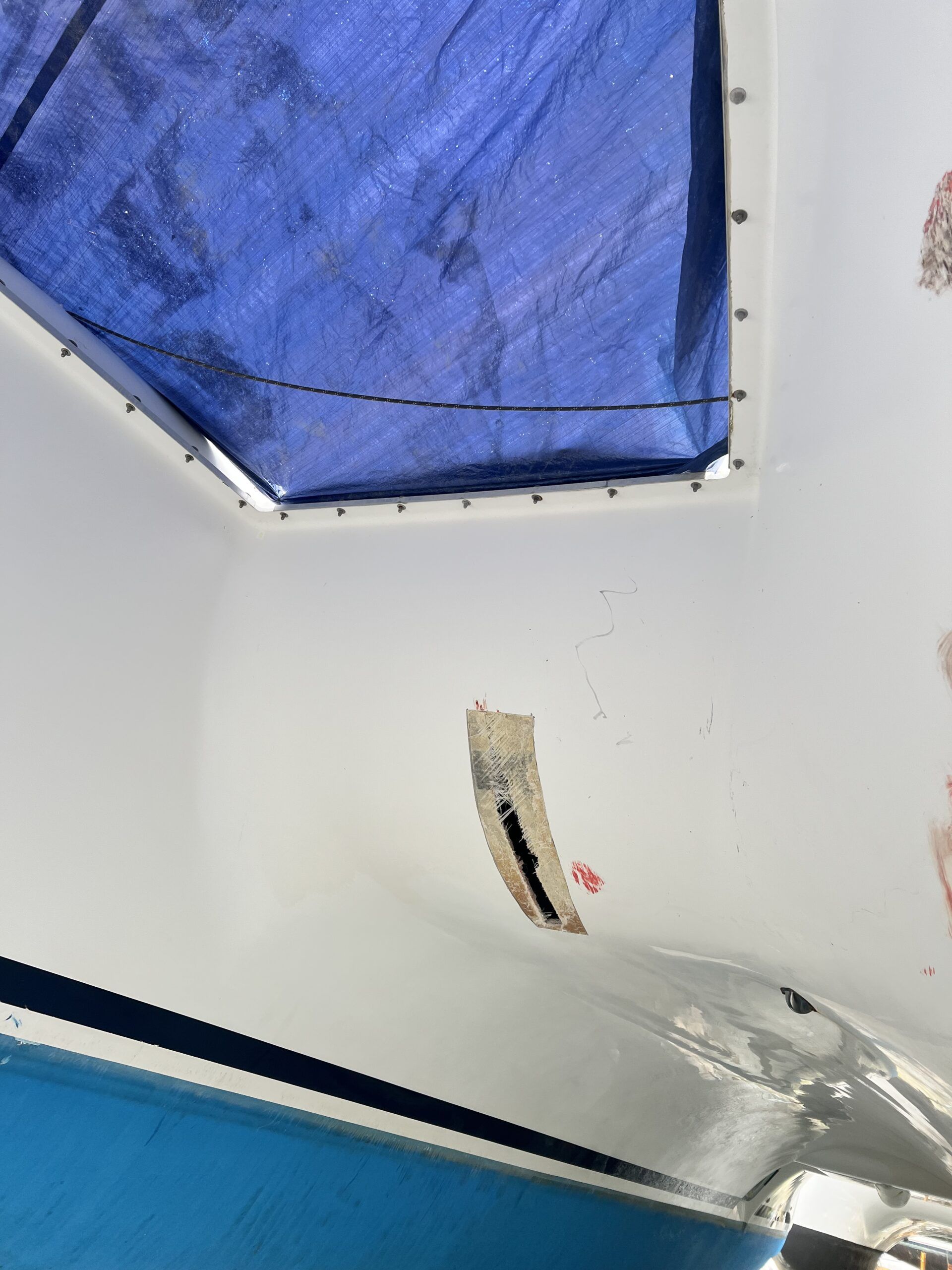
Rather than naming a single best carrier, it’s more useful to match policy structure to actual use case. The right policy for a marina liveaboard in the Chesapeake looks nothing like the right policy for a bluewater passage-maker.
Coastal Liveaboards or Weekend Cruisers (Limited Range)
Some standard carriers still apply here. These policies have lower premiums, tighter navigation limits and less complexity. If you’re within U.S. coastal waters and not moving frequently, you have more options than offshore cruisers.
Caribbean Cruisers (Seasonal Movement)
Specialty markets dominate this segment. Hurricane clauses are critical! Read them carefully, including how “named storm” deductibles are structured and what your haul-out or repositioning obligations are during the season. If you are in a zone during hurricane season and damage not related to hurricane happens, is everything denied? Or would you still be covered?
Full-time Bluewater Cruisers
Surplus lines and Lloyd’s-backed policies are the standard here. Flexible navigation terms are essential. Bring a current survey, documented offshore experience, and a realistic cruising plan. Underwriters writing this risk want to see that you know what you’re doing. Put together a cruising resume with classes taken, miles traveled, and boats owned and operated.
Older Refitted Boats
Highly survey dependent. A well-documented refit can make an older boat insurable where a neglected one cannot be placed at all. Keep records. Older boats are often placed through brokers into specialty markets with higher deductibles.
Catamarans (40–55 ft. Range)
Increasingly routed to specialty carriers regardless of age. Structural surveys and maintenance records carry significant weight. Budget for higher rates than comparable monohulls and expect more underwriting questions.
The Bottom Line

For liveaboard sailors, marine insurance is no longer a commodity purchase. It’s a negotiated contract shaped by your boat, your experience and where you’re going.
The policies that hold up when it matters share a few consistent traits: agreed value hull coverage, salvage treated as a separate limit, navigation terms that actually match your cruising plans, and an underwriter who understood what they were writing when they bound it.
The ones that fail often look similar on the surface until there’s a claim. Make sure email trails show questions and clear answers by agents or underwriters so there is less gray area. Some of the large U.S. national carriers are going to be better when it comes to claims within their policy waters and limits, know them well. Many times cruisers get frustrated with paying premiums for a carrier like Concept Special Risk, however when a claim happens, they will follow the policy and pay for losses per the contract.
Understanding that difference is what separates a workable policy from an expensive mistake. When you get your policy, use your preferred AI interface and put your policy into it. Ask things like:
- What is my coverage area?
- What are the deductibles and when do they apply?
- Do travel restrictions pertain not only to waters but time of year and hurricane season?
- Is there lightning coverage and is there a separate deducible?
- How do you file a claim should one happen, and what are the steps the carrier might have outlined in the policy that you should take?