

Sailing is actually getting easier as I get older, in part because I make fewer mistakes, but also because I’ve added some old fart stuff to my quiver. Boarding tackle, a longer boarding ladder, tied-off boat yard ladders, various forms of body armor and keeping fit will keep us old salts sailing long into the future.
Boarding Tackle
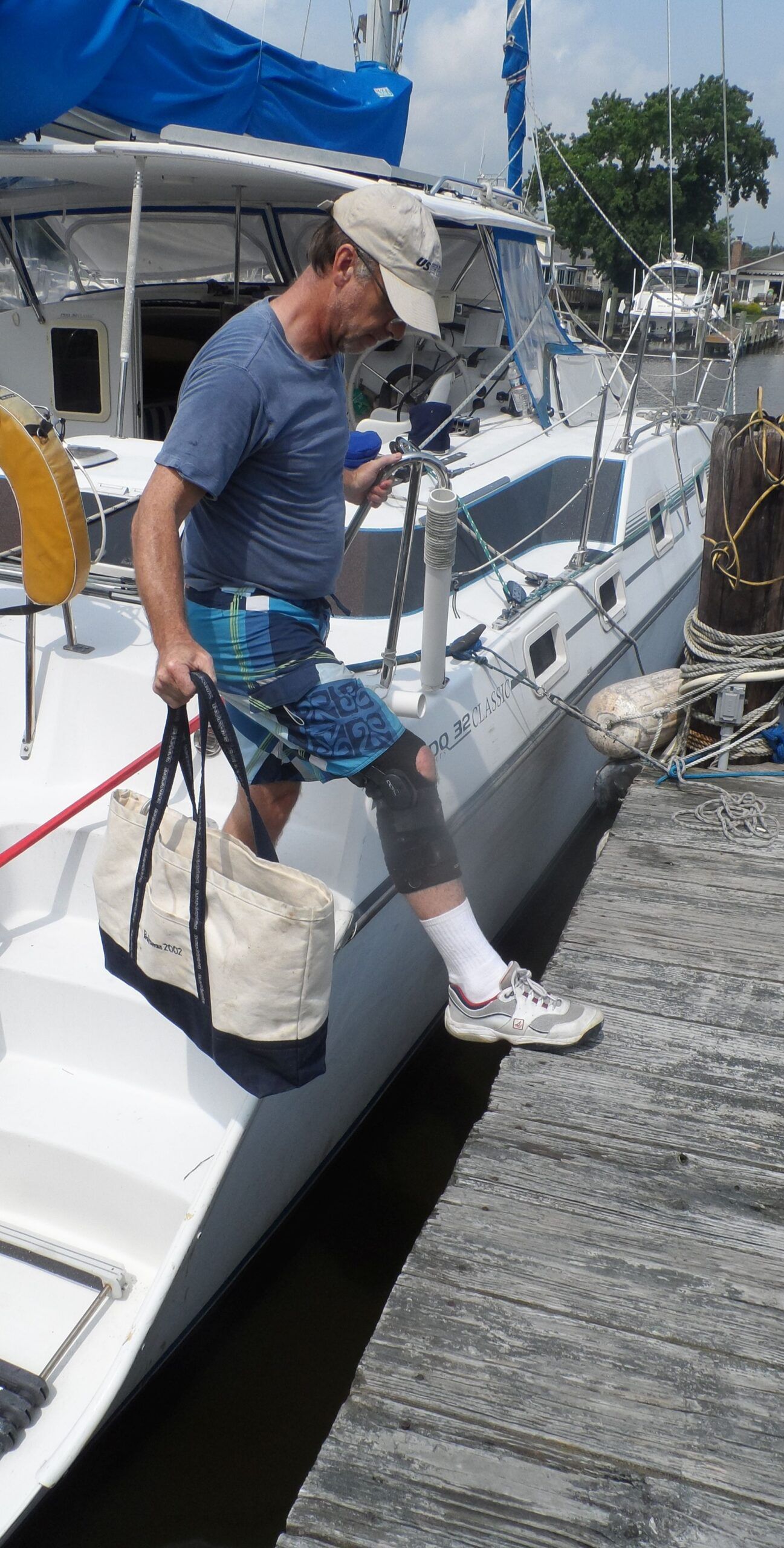
For those of use that dock between pilings with non-floating docks, it’s a must to tie the boat a considerable stride from the dock. With empty hands or light pack on your back, no problem. But with old knees, poor balance, or even a young guy making repeated trips to the car or loading stores, pulling the boat in snug against fenders is both safer and more energy efficient. A small tackle or even short line with a clip does the job.
Boarding Ladder
ABYC and ISO both require the ladder to have at least two full steps below the water (22 inches submerged) and to be deployable by a swimmer without assistance. Three steps (34 inches submerged) is recommended. We agree. The minimum is really only for a young, fit person, in a bathing suit; if tired, wearing fins or clothing it will be a struggle.
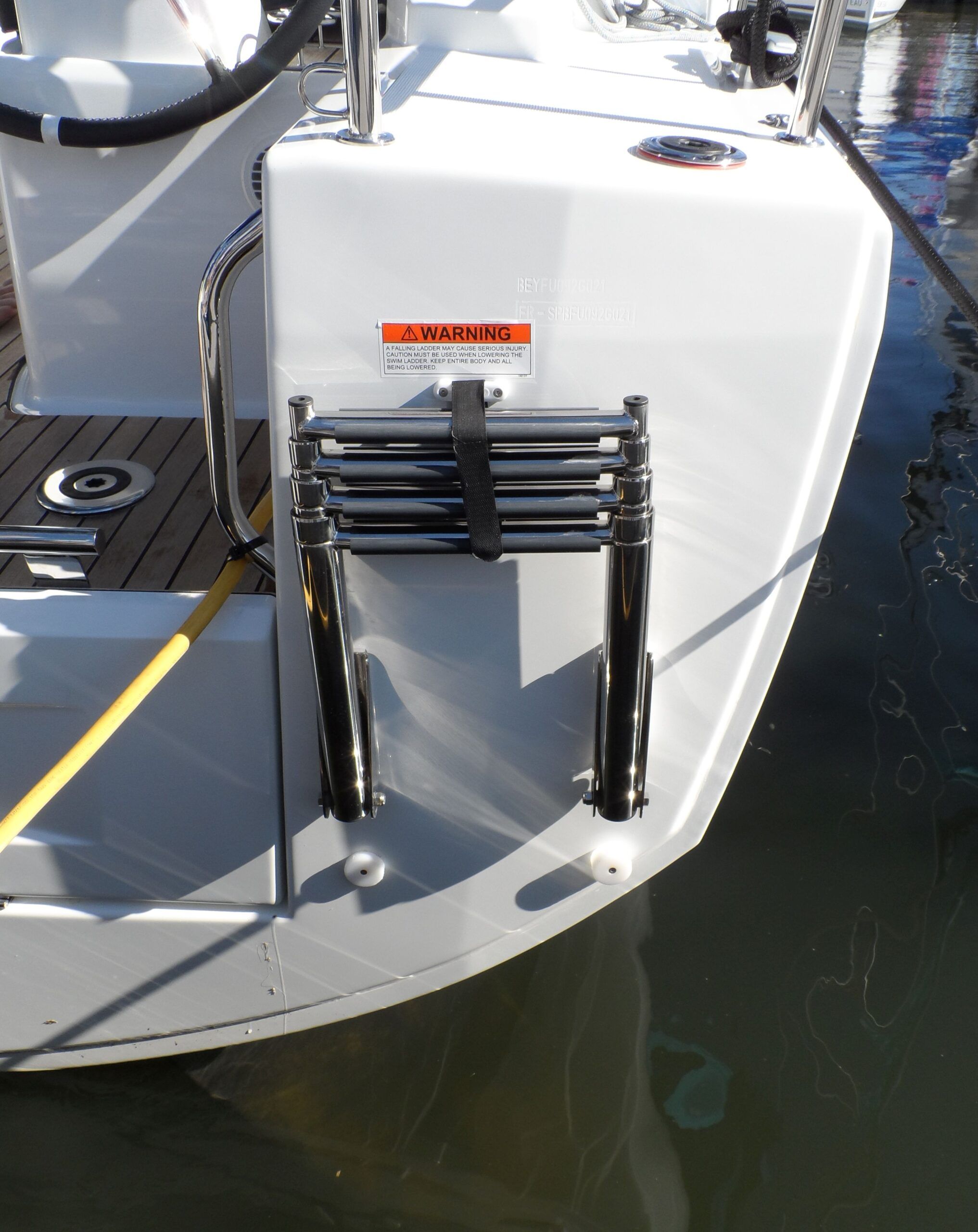
Starting 40 years ago, I added a third step to every boat I have owned, at first for my parents, then for my wife (knee replacement), and soon enough, for me (old injuries). Heck even when I don’t need a third step—as a climber I can board some pretty high freeboard without a ladder—they are nice for getting used to cold water, burping the air out of a dry suit, and when I’m tired from scrubbing the bottom.
Boat Yard Ladders
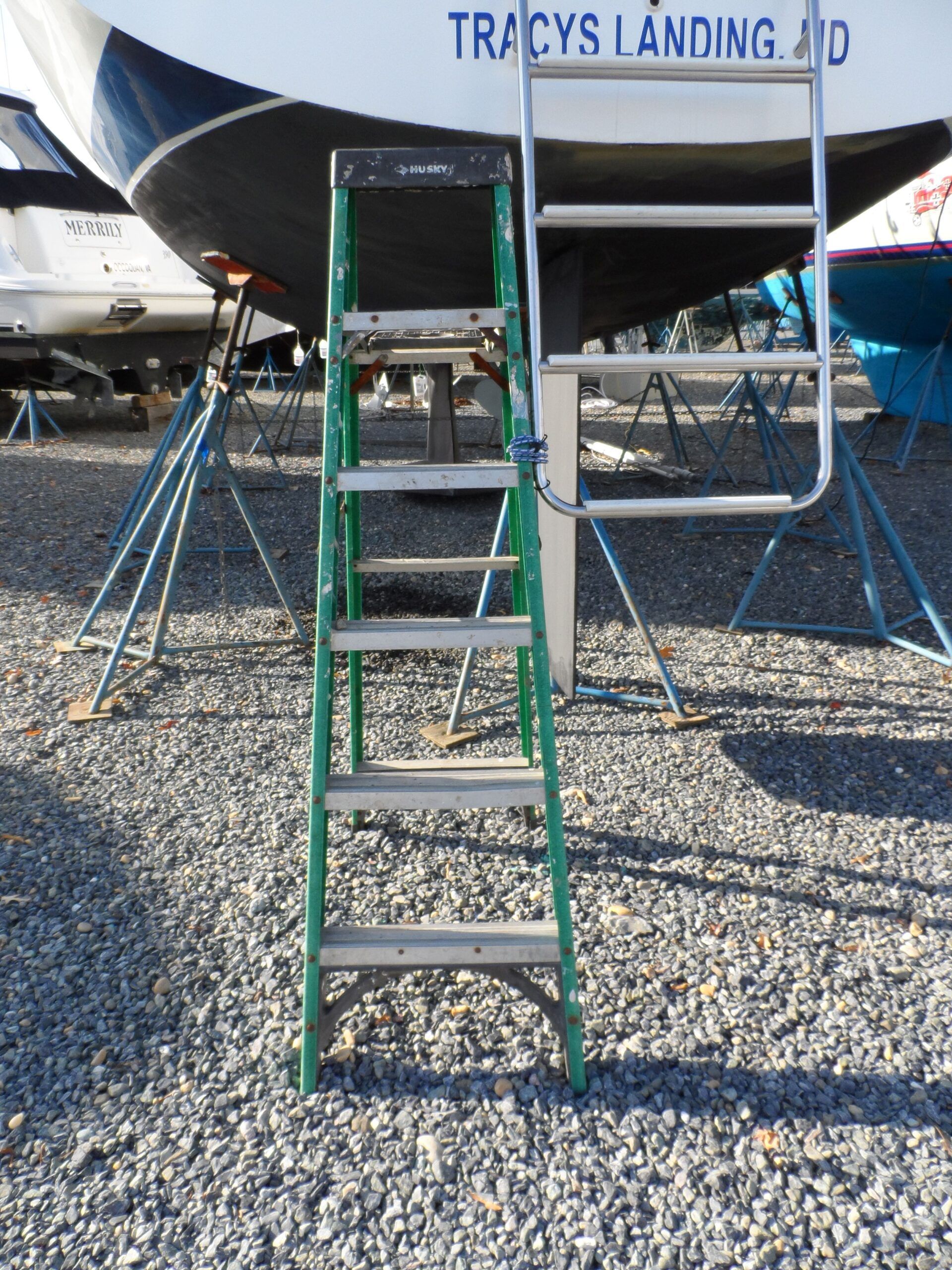
Tie it off. Every time. I have known several sailors to sustain career ending injuries because a ladder slid out. Perhaps they overreached or there was lumpy gravel under the feet. One moment they were varnishing the toe rail. A few months later the boat was up for sale because they landed badly and their shoulder or back or hip was shot for good. Leave a short length of rope or a loop with a climbing carabiner on the ladder permanently as a reminder. You will actually save time by moving more confidently.
Armor
I believe in preventative padding and bracing.
Knee Brace (or other)
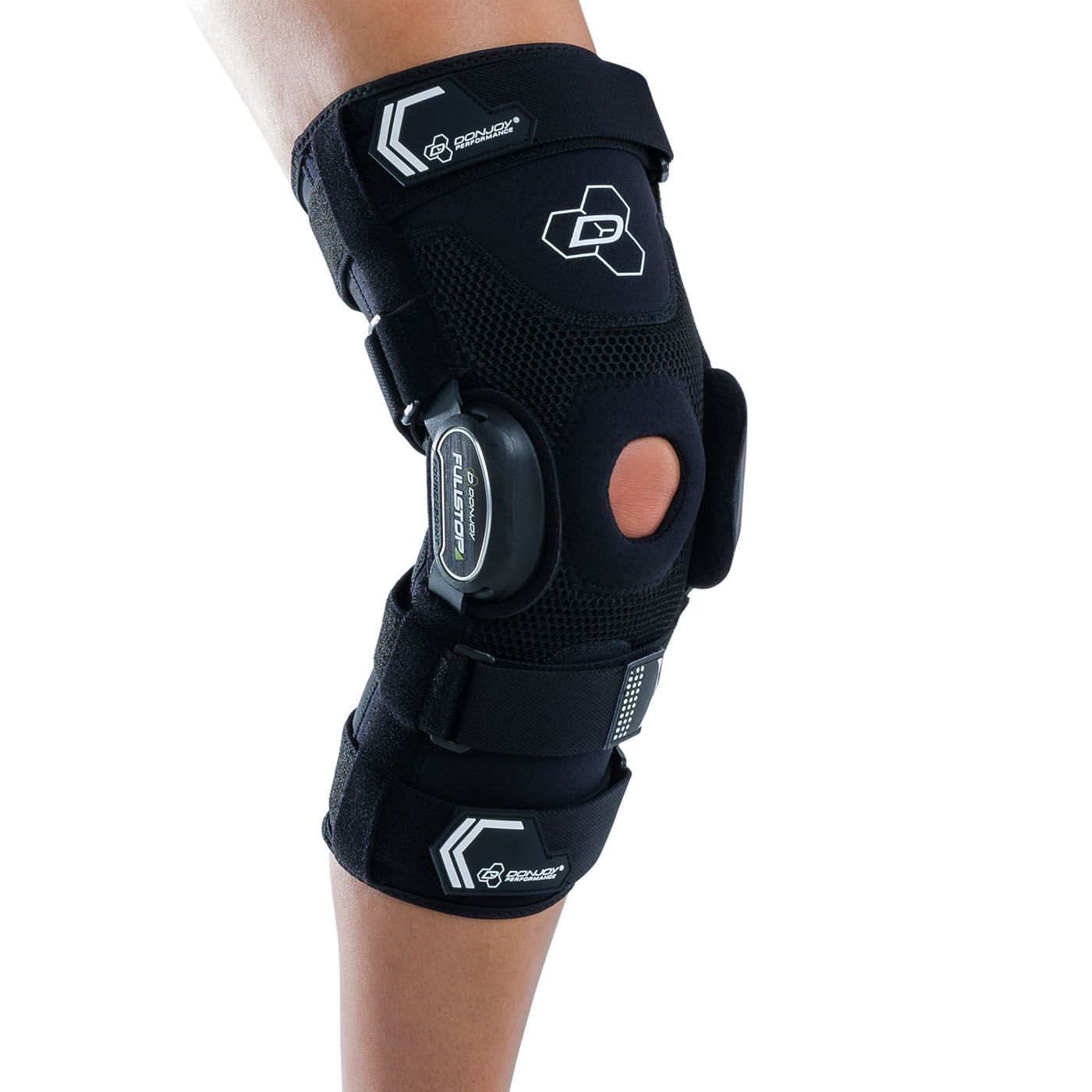
If you have an arthritic knee or other joint, don’t cheap out on a drugstore brace. Talk to your doctor. They may prescribe something or they may just give you advice. I’ve had multiple knee injuries, and while I do not need or want nor would benefit from a brace during normal activities, I wear a substantial brace during any vigorous activity, such as mowing the grass, hiking trails, vigorous maintenance around the house or the boat, shoveling snow, and yes, sailing.
My favorite (I’ve worn several out many over 30 years), is the Don Joy Bionic Full Stop ($260), but get what you’re your needs. It’s much cheaper than a knee replacement!
Gloves
Injuries and tendonitis come on faster. See “The Best Gloves for the Boatyard” and “Prevention Plan for Finger Tendon Injuries.”
Knee Pads
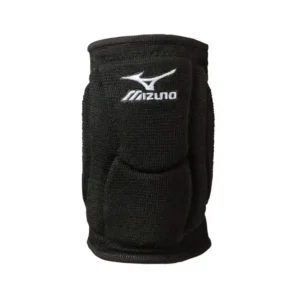
They’re not just for racers. They are for all sorts of boatyard work. Use the hardshell type on gravel. I’ve used the Husky Soft Cap ($15 from Home Depot) for countless hours on my knees inspecting the insides of million-gallon steel tanks and working on keels on boatyard gravel. The volleyball type are non-marring for use on-deck and in the cabin.
The Mizuno T10 Plus ($20) is as good as any. Also cushions and rolled up towels for kneeling and rolled up towels to cushion the ribs during boat yoga in a locker. But knee pads are best.
Bump Cap Liners
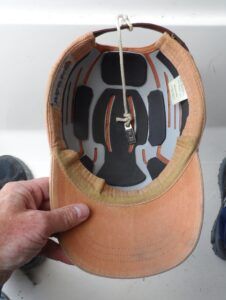
When I was a kid (less than 40) I had hair, now not so much. My favorite cap for the last five years has sported a Skullerz 8945 bump cap liner, supplemented with some self-adhesive polyurethane foam for extra padding and to keep it on my head. $6 on Amazon. These don’t give hard hat-like protection, rather they are intended for work in tight spaces where knocking your noggin is the primary hazard. They prevent minor scalp cuts and bruises. The updated Skullerz 8945 F(x) ($7) improves the ventilation and crown protection. A new standard came out in January 2025 (ANSI/ISEA 100) and it is generating innovation. We’ll be looking at these in the future.
Keep Fit
Physical therapy and exercise are for life. Not just injury recovery, but also injury prevention, and even more so as we age and tend to avoid the regular movement that life used to provide. The result is snow shoveling heart attacks and spring boat yard accidents; we’ve forgotten how to move and need to learn a more moderate but steady pace of work. Our balance does not just “go,” we stop using it.
I’m not a proponent of working out at the gym and trying to stay 20 or even 40, but regular walking or cycling is mandatory, and a stretching/strength routine that includes hamstrings, hips, core, and back rotation will keep you moving. You’ll be slower and weaker, but without pain or increase risk of injury or accident.
Curiously, I come back from sailing without the bumps and strains common in my youth. Some of it is avoiding dumb stuff, and some of it is actual wisdom.







Thank You all, (the ‘testing team’ especially), for the work you do. It helps boaties more than you know. Thanks again, ‘B J’. P. S. What a great job, to (you) do & share.
As U entry & or leave U’re boat, U can step,(carefully, with 80 Kg? body weight force), on a mooring line, to bring yacht in closer, but ‘hold on’, to keep balance, (yacht will! move). P.S. Multihulls are straighter sided. ‘B J’.
Yes, that can work. Particularly for boats with a piling near the boarding point, a simple loose pull-her-over line can also be useful. Avoids the balance problem.
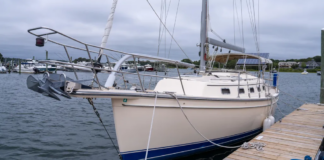
Also notice the permanent fenders, so that I can safely pull it in snug.
At 78, I am a bit creakier than i was decades ago, but I follow Drew’s advice by keeping activity in my life. As a full time employee still, I commute to work by bike and try to do lots of walking and activity involving the upper body as well. Keep moving! I was sailing single-handed yesterday.
I like your ladder idea, now on my boat, I have added Davits to the stern, which make’s it very nice to lower the dink, but it blocks the swim ladder. So now I wonder if on a long passage, should I place the dink on the foredeck to make sure the swim ladder is accessible?
Most solo sailors wear (self inflating) buoy ance & two tillers lines c/w end floats, could have life ring & or danbuoy set to pull off the deck with a pull. A comfortable Air Sea Rescue colored back pack could have a (last hope & chance @) life saving gear & water, meds, Flares, gar bag, ( to reduce heat loss), EPIRB etc. for 2nd chance if MOB. Prepare for the worst, & hope (& pray?), for the best! ‘B J’.