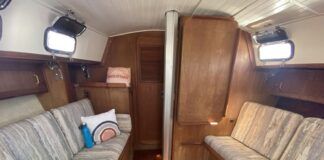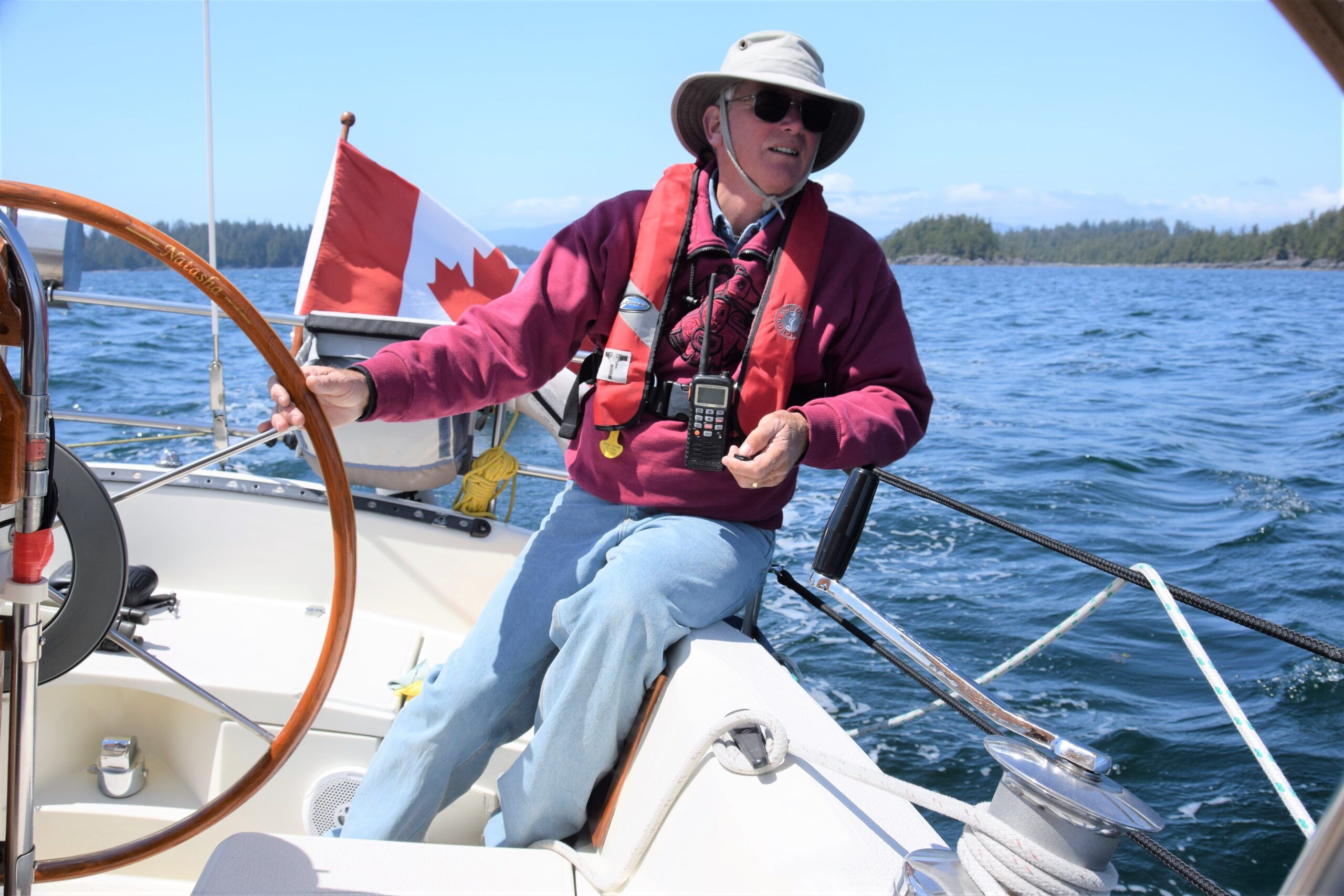
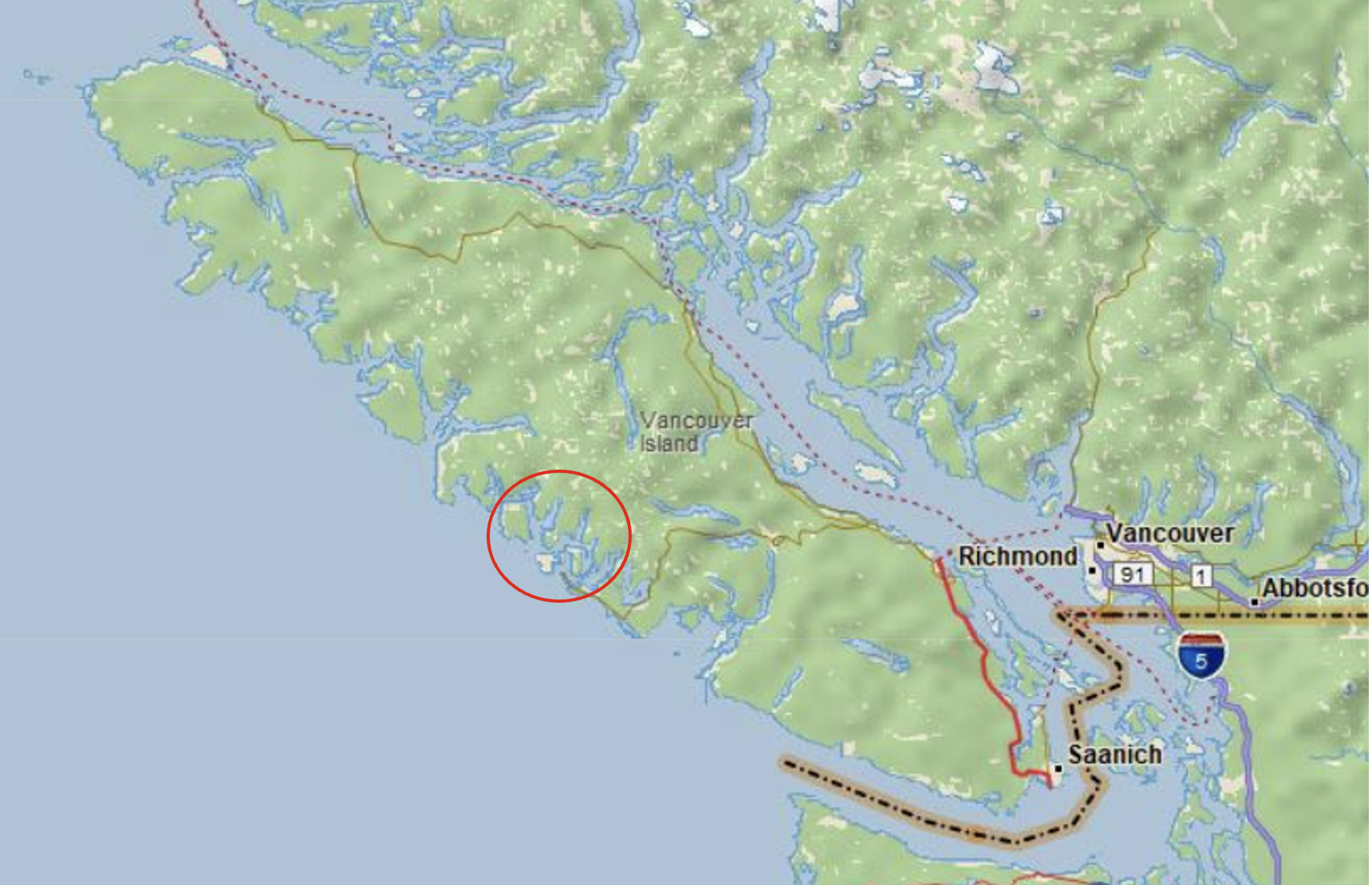
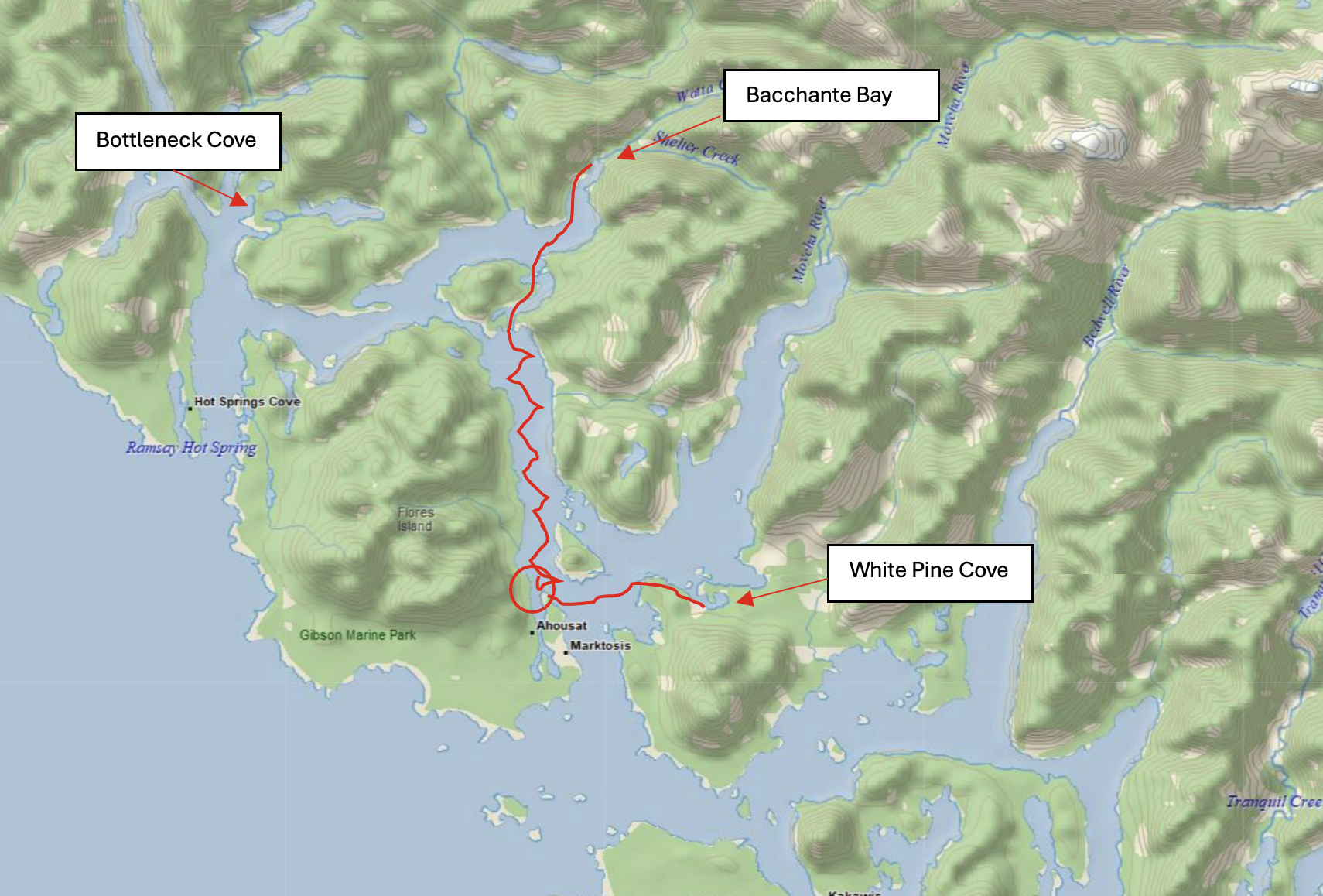
A few years ago, I was fortunate enough to be spending a few weeks aboard our 1978 Islander Bahama 30 Natasha cruising the west coast of Vancouver Island. Sailing singlehanded, I was to get Natasha out to Barkley Sound, a sailor’s paradise on the rugged coast, to be joined by my wife Carey and granddaughter Natasha at the village of Tofino. With time to spare I had already sailed north beyond Tofino visiting popular Hot Springs Cove with its sulfuric falls and pools. Sailing south in the protected waters behind Flores Island, I anchored in Bottleneck Cove and Bacchante Bay under brilliant sunny skies and pristine nights, all without seeing another boat.
From Bacchante Bay I powered through narrow Sulphur Passage into Millar Channel and was soon tacking to windward under dazzling blue skies and diamond dappled water. There wasn’t another boat in sight. The morning winds were light with Tofino still miles away. The scenery was west-coast spectacular, majestic mountains draped in green forests, the open Pacific Ocean visible in the distance. All was good with the world!
Rising Winds
The warm breeze increased as the morning turned to afternoon, the ripples evolving to the occasional whitecap. The rising wind was typical of the weather pattern on the west coast and totally expected. With the toe-rail being threatened by the rising waves with spray flying over the foredeck, I was considering a reef in the main.
Looking ahead I could see calmer waters at the mouth of Matilda Inlet near Ahousat, a small indent just off Millar Channel. I could see ripples in the much calmer waters protected by high bluffs. An opportune place to put the reef in the main. Sailing into the wind-shadow of the bluffs was like hitting a wall, the boat popped up right and the sails began to slat gently as Natasha coasted to a stop. The cliffs of the shoreline were close, and submerged rocks were even closer. But reefing the main could be done in no time from the safety of the cockpit. I had perfected that technique many times in the past.
A Reef Gone Awry
With single line slab reefing I had to step forward of the wheel and reach under the dodger for the main halyard and reefing line, handling both lines at the same time. As I stepped forward and reached under the dodger a violent gust slammed the sails, the boat heeled dramatically. Yikes! I scrambled back behind the wheel, releasing the genoa sheet as the wind again evaporated.
I stepped forward again, just as another violent gust slammed into the sails from the opposite direction, the bow spinning towards the nearby shore. Bashing my shins on the cockpit locker I swore my way back behind the wheel. I released the main sheet, spinning the wheel to get the boat back under control. I was now far too close to the cliff and rocks to ignore.
With the genoa flapping violently with the gusts, sheets slamming against the cabin top in a whirlpool of wind, I elected to start the engine and power out of danger. I cranked up the throttle and pointed the bow towards deeper water, engaging the auto pilot. I quickly moved forward and put the reef into the main, sheeting the boom in for some power and then getting back behind the wheel to control the still wildly flapping genoa. With the main pulling hard, I throttled the engine back to idle and began pulling the leeward genoa sheet. The unexpected sound of the engine alarm was faint above the wind noise.
Engine Trouble
It took me a moment to figure out what the alarm was. The little Beta diesel has never quit on its own. I turned off the ignition, silencing the alarm, and took stock of the situation. I was temporarily out of danger of the nearby shore, the reefed main pulling hard as the boat sailed away from the shelter of the receding cliff. I would have to tack soon, the opposite shore of the inlet with a gravel beach and submerged rocks was approaching rapidly.
I reached for the windward genoa sheet to prepare for the tack. But it wasn’t in the cockpit! I followed the sheet from the wildly flapping genoa tack, over the side, then back aboard to the car on the side deck, the stopper knot jammed against the block. Oh no! During all this frantic action the sheet had looped over the rail and, presumably, tangled in the prop. The end was still aboard at the block. I tried pulling it but to no avail, it seemed set in concrete.
Reversing the Problem
Now I had a real problem. I couldn’t control the genoa with the sheets, and I couldn’t furl it with the sheet stuck. I had to tack onto the stuck genoa sheet real soon, the wind was back up to strength and the beach was getting close. The engine was not an option. Talk about “stuck between a rock and a hard place.” Out of options, I was reluctantly reaching for my emergency knife to cut the genoa sheet when I saw the transmission lever was still in forward. I quickly considered turning the engine on and momentarily using reverse. Perhaps the sheet would untangle?
On a hope and a prayer, I flipped the lever into neutral before I started the engine. The sheet suddenly came free, the genoa pulling viciously in another violent gust. I was stunned. I quickly got the sail under control and tacked away from the rocks. I couldn’t believe my luck. There were stains of bottom paint on the sheet, but no other apparent damage. Back to sailing, hard on the wind in what was now quite choppy conditions, my destination about two miles away to windward. Adrenaline was surging through me—so was relief.
Inspecting For Further Damage
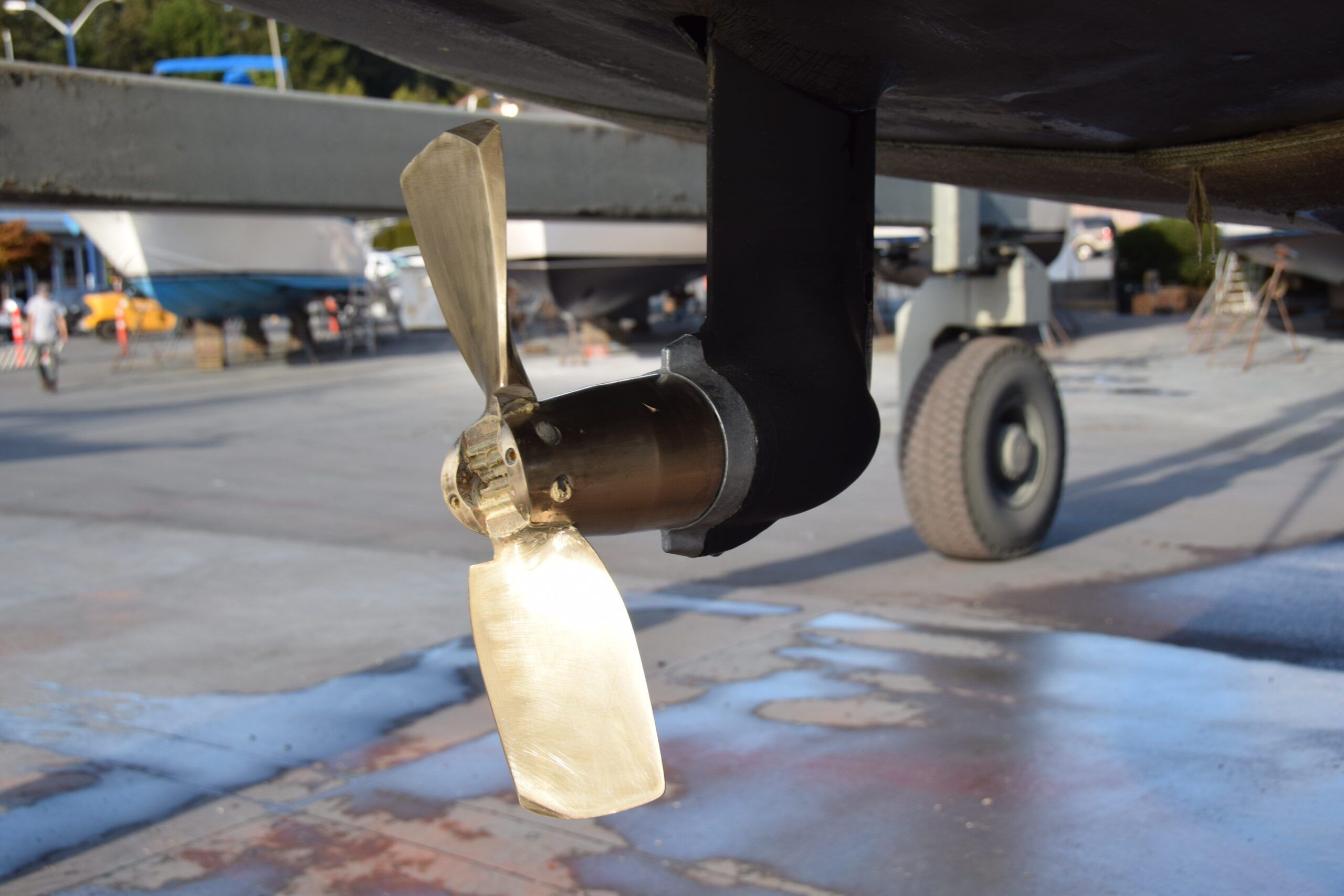
Then the rational part of my brain took charge; What about the potential damage under the boat? Had the sheet caused any damage to the sail drive hanging under the hull? There were three mounting bolts holding the engine/saildrive assembly in place. A large rubber O ring sealed the saildrive to the hull, holding the water out. Had the mounts or seal been compromised? Had the big bronze folding prop with all its intricate parts been damaged? Or had the engine or transmission suffered any internal damage in the sudden stop?
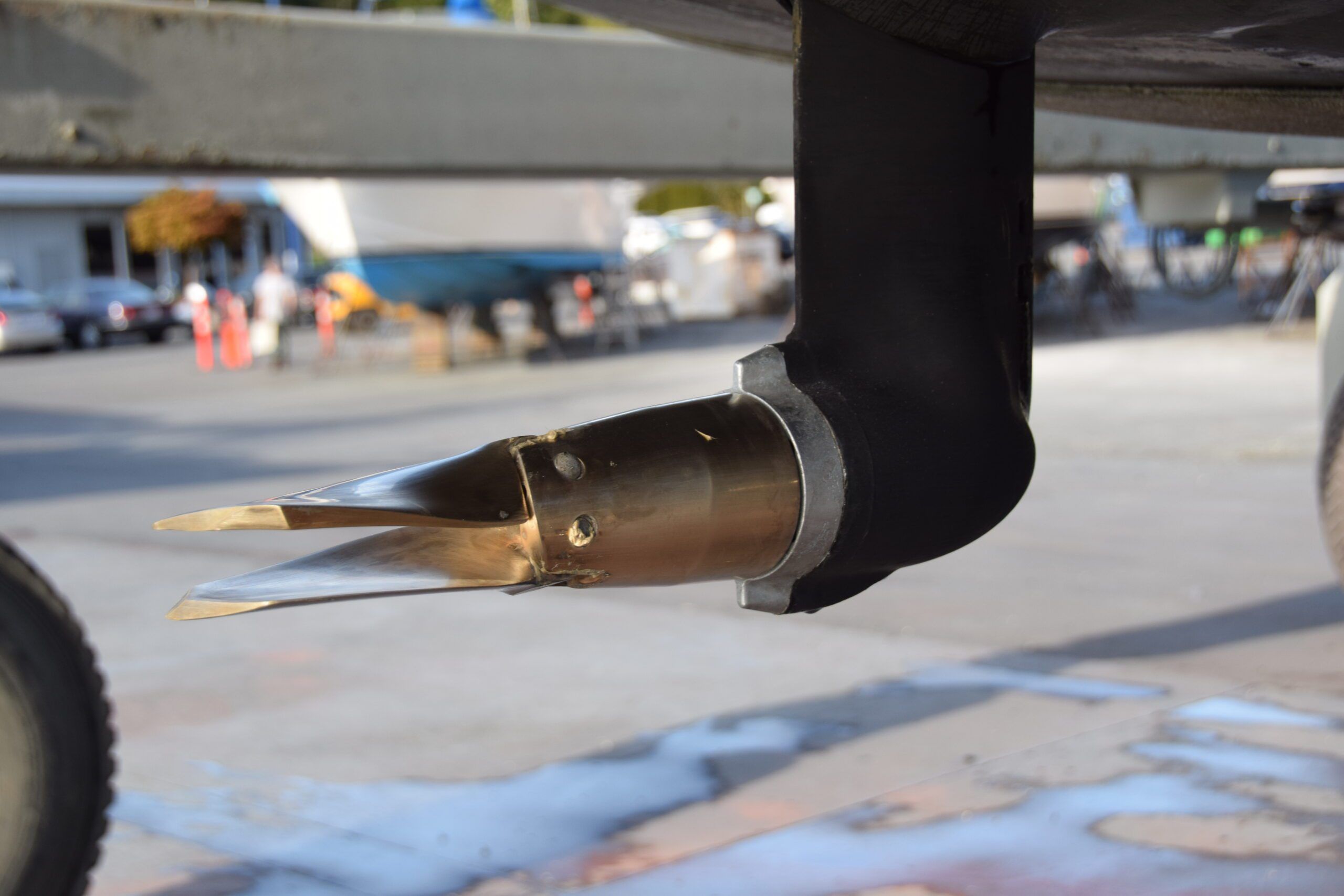
Considering that there were no haul-out facilities within hundreds of miles on the west coast of Vancouver Island, I would have to hire a diver, perhaps in Tofino, to have a look under the hull. And if there was catastrophic damage to any part of the drivetrain, then what? I was a long way from home with the girls arriving in the morning, anticipating adventure, not long-term repair. All sorts of thoughts cascaded through my mind as I approached the anchorage, the wind easing as I glided onto quieter water.
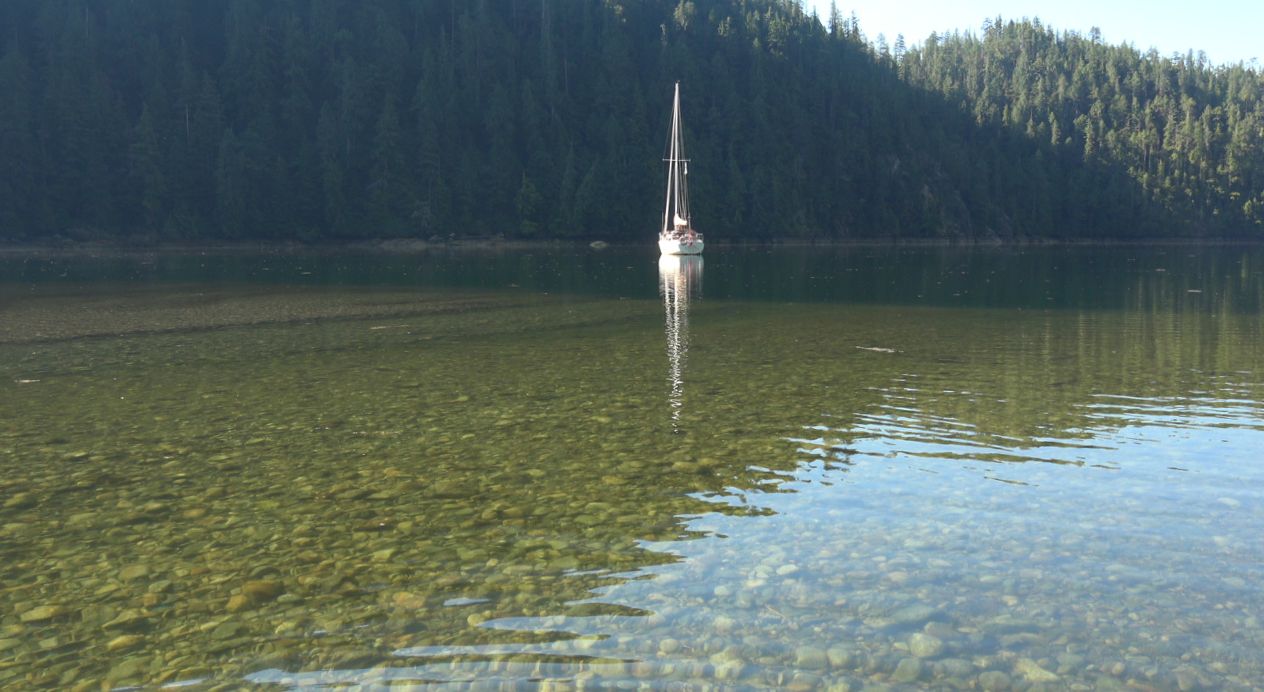
I was reluctant to start the engine to get into the anchorage, expecting the worst. But the Beta started immediately and ran sweetly, just as it always had. But the prop? Carefully slipping the transmission into gear I heard no fearful clunk as the transmission seized, or clatter as a blade spun off the prop. It seemed to work. The anchor was soon down in White Pine Cove and an immediate inspection of the engine compartment showed no visible abnormality. All was in order—what a relief. A celebratory libation was prepared. All was good with the world again.
Dream Trip Still On
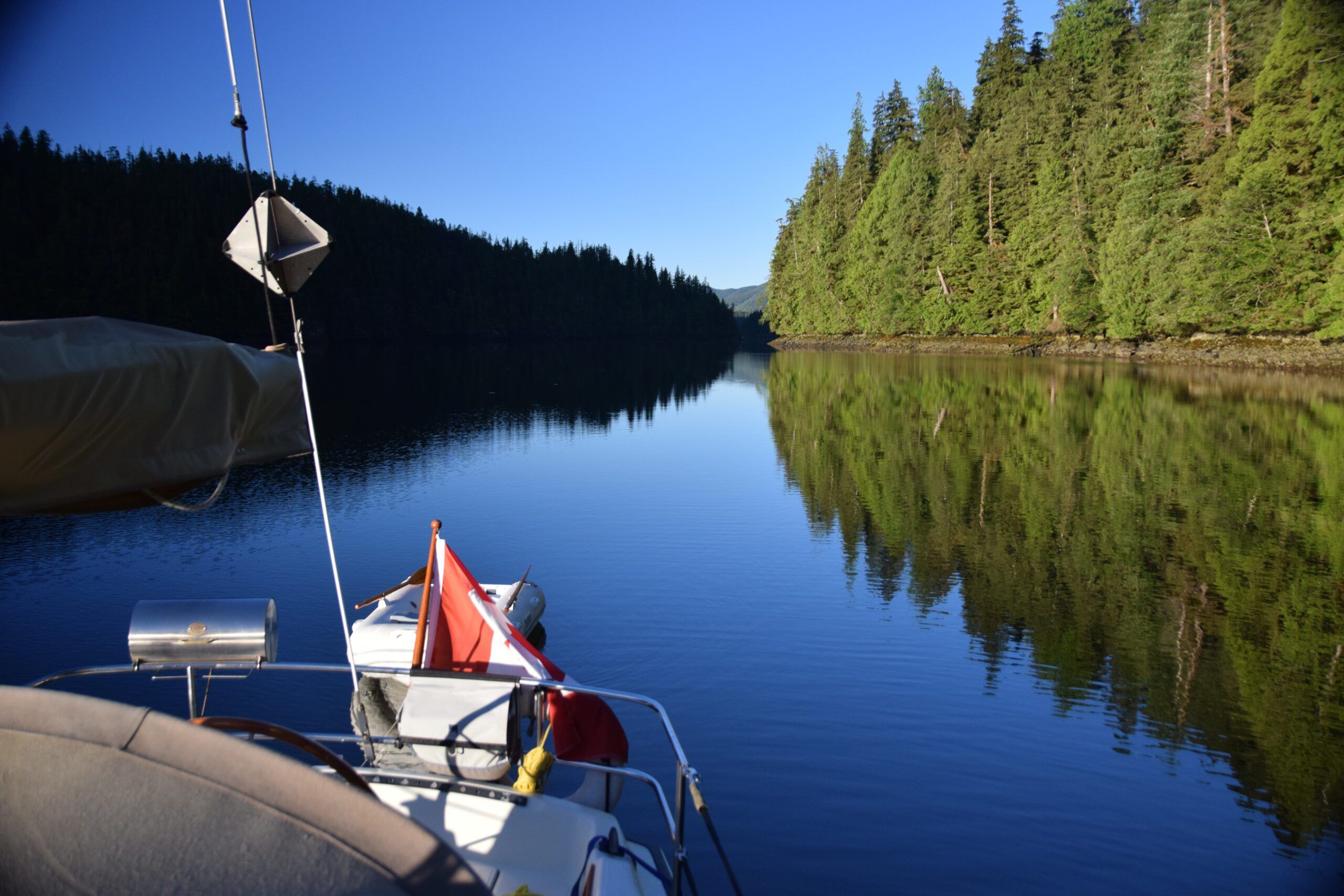
The cruise into Barkley Sound with Carey and Natasha was a memorable one, sunny days interspersed with west coast rain, humpback whales larger than the boat right alongside, evenings in quiet anchorages. Although the incident still nagged at the back of my mind, and would until I hauled the boat out for a visual inspection upon returning to Sidney, all went well for the remainder of that voyage.
Lessons Learned
When things are going well and sailing conditions are near perfection, complacency ushers potential danger to the forefront. As the skipper of a vessel underway, there are no times when vigilance is not called for. A repetitive task as common as reefing a sail reminds us of how fragile safety can be, and how quickly a situation can get out of control.
As the saying goes, if you’re thinking it’s time to reef, the correct moment was probably 10 to 15 minutes ago. I could easily have reefed the main while in the windy conditions mid channel where I had room to maneuver should a problem occur. I was getting lazy and looking for an easy alternative.
If I’d been paying careful attention, I would have interpreted the ripples under bluff for what they were, a gusting williwaw, not an area of calm. Again, casual complacency had me ignoring the warnings.
There is certainly no need to get paranoid or fearful of sailing in boisterous conditions, but there is a need to pay attention and anticipate difficulties in any task. The mental “what if” exercise should never stop.