

The purpose of chainplates on a sailboat is to transfer the enormous loads from the standing rigging into the hull structure safely. Without chainplates, the mast would not stay upright. The shrouds and stays pull on the mast from multiple directions. The side shrouds keep the mast from falling sideways. The forestay keeps the mast from falling backwards and the backstay keeps the mast from falling forward. Those wires are under tremendous tension. The chainplates are the structural anchor point where those rigging wires attach to the boat.
The wind’s force begins at the mast and is transferred to the shrouds/stays to the chainplates and absorbs into the hull’s structure. Bulkheads, stringers, compression posts and the hull’s laminate are all part of the structural grid system that absorbs the force. If the chainplates are the weakest link in this equation, the mast’s vertical position may fail, the rigging may collapse or the sailboat might suffer deck or hull damage.
Chainplates must be extremely strong to resist all the pulling force. They are usually made of stainless steel and heavily bolted to major structural areas. Imagine a shroud pulling with 3,000 pounds of force. That load pulls upward on the chainplates, tries to rip it from the deck/hull and bends surrounding structure. This process goes on for decades.
Different Types of Chainplates
External Chainplates
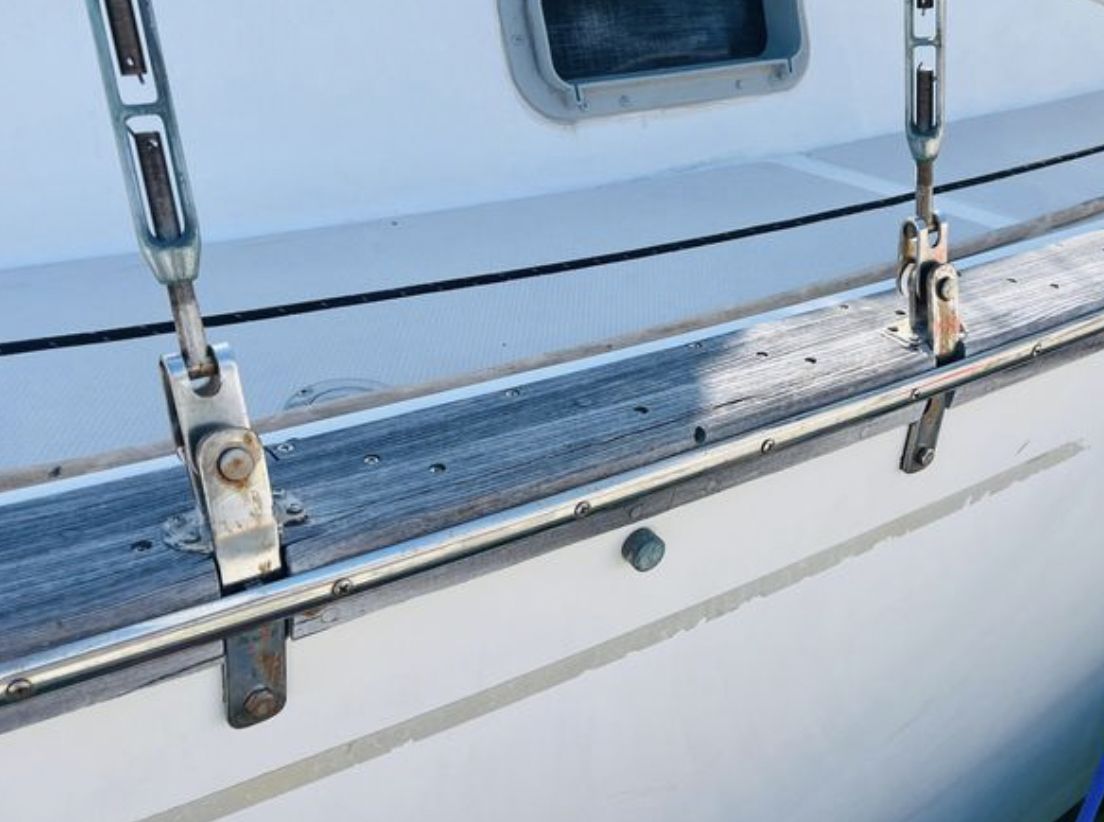
These are mounted on the outside of the hull. A thick stainless steel flat bar runs from the deck down the hull side and is through-bolted to structural bulkheads or knees inside the boat. These are surveyors’ preferred chainplates to see and inspect. They are very strong and easy to inspect, plus leaks are usually visible and easy to replace. The downside is they are exposed to weather elements, and the deck penetration can eventually leak.
Internal Through-Deck Chainplates
This is the most common modern style. A stainless steel plate comes up from inside the hull and passes through a slot in the deck where the shroud attaches. They are usually bolted to plywood bulkheads or fiberglass knees. They can also be tied into hull stringers or incorporated into the structural grid.
These chainplates provide a cleaner looking deck, are relatively strong, and are protected below deck. However, deck leaks are common, corrosion is often hidden inside the deck slot and it is difficult to inspect on some boats. This style is notorious for hidden stainless corrosion where the chainplate passes through the deck. Water gets trapped in the sealant gap and oxygen starvation causes crevice corrosion. This is one of the biggest survey items on aging fiberglass sailboats.
Bulkhead-Mounted Chainplates
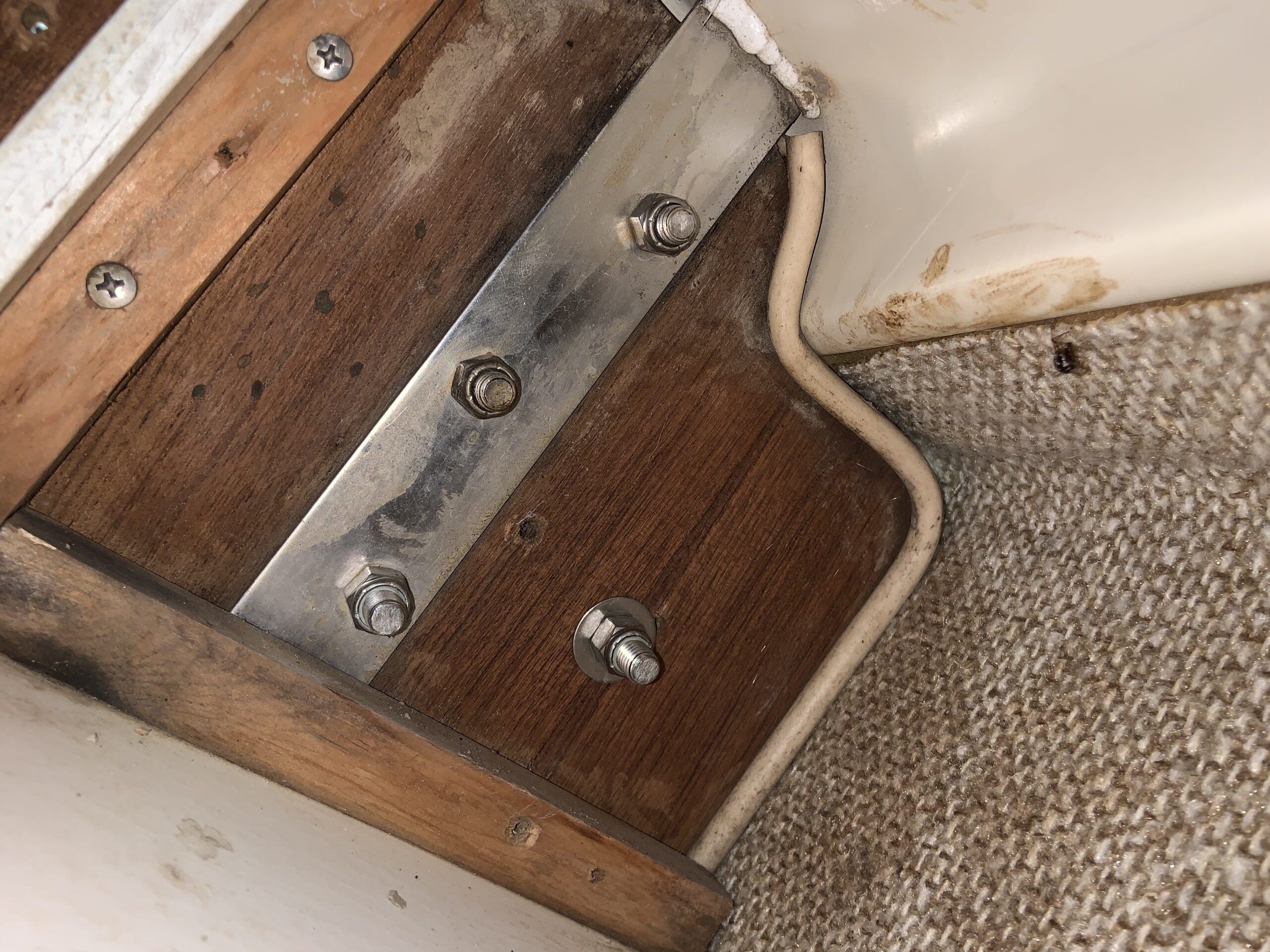
The stainless plate bolts directly to a major structural bulkhead. These chainplates offer efficient load transfer and are easy to inspect but are only as strong as the bulkhead. Water often enters and saturates the plywood causing high moisture levels and rot. The survey must check for moisture in bulkhead, delamination, compression damage, rust streaks and elongated bolt holes.
Knee-Mounted Chainplates
Instead of using a bulkhead, the chainplate bolts to a fiberglass structural “knee” bonded to the hull. They distribute the load evenly and are very strong. A downside is they are difficult to inspect, and repairs can be costly as it requires quality fiberglass work.
Glassed-In Chainplates
Some builders such as C&C Yachts and Ericson Yachts glass stainless chainplates directly into the fiberglass structure—this is a surveyor’s nightmare. The chainplates are impossible to inspect, hide corrosion and moisture, and are difficult to replace. The upside is the clean appearance and they eliminate bolt holes.
Chainplate Materials
The most common material used for chainplates are 304 and 316 rated stainless steel. They both offer high corrosion resistance but need oxygen to create an invisible layer called chromium oxide. This layer blocks moisture from reaching the iron beneath causing it to rust. Without the passive layer, the stainless steel usually starts corroding from its interior, causing the chainplate to weaken, and goes undetected until it breaks.
Galvanized steel can be found on older boats. It is heavy but tough and requires regular maintenance. It is no longer used. Composite chainplates are used for modern performance and luxury boats. Carbon fiber and titanium chainplates are incorporated into the hull structure creating an extremely high strength-to-weight ratio. They are light, corrosion resistant, have a long life span but are also expensive and require expert engineering.
The Inspection Process
The surveyor always starts with a visual inspection for each part of the boat. For the chainplates, the surveyor will begin inspecting the exterior deck where the chainplates pass through, looking for rust stains that usually indicate corrosion. Next, the surveyor will inspect the bedding compound around the deck slot. Cracked caulk or lifting sealant is a point of entry for water. Water entering here is one of the biggest causes of hidden structural damage. Soft spots and delamination can be discovered by sounding the area with a small plastic hammer. A moisture meter can be used to measure the moisture percentage and determine the wet core.
Movement
The surveyor then pulls and pushes on all the rigging to look and feel for movement. Any movement in the chainplates is a major concern as the chainplates should feel solid. Movement may indicate bulkhead rot, loose bolts or structural separation.
Interior Inspection
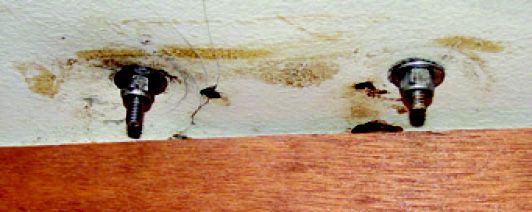
Inside the cabin, the chainplate is followed down to its attachment structure. Bulkheads, fiberglass knees, structural grids and backing plates are all inspected depending on the type of chainplates installed. On bulkhead mounted chainplates, the plywood is carefully inspected for water stains and delamination. The fiberglass bonding the bulkhead to the hull must also be inspected for separation and cracks. The moisture meter will once again be used on the bulkheads.
Fastener Inspection
The next step of the process includes inspecting the bolts, nuts, washer and backing plates. The surveyor is checking for rust, deformation, elongation of the bolts, signs of leaks and corrosion. Loose or elongated bolt holes may indicate years of rig movement.
Stainless Steel Inspection
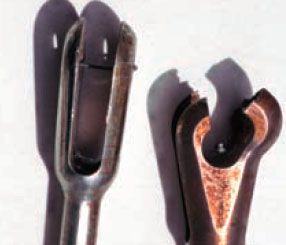
The stainless steel chainplate itself is carefully inspected. The surveyor looks for tiny corrosion pits, hairline cracks and crevice corrosion. Hairline cracks are difficult to see and require a magnifying glass and a strong light. They are usually found in welds, at deck level, bend and bolt holes. Crevice corrosion is the biggest danger because stainless steel can fail internally while looking decent externally.
Rig Tension Observation
This inspection can only be done on a sea trial. The surveyor can watch for chainplate flexing, deck movement, unusual deck pumping and flexing bulkheads. This can reveal structural weakness under load.
Report on Findings
This is the report written by the surveyor noting their findings. Almost every survey report includes words like:
“Chainplates were not removed for inspection.”
That’s because true inspection of hidden stainless requires removal. Without removal the surveyor cannot fully see the hidden crevice corrosion, internal cracking or backside pitting.
Sailboats Known for Chainplate Issues
Some sailboats developed reputations for chainplate problems because of:
- poor water sealing
- plywood bulkhead rot
- hidden stainless corrosion
- inaccessible designs
- undersized structure
- aging construction methods
That does not mean every boat from these builders is unsafe. Many are excellent boats when maintained properly. But certain designs and eras are well known among surveyors and owners for recurring chainplate-related issues.
Hunter Sailboat
This is one of the most commonly discussed brands regarding chainplate leaks and bulkhead deterioration.
Common problems include leaking deck penetrations, rotten plywood bulkheads, compression-post issues, hidden moisture and cracked tabbing.
Carefully inspect the Hunter 27, 30, 31, 34 and Legend series.
The issue is usually not the stainless itself; it’s water intrusion into surrounding wood structure.
Catalina Sailboats (Older Models)
The Catalina 27, 30 and 34—built from 1970s to the mid 1990s—commonly develop leaking chainplates, wet bulkheads and deck-core saturation.
The Catalina 30 is especially famous for chainplate rebedding projects.
Beneteau (Older Production Boats)
Some Beneteau Oceanis 321 and 350, built from the mid 1980s to the late 1990s, developed issues with inaccessible chainplates, wet structural liners and hidden corrosion.
Jeanneau
Jeanneau Sun Odyssey 34.2 and 36.2, and the Sun Fizz 40 from mid 1980s to the early 2000s had liner-hidden chainplates. These have difficult inspection access and moisture intrusion around deck penetrations. This is most common on heavily cruised charter boats.
C&C Yachts
C&C Yachts are well known for buried chainplates, inaccessible stainless and core moisture issues.
Some C&C designs glassed chainplates into the structure, which makes inspection and replacement difficult.
Pearson Yachts
Some older Pearsons suffered from crevice corrosion, wet deck core near chainplates and aging stainless fatigue. This is especially true on boats from the 1970s.
Ericson Yachts
Certain Ericsons experienced hidden chainplate corrosion, moisture intrusion and inaccessible structural attachment points. Some had chainplates integrated deeply into cabinetry.
Tartan Yachts
Watch out for older Tartans with deck-stepped masts, wet bulkheads and aging stainless. They can develop structural chainplate issues if neglected.
O’Day
Older O’Days commonly experience plywood bulkhead deterioration, leaking chainplates and deck-core moisture.
Which Boats Tend to Avoid Problems Better?
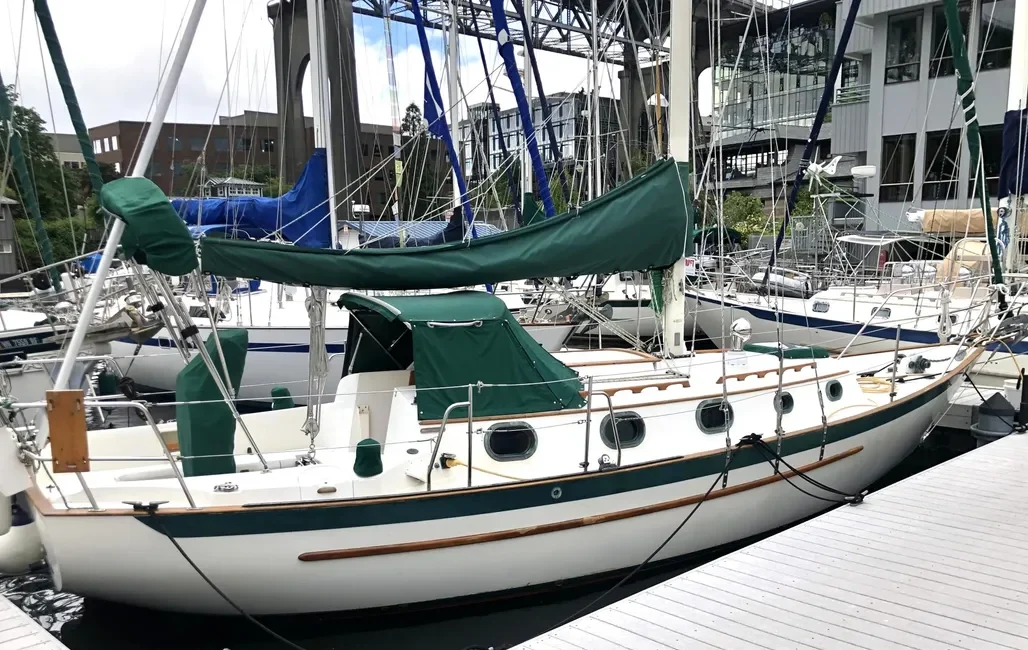
Boats with:
- external chainplates
- visible stainless
- heavy fiberglass knees
- minimal wood dependency
- easy inspection access
For less chance of chainplate issues think of:
- Pacific Seacraft
- Valiant
- Hallberg-Rassy
- Oyster
- some Tayanas
However, any sailboat can develop problems if leaks are ignored long enough.
Chainplate Repair Costs
- Rebed leaking chainplates.
- Remove, inspect, reseal, reinstall.
- Cost: $500–$2,000
- Replace corroded or cracked chainplates.
- New stainless chainplates fabricated and installed.
- Cost: $2,000–$6,000 (more on larger boats)
- Repair rotten bulkheads.
- Common on older Hunters, Catalinas, and similar boats.
- Cost: $3,000–$10,000+
- Repair wet deck core around chainplates.
- Water damage in balsa or plywood deck core.
- Cost: $1,500–$15,000+
- Repair fiberglass knees or structural supports.
- Cracked or separated chainplate supports.
- Cost: $2,000–$8,000+
- Glassed-in chainplate replacement
- Most difficult and expensive.
- Cost: $5,000–$20,000+
Bottom Line
The good news is that many chainplate problems are caught long before they become catastrophic, and a leaking chainplate is usually far cheaper to fix than a failed chainplate.