


Before we consider the safety issues of lithium-ion batteries, we should remember that lead acid batteries are not without risk. Apart from the obvious risk of a sulfuric acid spill or exposure, there are other concerns. Under heavy charge or discharge they can give off heat and gases which can be corrosive, explosive, and poisonous in high enough quantities.
A viewer of a recent Practical Sailor video commented that a hydrogen sulfide discharge from his lead acid battery nearly killed him (his words), while under charge overnight. It was a quality charger, on shore power, but it seemingly delivered an excessive charge (possibly because of a battery fault). Thankfully, the smell woke him and alerted him to the issue.
There are also some rare stories of high-capacity alternators overheating lead-acid batteries and discharging hot acid onto operators. Moreover, in the event of a cell dropping internally, lead acid batteries can draw high currents (as this essentially represents an internal short), which can also lead to heat and degradation in the battery.
Fire, Not Shock, Is the Risk at Lower Voltages
While there is a broad public understanding of the risk of electrical shock (or execution) in household wiring systems, we were generally raised to view lower voltage DC systems as risk free. While it is true that OSHA and safety standards such as IEC 60364 establish 50V as a key threshold for hazards to the human body, this overlooks the fact that the greater risk from lower voltage DC systems is primarily fire, not electric shock.
A certain casualness towards lower voltage DC systems encourages many boaters to neglect or experiment with their boat’s (12 or 24 or 48V) DC system, innocent to the fact that the current carrying capacity of modern batteries and alternators is far greater than any childhood toy. That capacity translates into the capacity to create heat and ignite a fire.

Another reality is that many boats are aging, without ever having been comprehensively rewired. According to an analysis of Boat US insurance claim data, nearly 50 percent of insurance claims relate to onboard fires, many of which arise from electrical failures. Maintaining your boat’s electrical system is therefore a priority and this was discussed in “ How To Maintain A Small Boat’s Electrical System.”
The risk of fire from wiring faults is essentially the same, whether the source is a lead acid or an LFP battery, but we should also acknowledge that risks are likely to increase if, as part of a conversion, you are increasing the capacity and complexity of your electrical system.
Short Circuit Fault Risks
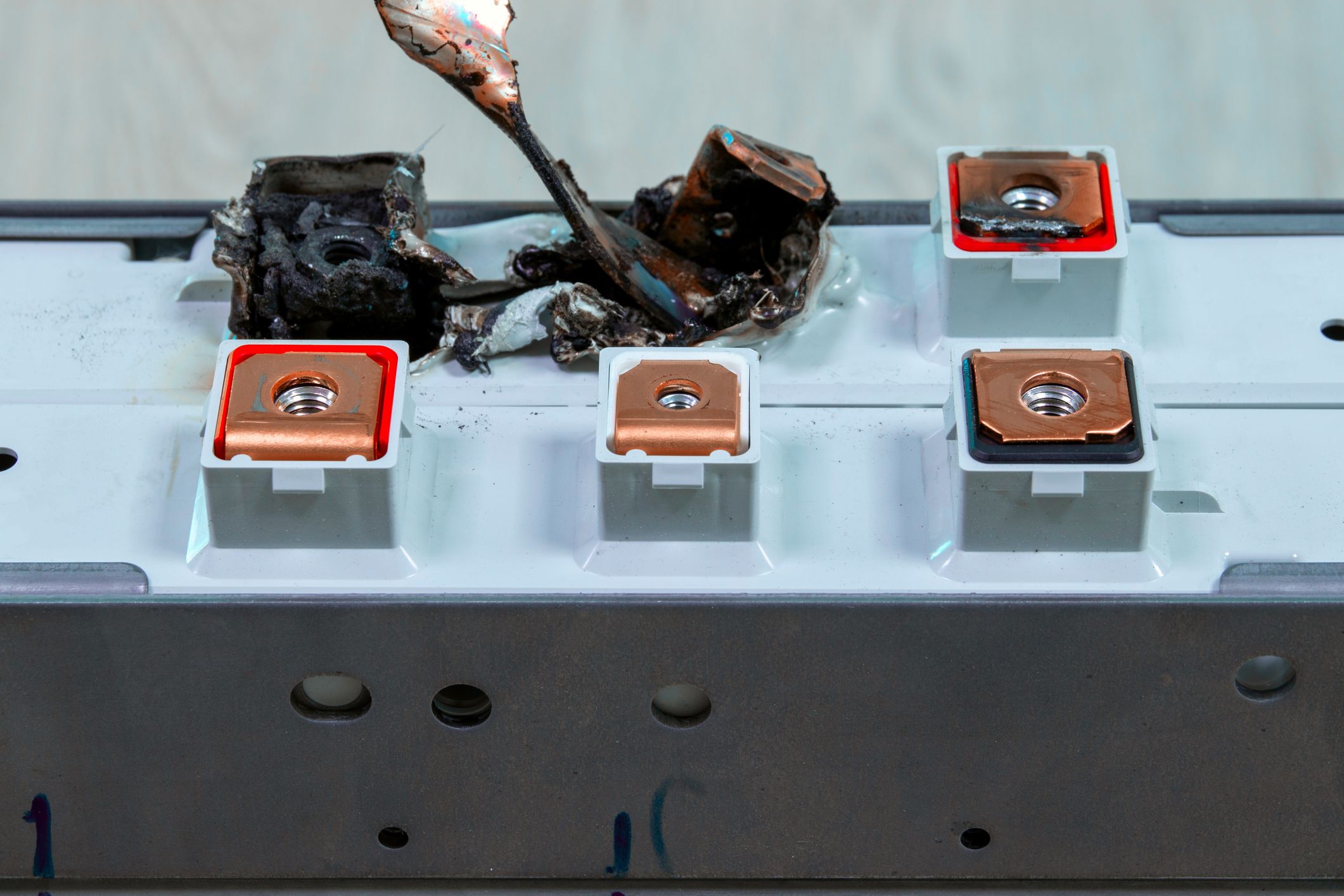
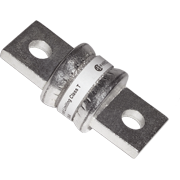
Lead acid and LFP batteries differ, electrically, in one very significant way. As we discussed in “LFP vs. Lead Acid: Eight Things Every Sailor Must Know Before Switching,” the internal resistance of an LFP battery is a fraction of a lead-acid battery, which means that far higher short circuit fault currents can flow, especially in a multi-battery LFP system. Recognizing this, the new ABYC standard requires that a “High AIC” (Class T) fuse be fitted.
Lithium-Ion Fire and Thermal Runaway Events
However, the issue that attracts the most attention is a thermal runaway event, often referred to as a “TR” event. You have all heard stories of the spontaneous combustion of some EV, e-bike, laptop, or power tool batteries and these are mostly TR events.
What is a TR Event?
To put it into a single sentence, it is a violent chain reaction of exothermic chemical reactions, resulting in an uncontrollable increase in battery temperature, which leads to the release of gases, fire and potentially an explosion.
To get a TR event started, heat generation is necessary. All batteries, of course, generate some heat and normal temperatures do not lead to such events. However, should the battery have been subject to abuse (the meaning of which is discussed below), excessive heat generation can occur and if that exceeds the ability of the battery to dissipate heat, a self-sustaining cycle of thermal runaway proceeds, in a snowballing sequence.
Heat generation causes a rising temperature, which can cause chemical reactions to start accumulating inside the battery, which, in turn, triggers the release of gases, many of which are either toxic or flammable. The toxic gases can greatly exceed acceptable exposure limits and the air around a battery in TR event can be extremely dangerous to breathe in. The flammable gases ignite, contributing to the progress of the TR event and can potentially even cause an explosion.
Such gas compounds and their concentrations vary, depending on the size and type of battery and the stage of thermal runaway. The heat buildup can be rapid, however, with the temperature of the battery cell potentially skyrocketing to over 600 C. From the start of the TR event, the battery might ignite or even explode within minutes.
What To Do in a TR Event
The first recommendation, with any sort of lithium-ion battery fire, is to evacuate the immediate area, because of the toxicity of the released gases. If you are on board a boat, however, there is no running away, so the next best approach, if the device is portable, is to place that device on the foredeck or into the water. Clearly, that does not work for a large, fixed installation, such as a house or propulsion bank, which is one reason why the ABYC has generally adopted more cautious standards than other regulatory agencies.
Extinguishing a TR Event
One of the difficulties of fighting a TR event is that thermal runaway can generate oxygen, which means that a fire can proceed without any external oxygen. Standard ABC fire extinguishers were not designed to address such chemical reactions. They might suppress the flames temporarily, but the probability is that it will not cool the battery sufficiently to stop the TR event and re-ignition might occur, even after apparently being extinguished.
Recommended approaches, therefore, often focus on cooling the battery, rather than necessarily starving it of oxygen. One solution that is often recommended is a water sprinkler system, possibly operating for 24 hours or longer, as this can cool the battery enough to suppress the heat generation and the chain reaction. For smaller devices, some have suggested covering it in a bucket of sand or dousing it with a garden hose.
There are also some highly specialized suppression systems and products, more often used in industrial applications.
Possibility of a TR Event
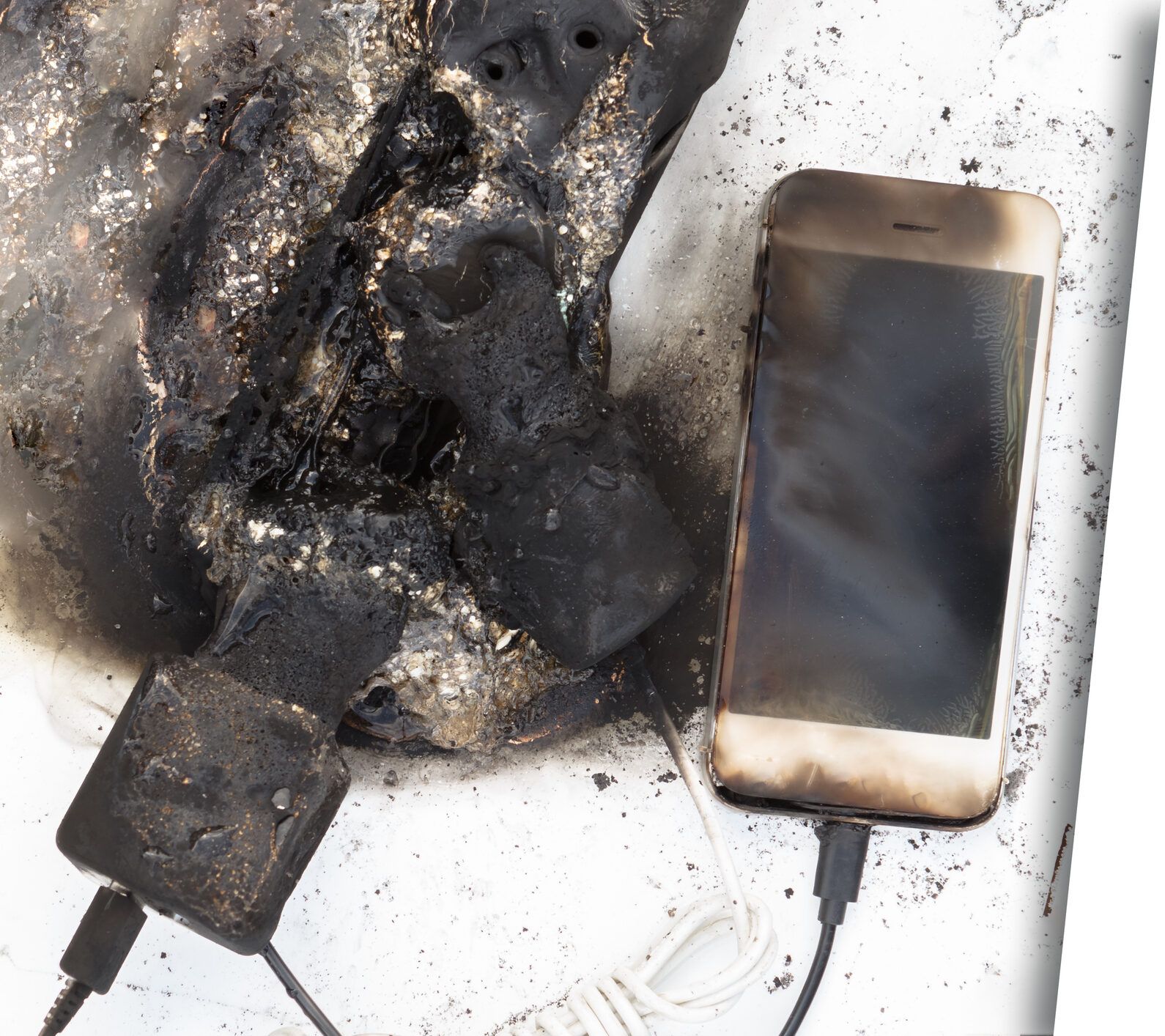
The London Fire Brigade recorded 522 lithium-ion battery fires in its area in 2025, as compared to only twelve in 2019, which is a massive increase. They noted that nearly half of these were e-bike and e-scooter specific fires. An industry colleague went further and suggested that over 90 percent of lithium-ion TR incidents they see arise from cheap e-bikes, lithium power tools, and phone/laptops. If you also include EV fires following a vehicle collision, this group might represent over 95 percent of all TR events.
Another consideration is that the risks generally rise with the number of battery cells (e.g., more cells means there is a greater possibility of internal shorts), which is part of the reason why e-bikes have such a poor record (as they operate at 36, 48, or 52V—sometimes even higher).
Many smaller and/or lower cost devices of course, may not even have had a Battery Management System (BMS) fitted, and, if they were, the BMS may have been of a quality where they were largely ineffective. The primary purpose of a BMS is to monitor individual cells and the battery as a whole, and to shut down the battery if it detects conditions outside its design parameters, that have the potential to precipitate a TR event.
The vessel was fitted with a Class B, AIS and at its last update on June 13, that transmitted the vessel’s position as 34 nm southwest of Sable Island, Nova Scotia. The vessel was not considered missing until July 2, when it was deemed overdue in the Azores. It had not activated its EPIRB nor issued any form of emergency distress transmission at any time. Aircraft were deployed to search the area around the vessel’s last known position but found no sign of the Theros. On July 10, a dinghy with the deceased crew was found on the south side of Sable Island. The Transportation Safety Board of Canada investigated the incident as a possible collision but found no evidence to support that possibility. In its final report, it noted that one crew member was wearing a flotation suit that had fire damage; that the vessel’s propulsion system had been retrofitted with an EV battery and that the data collected was consistent with an occurrence involving a fire on board the sailing vessel. Nissan Leaf EVs have been in production since 2011, and the marketing literature generally refers to a “lithium-ion” battery. Online commentary suggests that the early models were lithium manganese oxide (LMO), and later models nickel manganese cobalt (NMC). These are the known facts and Practical Sailor does not want to speculate about what exactly occurred in this tragedy, out of respect for the family and friends. We would restate, however, that we have consistently recommended that Lithium Iron Phosphate (LFP or LiFePO4) is by far the most chemically stable lithium-ion battery type and therefore the only one we would consider for a large fixed battery installation in a small boat. We have also consistently recommended to only consider a new battery, supplied by a reputable manufacturer and to never repurpose a used battery from a different application.Investigation
PS Recommendations
LFPs are Less At-Risk for TR Events
While LFP batteries are a member of the Lithium-ion family, they are characterized by being the most chemically stable and therefore at least risk of a TR event. While no hard statistics seem to be available, TR events with LFP batteries would seem to be a tiny percentage of the overall total. It is noteworthy that in 2023, Tesla switched to LFP batteries (from Nickel-Cobalt-Aluminum (NCA) or Nickel-Cobalt-Manganese (NCM)), for some models. They cited reasons of safety and cycle longevity, even though their range was slightly reduced (especially in cold weather).
Limiting TR Risk in a LFP System
The first steps to reduce any possibility of a TR event with an LFP battery are to ensure that you know the batteries’ history e.g. no repurposing of secondhand batteries; operate it within its designed temperature range; have the right charger (not repurposed from another application); become familiar with the manufacturer’s specifications and follow all the necessary instructions.
A further step (which the American Bureau of Shipping or ABS encourages) is the physical separation of individual batteries in a multi-battery bank, to limit the possibility that an event in one malfunctioning battery can spread to its neighbor in the battery bank.
LFP Abuse
We explained earlier that TR events only arise from “abuse.” What does abuse of an LFP look like? Broadly speaking, abuse might take the form of mechanical damage, heat or excessive load, short circuit, or overcharging.
The most obvious risk is physical damage, such as being dropped or punctured. It is interesting to note that the relatively light weight of LFPs (as compared to lead acid batteries) is often quoted as a positive feature, whereas some manufacturers now encase their LFPs in a steel case, in the belief that protection is the more important consideration.
Location
Another consideration is location. We were encouraged to locate lead acid batteries in the lowest part of the boat, as they were heavy, to facilitate the lowest possible center of gravity for the vessel. We were also encouraged to store lead acid batteries in a container, in the event of an acid spill. LFP batteries have different priorities, as ventilation or heating (depending upon where you are located) can be more critical considerations.
BMS
By definition, a BMS that has been physically damaged may not be able to detect or respond to the other forms of abuse, so arguably physical damage should be our first concern. A fully functioning BMS will monitor for risk of all other forms of abuse, such as temperature, excessive load, short circuit, and under or overcharging etc.
We should add, however, that there are considerable competitive pressures on battery manufacturers, and some are claiming that their battery is capable of high rates of discharge, and therefore a substitute for a lead acid start battery. In order to fulfill such a function, each individual cell would need to be capable of safely passing hundreds of amps (and for the BMS to allow such passage), a claim that many other LFP manufacturers very clearly avoid making.
LFP TR Arising From Operational Failures
Despite all the safeguards built into a BMS, and even if operators seek to diligently follow all manufacturers’ guidance, operational failures can still arise unintentionally.
For example: On discharge, the BMS will cut off the LFP at a State of Charge (SOC) level of (say) 15% but the discharge does not necessarily end there. LFP batteries are subject to a self-discharge (maybe 1-3% per month) plus the BMS will periodically “wake up” to check whether the battery is yet receiving a charge.
Over a long enough period of time, therefore, an LFP that was shut down by its BMS at 15% SOC might have discharged down close to 0%. Applying a high charge rate, to such a deeply discharged LFP, represents a significant risk event. While some might view such conduct as a remote possibility, circumstances might arise with an abandoned or seasonally unused boat or within, say, an industrial operation where multiple parties are responsible for the LFP, with each working shift (or operator) unsure of what the other shift (or operator) has organized.
In other words, poor operating conditions can defeat even a well-designed BMS. It takes a series of errors to get to such a level of failure, but these are known instances of failure.
In 2019, a cruiser known to your author, back home in Australia after having successfully completed an incident-free Pacific crossing from Mexico on his 42-ft. Hans Christian, went on board his boat one morning to start cleaning up after the long passage. He sprayed down the engine, intending to let that fluid penetrate, while he made himself a cup of coffee. By some miracle, he briefly stepped outside to check the mooring lines at which point his boat exploded, with a force that was heard miles away. Thankfully, the owner, only experienced minor injuries and while the interior damage was extensive, the hull of the strong Hans Christian was not compromised, and the vessel did not sink. The owner concluded that flammable gasses from the degreaser were ignited when they reached the galley stove. This was a “by the grace of god” moment for him and many cruisers, as we had all at some time used an engine degreaser from a regular auto parts store. We all came to learn the hard way, therefore, that there is a class of degreaser intended for marine (or confined space) use that is non-flammable. You do need to read the description of products carefully, however, as some have reported that a so called “marine degreasers” might simply mean they do not damage fiberglass, rather than non-flammable. We are now all accustomed to being asked by airlines if we are carrying any form of lithium-ion batteries but aerosols are also on the airlines list of restricted items.










the initial portion of the article uses non-LFP incidents as an attention getting/scare device. This is misinformation & not useful Practical Sailor” level information. The first and most basic warning any such article should be “Use only LFP – other chemistries are currently inappropriate”
as Jack Webb said “just the Facts Ma’am” (and I believe he added ‘and no distracting scary stories about other crimes’)
I do agree with Geoffry and I don’t think we need even another week to make a conclusion. I have an electric motor with 24 Eve cell LiFePo4 batteries on a 28,000 lb 41′ ketch. 16 of the cells are for the 48v motor and 8 are for a 24v house battery bank. I have “gone through”/destroyed another 10 through my trials and errors over the last three years after installing the system. Dropped a couple cells in the drink and then retrieved them at low tide. Dropped a few more off a work bench. Probably more importantly, drew down the engine battery bank well below its stated limits and killed a few more cells in the engine bank. The worst that has happened is they might leak a little (which isn’t ideal) and the ones that go below 2.0 volts can get so blown up (expand) that they are difficult to remove from the batter bank enclosure I built. I have since reconfigured the enclosure for easier removal if it happens again. I basically, because of my own experience, skimmed through the lithium battery horror stories because it’s not based on LiFePo4 batteries. I am careful with charging phones, and other devices that have regular lithium batteries because I have no interest in experiencing a lithium fire.
Sorry about that. Hit send by mistake. Although I have seen LiFePo4 batteries being shot and nothing happens I will not go so far as to say the are “bullet proof”. But – any fears I had of what they could do if they were mishandled have been put aside due to my own accidental tests of, “I wonder what would happen if I dropped, or overcharged, or overused, or undercharged one of them?” I know what happens and it isn’t much. My biggest problem, now, is finding a place that can recycle them and not charge me what it cost to buy one.
You make a good point. I gather that manufacturers have been lobbying hard, for LiFePO4 to be segregated (in the legal & regulatory framework such a UN, airlines, ABYC, ABS etc) from the other types of Lithium-ion battery but the response, currently is ‘no way’. At this time the various agencies are considering new regulations, not relaxing anything for LiFePO4. My ten year prediction was that, ultimately, LiFePO4 will get it’s own set of regulations (separate from Lithium-ion), recognizing its safety but I gather that the political will (and/or the studies) is not there, to contemplate such a move today. As a result, we currently live in a world where LiFePO4 is viewed as more hazardous than a flooded lead acid battery, which makes no sense. The reality, of course, is that any sort of lithium related incident is magnified by the media, where as any form of lead acid incident is likely to go unreported.
Familiarity breeds contempt as the saying goes. I think that is sometimes an issue with lead-acid batteries. We are so used to them we no longer think of them as hazardous. LiFePO4 is a new and relatively unknown tech, so people tend to look at the safety record more closely and skeptically. As a retired nurse, one of the most serious accidents I dealt with involved someone working in a battery centre who had a lead-acid battery he was working on explode, spraying him with boiling acid. Fortunately, there was an emergency shower on hand so he was immediately doused with many gallons of water. Without that, he would certainly have lost his sight. Lead-acid batteries are also hazardous, just in different ways. My view is that the most dangerous systems on the boat are not the batteries but the propane system, which can blow the boat into matchwood, and the can of gas for the dinghy.
Having experienced the catastrophic failure of a Lifeline AGM battery in the 90’s with significant aerosolized acid discharge, I believe no battery technology is completely immune from serious failure.
My current LFP batteries, with a very good external management system, don’t keep me up at night.
I can’t find a single confirmed case of an LFP battery chemistry causing a fire in a sailboat or RV.
Articles like this just perpetuate an exaggeration of a perceived but unlikely risk.
I have been asking around as to whether anyone knows of an LFP fire on a boat. The only thing I can find is an incident (some refer to it as an explosion) on a canal boat (“narrow boat”) in the UK, last year. As there was no fatalities, there is no public enquiry or report, however (just an insurance inspection report, which is not public). Nonetheless, there is keen on-line interest in knowing what occured, with speculation ranging from it was not a TR incident (maybe a propane incident) to others suggesting mismatched 48V LFP’s were in parallel, triggering some form of overload condition. It seems to be confirmed that they were Victron LFP’s on the vessel and it was an electric propulsion system. If anyone knows anything more, please comment below.