





Bottomless Lockers Be Gone
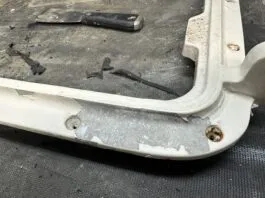
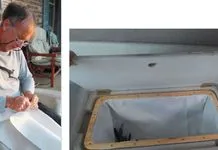
Storage is a challenge on small boats, and my new-to-me Corsair Marine F-24 trimaran was particularly Spartan this regard. The skinny hulls provided minimum volume and the race-focused designer intentionally omitted proper lockers. A performance-oriented boat such as this must be kept light if she is to sail to her potential. But even day sailers and racers attract a certain amount of necessary clutter, sure as honey attracts flies. Something had to be done, and yet, as a new owner its tough to know what will best suit your needs and what the boat needs. Its even harder to cut the first hole. This project was 100 percent non-invasive.

Online Help for Autumn
Its getting to be that time of year, when many skippers haul out or head south. Fall also heralds the beginning of boat show season. Here are some PS articles from the online archives that are suited for the season.

Years Later, Mast Mate Still Riding High
Mast steps are a great help when going aloft, but they add weight where it hurts most (aloft), and halyards love to get stuck behind them. One alternative is the Mast Mate webbing ladder, which hoists on your mainsail track.

Sailing into the Golden Age of Hook-and-Loop Fasteners
Hook and loop fasteners are familiar from jacket cuffs and companionway bug screens, but during our many years of fiddling around boats, weve come up with a few applications that even a Velcro-lover havent yet tried. Lets look at some new tricks.

Controlling Motion: Two Case Studies
Securing a small boat between pilings in a wrong-sized slip is a common challenge. The dock line angles from the dolphins (outlying pilings) are too narrow for a beam wind, allowing the boat to dance around, increasing forces, chafe, and even making it difficult to stand in the cockpit. During a recent winter near-gale we measured dockline forces on several smaller boats that reached four times higher than the static wind load. If the recommended size dockline was used, the rope would be operating beyond its working load limit in real storms and could fail. Increasing the line diameter would result in more jerking and chafe.

Make Your Own Over-the-Boom Riding Sail
Delighted with the performance of the over-the-boom riding sail, we decided to make our own.

Sails and Summer Projects
While most of us are-hopefully-out sailing this summer, we know that many sailors are busy with system upgrades, do-it-yourself projects, and the usual marine maintenance adventures. Here are some archive articles we think will help you tick off the tasks on your to-do list.

Batteries, Cleaners & More
As a subscriber, you have free access to our back-issue archive-more than 2,000 articles. Here are a few topics you might find relevant this season.

Shedding Weight on Sailboats
Balsa and rigid foam cores. Aluminum, magnesium, and titanium alloys. Epoxy resins. Unidirectional glass, carbon fiber , and Kevlar. Builders have the most fantastic tools at their disposal to build light, durable boats … and then we weigh them down with all manner of stuff.

Leaving Your Boat Abroad Part II
In addition to the usual steps you take before a seasonal haul out at home (decommissioning the engine, storing sails, pickling systems, etc.), hauling out and leaving your boat in a new yard, especially a foreign port, involves some extra measures.

Bahamas for $5000? The Watkins 27 foot Sailboat
Is the Watkins 27 the ultimate small cruising sailboat? In this video, we take a deep dive into the Watkins 27 — a classic...



Latest Sailboat Review

Tartan 30: An Affordable Classic
The early 1970s was the heyday of the Tartan 30' racer/cruiser. In all, no less than two dozen boats of a similar size and type were introduced in just three years, many of them to become highly successful among sailors eager for the performance and amenities of big boats at a modest price. Among the most noteworthy and enduring of the 30-footers from this era has been the Tartan 30.