




How To Deep Clean Your Sails at Home
Have you ever noticed that when people want to post beautiful serene moments, they use images of sailboats in the distance, usually seen from...

Keeping Ice at Bay
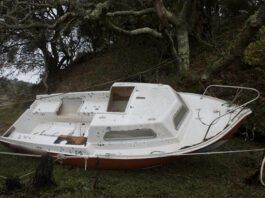
Southern sailors often put their boats away for a few months when the water gets a little cool. Northern sailors have a more definitive reason; they put their boats away when the water gets hard. Often, freezing is limited to harbor areas, where shallow water, freshwater input, and limited tidal flushing encourage ice formation. Far north, you can walk on it for weeks, while in the mid-Atlantic, the layer is often thin and transitory. And while a few inches of ice are generally harmless to a sound boat, thick moving ice can damage paint, exposed steering gear, and planking. Although we can't make the weather any warmer, there are measures boat owners can take to keep ice at bay.
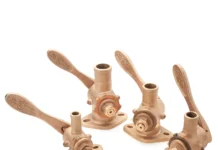
Keep Tapered Bronze Seacocks Working Smoothly
Are the tapered plug seacocks on your boat difficult or impossible to close? If you tighten the adjustment nut enough for them to stop weeping all over the inside of your boat, does it take two hands and a hammer to operate them? If so, it's time for an overhaul. Even if they worked well last season, a little care while the boat is hauled can save you a lot of grief in the future. As part of your boat's routine maintenance, tapered plug seacocks should be disassembled, cleaned, lubricated, and reassembled on a regular basis.

Give Old Boat Parts New Life as Holiday Gifts
There’s nothing worse than getting or giving yet another ugly sweater or never-to-be-worn tie. Why not try up-cycling old boat parts to give new...
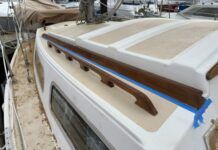
The Art of Maintaining Teak Trim on a Sailboat
As the owner of a modern Beneteau, Jeanneau or a host of other recently-launched dream boats, you’ve probably noticed the distinct lack of teak...

Can Exterior Paint Revive Faded Dodger Canvas?
One of the little luxuries many sailors treat themselves to is great canvas. I just went sailing on a brisk, cold and windy day...
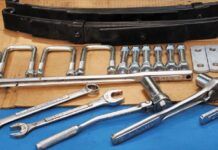
Freeing Seized Hardware
Simple ferrous-metal oxidation is a process in which iron, oxygen, and water chemically react, and it can cause rust to seemingly weld fasteners together. This unyielding grip often turns disassembly into much more of an ordeal, but with a few, regularly available products and a good set of wrenches, the big battle becomes a minor squabble.
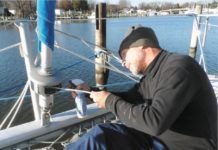
Winter Sailing Tips for Diehards
For many seasonal sailors, the winterizing routine is already well underway. But there are more than a few diehard sailors in the mid-Atlantic regions, on the West Coast, and even in New England, who plan to spend all or part of the snowy season afloat. Some, we daresay, look forward to the quiet of winter. If youre toying with the idea of keeping your boat in the water during the winter, heres a short rundown on some of the more important steps to take.
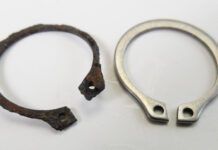
Sailboat Stewardship Tips: How Not To Be “That Person”
Good boats outlive us, or at least outlive our interest in them. In time, we become the dreaded Previous Owner (PO). Will we make this...

DIY Winch Feeder
It was snowing and I needed a project. Ever since the article on cross sheeting, “Where Winches Dare Go,” I’ve been wanting to add...
Latest Logbook

Practical Sailor Logbook – October 2026
This month leans into used-boat value and hands-on maintenance: Tim Labute tours the traditional, shoal-draft Bayfield 32, Nick Nicholson revisits the much-requested Morgan 38/382,...

Video: What Happened to the Hallberg Rassy 400
Filmed at the Annapolis Sailboat Show, we take an in-depth look at the Hallberg-Rassy 400's hull construction, twin helm cockpit, twin rudder steering system,...



Latest Sailboat Reviews
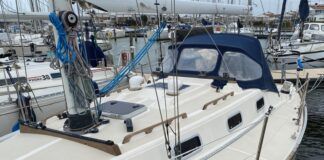
Tartan 31 Piper: Used Boat Review
The Tartan 31 is one of the new line of performance cruising yachts from the venerable-and durable--Grand River, Ohio boatbuilder. In the last few years, Tartan Marine has come out with a range of new models, including the T-28, the 3500 and the 4600. A 41-footer is in the works. Both the 28 and the latest version of the 31 are part of the new Piper series, which are marketed in sailaway condition. Tartan has a reputation for solid construction and good workmanship and that's what the 31 is: solid and well put together. The hull is hand-laminated with alternating layers of chopped strand mat and unidirectional E glass. Behind the NPG/ISO gelcoat there's a layer of vinylester resin, which so far appears to provide the best osmotic blister protection available.