




Remote VHF Mics Test
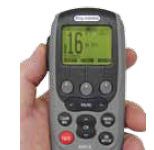
Remote microphones for fixed VHF radios are great tools for both coastal and bluewater sailors, but they can be essential for shorthanded crews. Practical Sailor rounded up and tested six units, each designed to work with two or more compatible, fixed-mount marine VHF radios. The test field included the latest wired and wireless remote mics from Icom, Standard Horizon, Raymarine, and Garmin. To select the best VHF remote mic, testers considered performance, audio systems quality, user-friendliness, features, durability, and ruggedness.
Marine Stereos on a Budget
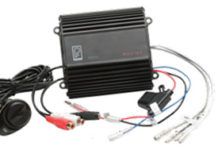
When it comes to onboard stereos, most small and mid-size boat owners want a simple, affordable sound system with a decent audio that can withstand life in the marine environment. To find out what the options are for the cruisers who just want a basic stereo system, Practical Sailor took a look at marine stereo-speaker kits priced under $200. Testers evaluated four budget-friendly audio packages: two kits from Dual Electronics, the AMCP400W and the MXCP43; the CDX-M20 from Sony Corp.; and the ME-52 amplifier from Poly-Planar.

What to Look for in Quality Marine Stereos and Speakers
When shopping for a new stereo system, be sure to evaluate the following closely to be sure the package meets your needs.
Is the SEND Device Message Loud and Clear?
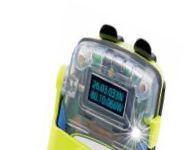
Sometime around 1:30 a.m. April 28, while participating in the Newport-to-Ensenada Race, the Hunter 437 Aegean sailed directly onto the rocky cliffs of North Coronado Island off Mexico’s Pacific coast. Fellow racers came upon pieces of the boat and reported their findings to the U.S. Coast Guard. The bodies of three crew were discovered with the wreckage. The body of the captain was recovered 16 days later. Contrary to news reports stating there “was no sign of distress” aboard Aegean, an SOS distress call went out from one of the crew—but by the time the Coast Guard learned of it, it was too late. Someone sent a distress alert form the captain’s personal SPOT Connect, a portable satellite emergency notification device (SEND) that delivers SOS messages and vital information—ship’s position and user identity—via Globalstar satellites to a third-party emergency call center.
Feature Loaded High-end VHFs
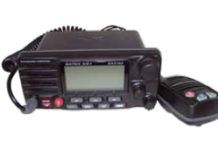
As a follow-up to our June 2012 report on mid-priced VHF radios, Practical Sailor tested seven fixed DSC-capable VHFs priced above $300. Because most high-end VHF marine radios offer excellent performance, testers looked especially close at extra features, price, and warranties. We evaluated one radio from Standard Horizon, the Matrix AIS+ GX2150; three from Icom, the IC-M424, IC-M504A, and the IC-M604A; two from Garmin, the VHF 200 and VHF 300; and one from Raymarine, the Ray 218. In addition to the bonus features like AIS, position tracking, and hailer/foghorn capability, testers looked at NMEA network compatibility, screen display, audio output and quality, transmit power and power stability, power draw, and frequency stability.
A Rundown on Common VHF Features and Functions
A Rundown on Common VHF Features and Functions

Raymarine e7 vs. Garmin 740s plotter-sounders
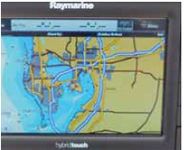
Practical Sailor evaluated the Garmin 740s chartplotter-sounder and other similar sized plotter-sounders in the November 2011 issue. For this follow-up report, we took a close look at the new Raymarine e7D. The Garmin 740s and the Ray e7D are similar in size, and both have a baseline plotter with sounder functionality, but the e7D has many new capabilities that include WiFi and Bluetooth interfaces witth mobile computing devices such as iPads and iPhones. The e7D is also capable of being fully networked with the other members of the new Raymarine chartplotter family and the C- and E-series widescreen units, while the Garmin 740s was designed as a standalone, multi-function display system.
Raymarine’s WiFi Advantage
Raymarine has re-defined onboard interface with WiFi and Bluetooth capabilities in its new MFDs. Using an iPad or iPhone (Version 4 or newer), a Kindle Fire Tablet, or any Android Smartphone or Tablet, users can stream the e7D display to these devices using the RayView free app downloadable from iTunes, Amazon, or the Google Play Android store. This allows you to use these devices as a second display.
Raymarines WiFi Advantage
Raymarine has re-defined onboard interface with WiFi and Bluetooth capabilities in its new MFDs. Using an iPad or iPhone (Version 4 or newer), a Kindle Fire Tablet, or any Android Smartphone or Tablet, users can stream the e7D display to these devices using the RayView free app downloadable from iTunes, Amazon, or the Google Play Android store. This allows you to use these devices as a second display.

Lighting the Way
While electronic navigation plays a dominant role on most of todays boats, paper charts still have their place at the prudent sailors nav station. No chartplotter can match the big picture view offered by paper charts, or the backup benefit in a power outage, hardware failure, or lightning strike.

O’Day 40 – A Budget Cruiser for the Bahamas
The O’Day 40 (1986) is one of those cruising sailboats that somehow slipped through the cracks of sailing history. Built during the final years...



Latest Sailboat Review
Island Packet Estero Used Boat Review
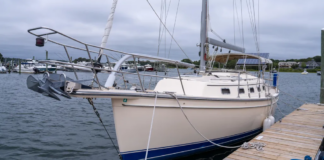
Florida-based Island Packet targets a relatively narrow niche, so the toughest competitors to its new boats are often older Island Packets. Introduced in 2010, the 36-foot, shoal-draft Estero is the company’s latest attempt to introduce a distinctive model that doesn’t stray too far from the company’s proven formula for success: moderate displacement, full-keel cruisers designed to be lived on, sailed far and in comfort, and endure the bumps, scrapes, and storms that cruising boats inevitably encounter. After sailing the Estero on Florida’s Sarasota Bay and inspecting its interior, construction, and systems, Practical Sailor testers noted that the shoal-water cruiser will appeal strongest to Island Packet fans who’ve been waiting for a shoal-draft, easy-to-sail boat that compares to the IP37 in terms of interior space. These strengths will be most apparent on intracoastal or riverine adventures like the Great Loop.