



Pros and Cons of Lowrance’s BR24 Broadband Radar
Practical Sailor reports on its test of the new Lowrance BR24 broadband radar. Unlike conventional radar, the BR24 transmits a low-power, frequency-modulated continuous wave (FMCW) signal that varies in tone and frequency. It has low power consumption and is very quiet with very low emissions from its transmit power. It has a high resolution at close range, but can be less effective than conventional radar at picking up distant storm cells and difficult shorelines and has an overall limited range.
Pros and Cons of Lowrances BR24 Broadband Radar
Practical Sailor reports on its test of the new Lowrance BR24 broadband radar. Unlike conventional radar, the BR24 transmits a low-power, frequency-modulated continuous wave (FMCW) signal that varies in tone and frequency. It has low power consumption and is very quiet with very low emissions from its transmit power. It has a high resolution at close range, but can be less effective than conventional radar at picking up distant storm cells and difficult shorelines and has an overall limited range.
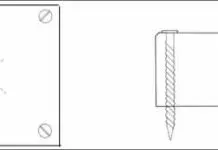
Design for: Through-Deck Fittings for Coaxial Cable
Sealing the holes in decks where Loran and VHF antenna cables penetrate is a fairly common problem on modern boats. If there were only the cable to be considered, a hole of the appropriate size plus a dab of sealant would do an adequate if tacky looking job. But these cables inevitably include sizable end connectors which require holes much larger than those required for the cable itself. Solutions include removal and reinstallation of the connector each time the cable is removed during storage or servicing, and any number of commercially available through-deck fittings or plugs. None of these solutions is simpler or better than the wood fitting shown here. It is attractive and can be made in a few minutes for a few cents.

Route-planning Software Review
Practical Sailor editors evaluated Digital Waves Visual Passage Planner software, which is based on the U.S. Pilot Charts and lets users plan a voyage based on historical weather patterns. Testers used the software to recreate the 1888 historical passage by Joseph Conrad. Conrads passage from Bangkok to Singapore, aboard the iron barque Otago, took an excruciating 21 days. By plugging in waypoints, location and time of year, testers were able to see wind, current, sea state, water temperature, and air temperature along Conrads route. Visual Passage Planner showed the average wind speed and direction, as well as the number of days of calm, for the area and time of year. The software is an interesting tool for passage planning, but because it uses historical rather than real-time data, it shouldnt be compared to true weather-routing software like the weather-routing module from MaxSea, which uses a boats polar data to evaluate real-time routing.
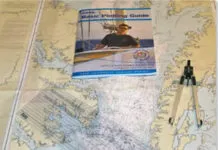
Chandlery: June 2011
Although the ease and convenience of electronic chartplotters has ensured their place aboard most every vessel these days, the punch-and-go navigation that makes them so popular has also spawned a generation of slack-jawed zombies when it comes to even the most rudimentary of navigational skills. Prudent mariners continue to carry paper charts, both as backup to chartplotters (and their “one diode away from disaster” nature) and to have the big picture view that a plotter just can’t match.
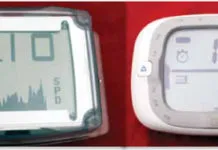
Speed Tools Give Racing Sailors Starting-line Advantage
Speed-gauging tools developed for racing sailors have moved beyond a simple display of measuring knots, and now offer heading data, course over ground, distance-to-line, and GPS speed-tracking features. Velocitek is leading the marine electronics field of handheld speed tools with its ProStart, while Rock City Marine's RockBox, like the ProStart, uses GPS satellite signals to monitor speed and performance. Testers looked at each model’s ease of installation, performance on the water, and durability. Testers also rated their accompanying software.
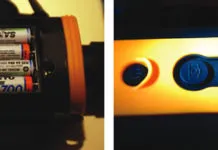
New-gen Night Vision for Mariners
The FLIR First Mate is a lightweight, easy-to-hold thermal-imaging monocular that allows users to “see in the dark” by reading temperature differences and displaying the infrared images in a digital viewfinder. Although its price tag keeps it from being a must-have navigation tool, the First Mate has real value as a man-overboard recovery aid. PS testers put the First Mate through its paces with a set of discernment tests on the water. Testers used the First Mate to spot crab pots, unlit beacons, unlit nuns, other boats, the shoreline, and a volunteer “man-overboard.” Setting the FLIR in the “white” hot mode, testers went about their infrared treasure hunt, ranking how well certain objects, all unseen by the naked eye, showed up with FLIR's thermal night vision.
Is AIS Chipping Away at Our Freedoms?
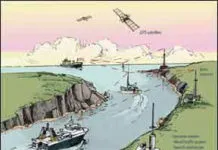
Sailors who read George Orwells 1984 when it was first published 62 years ago probably wrote off being tracked as a technological feat that was about as unlikely as the discovery of a tiny black box that would replace the sextant. Six decades later, GPS-based navigation has become de rigueur, and the big question is not if, but how tracking technology will be used. The upside of being locatable 24/7 includes many safety and search-and-rescue…
Pump Details: Wiring, Clamps, and Inlet Ports
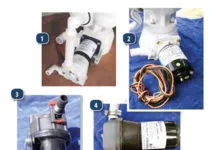
All the test toilets had at least one electric pump to handle supply and flushing duties; some had one pump for each job. The best pumps pushed more water faster and didn’t hesitate when they hit solids.
The Modern-day Flush: Push All the Right Buttons
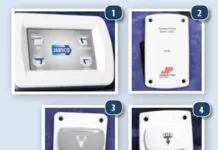
Several of the units PS looked at came with what might be called “smart” flushing capability. Instead of a simple momentary switch—push to flush, release to stop flushing—these switches controlled flow and the timing of various filling and flushing functions. Most allowed for about a half-gallon of water for a full flush, and a five-second delay between rinse and flush.

Small Boat, Big Keel Why This 27 Footer Works
What makes a small sailboat truly seaworthy? In this video, we take a deep dive into the Pacific Seacraft Orion 27, a rugged, long-keel...



Latest Sailboat Review
Island Packet Estero Used Boat Review
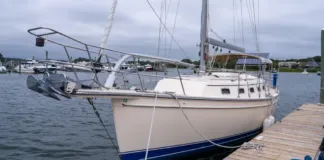
Florida-based Island Packet targets a relatively narrow niche, so the toughest competitors to its new boats are often older Island Packets. Introduced in 2010, the 36-foot, shoal-draft Estero is the company’s latest attempt to introduce a distinctive model that doesn’t stray too far from the company’s proven formula for success: moderate displacement, full-keel cruisers designed to be lived on, sailed far and in comfort, and endure the bumps, scrapes, and storms that cruising boats inevitably encounter. After sailing the Estero on Florida’s Sarasota Bay and inspecting its interior, construction, and systems, Practical Sailor testers noted that the shoal-water cruiser will appeal strongest to Island Packet fans who’ve been waiting for a shoal-draft, easy-to-sail boat that compares to the IP37 in terms of interior space. These strengths will be most apparent on intracoastal or riverine adventures like the Great Loop.