



Mailport: 05/09
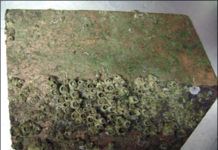
In light of your recent letters on copper/epoxy antifouling bottom coatings, Id like to share my experience. Near the end of my Searunner trimaran boatbuilding project, I decided to apply a product known at the time as Copperpoxy. I applied the coating to all three hulls to about 20 mils thick, and then sanded this "orange peel" surface down to about 10 mils. I finished up with 220-grit sandpaper. In the end, it was beautiful. It was just like a perfectly smooth, new copper penny, and just a bit thicker than recommended. We started our cruising adventure in the foul waters of Beaufort, S.C. Very soon, I was doing a huge scrape job every week. The bottom was covered with grape-size barnacles. I noticed that the aft half of the main hull, the part with underwater metals, was fouling the worst. (I was changing zincs every week.) Two years later, in Pensacola, Fla., we decided to give up on this product and paint over it with Pettit Trinidad SR bottom paint. When doing the weeks-long prep for this painting, we could see that the skin of our epoxy/ply boat was electrically conductive and corroding all the way through in the entire area of the bonded shaft, strut, prop, gudgeons, and copper mast ground. We put on three coats of Trinidad, waited a few days, and splashed the boat. Within two weeks, the new paint had peeled off in the electrically active area. We re-hauled, stripped the paint in this area, and coated the problem Copperpoxy area with three coats of epoxy. After sanding and repainting, we set off for the Western Caribbean. Over the following six months, we noticed that even the epoxy would not stick to the Copperpoxy.
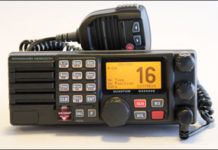
PS Advisor: DSC Group Identity Numbers
I’m a member of the Stonington Harbor Yacht Club in Stonington, Conn., and we need a better way to contact members on the water. We would like to use the full features of DSC (Digital Selective Calling) group calling for that purpose, but it is not clear to us what the best way is to obtain a group identity call number for DSC calls.
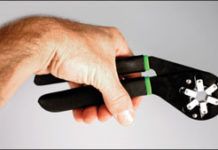
Next Best Thing
While world leaders and presumed financial wizards set to work trying to right the global economy with some very expensive bailers and sponges, Practical Sailor has taken the time this month to dig through our recent collection of Chandlery submissions to see if we can find anything more useful. Given sailors capacities for innovation (aka "jury rigging"), were holding out hope that the next great invention-the ultimate stimulus package-lies somewhere in our growing stockpile of Chandlery items.
Budget-friendly Handheld and Fixed-mount VHF Radios
As a follow up to Practical Sailors recent marine electronics report on mid-priced VHF radios, we evaluated three entry-level fixed-mount VHFs and three entry-level handheld VHFs priced at about $100. Marine radios in this price range lack some of the bells-and-whistles and safety features of higher-priced VHFs, but they will suit the needs of sailors on a budget or boaters looking for a backup VHF. The three fixed VHF radios tested were Cobra Marine F55, the Midland Regatta I and the Standard Horizon Eclipse GX1000S. Handheld radios tested were the Cobra MR HH325 VP, Midland Nautico NT3, and West Marine VHF55. Testers evaluated each radios transmitter, receiver, sound quality, display screen, and water resistance. Radio performance was also tested at extreme temperatures, and handheld models were dropped from 4 feet onto a concrete surface.
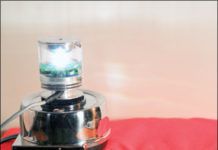
Signal Mate Review
Compliance is signaling in restricted visibility. This is why we became interested in Signal Mate and its approach to automating sound and light signaling, a big plus for short-handed sailors. The companys console-mount controller and its portable emergency signaling kit offer great capability and quite a bit more. The easy-to-operate push-button console actuates digital switching circuitry that controls light, and sound signals are pre-programmed to indicate anchoring and making way in low visibility, as well as designating emergency and distress situations. Theres also a capacity to manually control the signaling process, and to select sound, light, or both as signaling options. The unit can connect to the boat horn or other audible device or can be wired to a mast-mounted maneuvering light.
Practical Sailor Tests the Alado Jib Furler
Practical Sailor finds the Alado Nautica headsail furler to be easy to install and a worthwhile sail-handling tool. One feature that sets the Alado apart from other jib or genoa furlers is its staggered slotting of five-foot foil sections that slide together and interlock over a conventional wire or rod headstay. This design allows the do-it-yourselfer to fit each foil section over an attached headstay, and simply push the formed furler up the wire or rod. Mainstream headsail furlers tend to be assembled on the ground and installed with the mast horizontal. The Alado furlers design uses integral halyards to place a compression load on the foil, eliminating the need for Loctite, set screws, and a top swivel. We tested the Alado over five months of coastal cruising and daysailing.
Field and Bench Tests Determine the Best Full-Feature VHF Radio for About $175
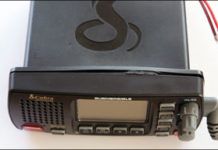
Practical Sailor tested 10 new mid-priced marine VHF radios. All VHFs tested are waterproof, can be interfaced with a GPS, and have Digital Select Calling (DSC) capability. The marine radios were run through a series of tests including VHF transmitter power output, frequency accuracy and frequency stability, and receiver sensitivity to determine which was the best marine radio in the group. The display on each radio was rated based on the size and readability of the information, the quality of the information displayed, and the backlighting. The test radios had a lot to offer in the way of extras with everything from hailers to remote microphone capabilities and voice recorders. Ratings were based on overall performance and features. The VHF radios tested in this price category were the Cobra F75, Cobra F80, West Marine VHF550 (made by Uniden), West Marine VHF650 (made by Uniden), Raymarine 49, Raymarine 55, Standard Horizon Quest X GX1500S, Standard Horizon Matrix GX3000S, Icom M304, and Uniden UM425.
Heavy Weather Sailing Gear
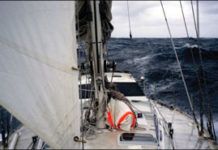
From sea anchors, drogues, and trysails to forereaching and heaving to, tactics and gear for surviving a storm at sea vary greatly. During a high-latitude circumnavigation, Evans Starzinger and Beth Leonard, aboard their 47-foot Van de Stadt sloop, had several opportunities to test heavy-weather sailing tactics. The couples main storm gear was a Galerider sea drogue, made by sailmakers Hathaway, Reiser and Raymond, is a webbing bowl with a wire hoop. Deploying the drogue involved a bridle of strong nylon lines connected to the Galerider rode via an oversized galvanized swivel. Starzinger and Leonard used the Galerider when running before the wind in gale-force conditions. The drogue helped slow the boat, kept it from surfing down the face of a wave, and provided directional stability, which allowed their autopilot to maintain control. Drogues and other storm-survival gear and tactics are particularly necessary for short-handed crews and boats that tend to surf in heavy weather. Other storm gear for sailboats that Practical Sailor looked at included the Jordan Series drogue and the Seabrake drogue.
Looking to Boost Your Onboard Computers Internet Connection?
Internet access onboard is increasingly popular but achieving a reliable wireless connection can be difficult in a marina or on the water. A laptop with a built-in Wi-Fi system is a common starting point, but marinas can be a difficult place for low-power, high-frequency radio signals. Practical Sailor tested 5MileWi-Fi, a system that utilizes an external antenna to extend the Wi-Fi range beyond that of normal Wifi devices.
Mailport: 01/09
In the December 2007 Practical Sailor Advisor, you requested feedback on Ultimate Sole, a product for coating cabin soles. Two years ago, I added a -inch teak-holly veneer plywood covering to my sole and used Ultimate Sole as the finish. I first put on a sealer and then two coats of Ultimate Sole. It went on very easily and performed better than I expected. It is a hard, glossy finish that truly does offer nonskid properties. You look at the finish and think you will slide all over the place, but you don't! It is a wonderful product, and I wouldnt use anything else.
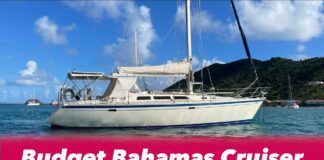
O’Day 40 – A Budget Cruiser for the Bahamas
The O’Day 40 (1986) is one of those cruising sailboats that somehow slipped through the cracks of sailing history. Built during the final years...


Latest Sailboat Review
Island Packet Estero Used Boat Review
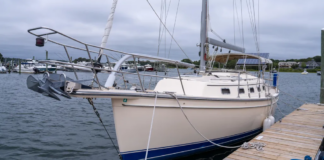
Florida-based Island Packet targets a relatively narrow niche, so the toughest competitors to its new boats are often older Island Packets. Introduced in 2010, the 36-foot, shoal-draft Estero is the company’s latest attempt to introduce a distinctive model that doesn’t stray too far from the company’s proven formula for success: moderate displacement, full-keel cruisers designed to be lived on, sailed far and in comfort, and endure the bumps, scrapes, and storms that cruising boats inevitably encounter. After sailing the Estero on Florida’s Sarasota Bay and inspecting its interior, construction, and systems, Practical Sailor testers noted that the shoal-water cruiser will appeal strongest to Island Packet fans who’ve been waiting for a shoal-draft, easy-to-sail boat that compares to the IP37 in terms of interior space. These strengths will be most apparent on intracoastal or riverine adventures like the Great Loop.