


Safety Tethers Under Scrutiny
On November 18, 2017, Simon Speirs, an experienced sailor, went overboard while at the bow assisting with a headsail change on a Clipper Round the World Boat CV30. It was blustery, with sustained winds of 20 knots, gusting to 40 knots. Shortly after he went overboard, his safety tether detached and he was separated from his boat. His body was recovered 34 minutes later. The cause of death has not been determined but drowning is the suspected cause. While such accidents are tragic, they offer a chance to re-evaluate equipment standards within a real-world context.
MAIB Safety Advisory Warns Tether Users
The sailing yacht CV30 was taking part in the third leg of the Clipper Round the World Yacht Race having left Cape Town on 31 October 2017 bound for Fremantle, Western Australia.
Climbing Gear Standards Guide Test Protocol
Testers used lab and field tests to evaluate each clips functionality, strength, and durability. After inspecting several sailboats to evaluate potential caribiner-benders and how we might replicate the loads, we returned to the lab and began pull-testing carabiners. The test data in the accompanying table resulted from tests that were modeled after those used to verify CE (European standard) and UIAA (climbing gear standards) specifications. All pull tests were carried out at a steady pull rate of about 2 inches per minute. These included the following tests...
Time to Review Tether Regs
Like a car seatbelt, the snap hook on a sailors safety tether has only one essential job to do. It must support the dynamic loads of a human body should a sailor fall overboard or get thrown across the deck to the end of his tether (about six feet). But late last year, when British sailor Simon Speirs was swept overboard during the Clipper Ventures Round the World Race, the resulting load bent and opened the stainless-steel snap hook that connected him to the 70-foot racing yacht CV-30.
New Trends in Sailing Safety Gear
Safety at sea has become more than a noteworthy slogan. Many feel it defines the right game plan and gear choice to ensure a favorable outcome in challenging conditions. But at Practical Sailor, we also recognize its role in incident prevention, and we understand why ones boat handling ability, navigation competency, weather awareness, and sound decision-making are just as important as the gear in the grab bag-perhaps even more so.
Budget Binnacle Pod
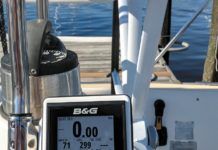
Many sailors want to tuck an additional instrument display or autopilot control at the binnacle, but just don't have the space. Seaview offers a very compact enclosure just right for this purpose. The Seaview SPOD is designed for adding a modern low-profile instrument display, autopilot, or other accessory to your sailboat helm. The SPOD is designed to be mounted either to the side of an existing chartplotter-sized enclosure or directly onto stainless rail.
Educating the Sailor: Start Small
Learning to sail is simple. Thousands of youngsters perfect the essential small-boat skills over the course of a summer. Mastering the art of crossing an ocean in small boat is a different story. Sure, we read about clueless individuals setting out in ramshackle boats making 1,000-mile crossings. The ocean, especially in tropical seas, is not nearly as foreboding as it might seem to the average landlubber.
Preventing Emergency Flare Fizzle
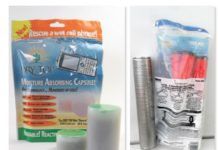
Weve been enjoying desert-dry gasoline for five years, courtesy of silica gel vent driers from H2OUT (see EPA Mandate Sparks Fuel-Vent Filter Test, Practical Sailor, January 2013). As a result, carburetor corrosion and jet plugging have been eliminated. PS diesel testers have report reduced condensate water and corrosion. We tested H2Out space driers against desiccan'ts and dehumidifiers (Dehumidifier Field Tests, Practical Sailor, June 2017) and concluded they had insufficient capacity for cabin drying. However, we quietly put one to work, protecting our flares. Although marine signal flares are waterproof, are packaged in plastic bags, and include deliquescent ingredients in the formulation, it is well known that by the expiration date, as many as half will not function. When we cleaned out our new-to-us boat 10 years ago, we discovered a package of four Orion Hand Held Signal Flares stored in a damp transom locker. They looked shaky, so we tested them, still a year short of expiration. Three of the four flares lit, but only one burned properly. The others sputtered, one going out and the other burning long and dull. This time, with fresh flares, we included an H2OUT SD109 space drier inside the bag and stored them in a dry cabin locker.
Tether Failure Cited in Fatality
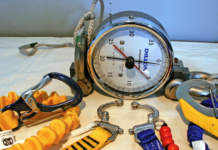
Just as we were wrapping up the report in our December issue describing how to make your own safety tether, 60-year-old British sailor Simon Speirs went overboard and died during the Clipper Around the World Race in an accident linked to tether failure. The race, which charges non-professional sailors to race with pro skippers, was already under scrutiny after two deaths in the previous running.

Building a Custom Safety Tether
A safety tether keeps you safely on board, but it also comes with its own risks. Previously, we investigated jackline materials (Jackline Materials Evaluation, Practical Sailor, November 2016), testing both common materials and commercial products. When redesigning a new tether, tester Drew Frye wanted something that fit his boat-very short for the side decks, but long for the broad decks and cockpit of his catamaran.
Bahamas for $5000? The Watkins 27 foot Sailboat
Is the Watkins 27 the ultimate small cruising sailboat? In this video, we take a deep dive into the Watkins 27 — a classic...



Latest Sailboat Review

Jeanneau 55 Boat Review
This recent sailboat from Jeanneau may as well be a spaceship. They’ve taken all the time-honored designs of a monohull aft cockpit and turned...