


Dodging a Bullet When Caught on Bulkhead
The following is aimed primarily at boats that are unable to leave an alongside dock or bulkhead before wind and seas become dangerous. Any fetch beyond 200 yards is dangerous, and there may be nothing you can do to protect the boat. However, if you are in a protected marina, well up a creek, and the storm is moderate, these actions can help. Just remember that low breakwaters will be overtopped, wooden breakwaters fall apart, other boats will come loose, and there will be lumber in the water from broken docks.
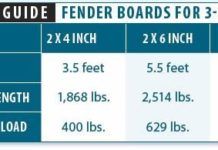
Make Your Own Rugged Fender Boards
We described a simple home-built version several years ago (Practical Sailor, December 2011); here we present a few simple upgrades on the same basic design, allowing for simpler deployment, better fender retention, and more stable positioning. Pressure treated lumber provides inexpensive durability.

Sailing Camps for Kids
This summer tens of thousands of children will take their first sail, with a friend or alone in their own little boat. They will sail away from the WiFi connection, the YouTube videos, and the remote control. Its an experience that can change a life.

Chest High Jacklines
Jacklines (also called jackstays) are rigged along the deck on either side or down the centerline. This is where you are supposed to clip your safety tether.

The Pros and Cons of Chest-high Jacklines
World sailing offers fairly explicit expectations regarding jackstays. And PS offer its own additional advice, including one that recommends jacklines ideally be installed so that a sailor who is clipped in can't go over the side (see Jackline Installation Advice, November 2015). This is not always possible, especially on monohulls. In most cases, he chest-high lifeline on Mahina Tiare will keep above water the head of the person who is overboard.

Safety Gear Recalls
As you gear up for another summer of sailing, it is also a good time to double check that none of your essential safety equipment is subject to a recall. Two helpful websites track recalls that can impact sailors. the Consumer Protection Safety Commission (www.cpsc.gov) focuses primarily on mainstream consumer goods like the Kidde fire-extinguisher (see below). There is also a U.S. Coast Guard site (www.uscgboating.org/content/recalls.php). Here are a couple recalls you should be aware of.

When is it Time to Retire a Safety Tether?
Rules of thumb are rather useless when it comes to equipment that is stored in a locker and then used roughly. Weve broken lots of new and old equipment during testing and learned a lot about what to look for, but even so we are often surprised when good looking equipment fails and scratched up stuff works fine. Inspect closely and often, regardless of age.
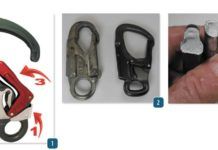
Safety Tethers Under Scrutiny
On November 18, 2017, Simon Speirs, an experienced sailor, went overboard while at the bow assisting with a headsail change on a Clipper Round the World Boat CV30. It was blustery, with sustained winds of 20 knots, gusting to 40 knots. Shortly after he went overboard, his safety tether detached and he was separated from his boat. His body was recovered 34 minutes later. The cause of death has not been determined but drowning is the suspected cause. While such accidents are tragic, they offer a chance to re-evaluate equipment standards within a real-world context.
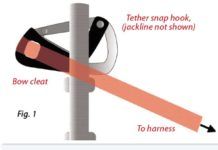
MAIB Safety Advisory Warns Tether Users
The sailing yacht CV30 was taking part in the third leg of the Clipper Round the World Yacht Race having left Cape Town on 31 October 2017 bound for Fremantle, Western Australia.
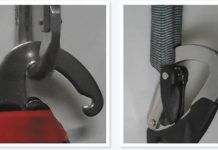
Climbing Gear Standards Guide Test Protocol
Testers used lab and field tests to evaluate each clips functionality, strength, and durability. After inspecting several sailboats to evaluate potential caribiner-benders and how we might replicate the loads, we returned to the lab and began pull-testing carabiners. The test data in the accompanying table resulted from tests that were modeled after those used to verify CE (European standard) and UIAA (climbing gear standards) specifications. All pull tests were carried out at a steady pull rate of about 2 inches per minute. These included the following tests...
Latest Logbook

Practical Sailor Logbook – October 2026
This month leans into used-boat value and hands-on maintenance: Tim Labute tours the traditional, shoal-draft Bayfield 32, Nick Nicholson revisits the much-requested Morgan 38/382,...

Video: What Happened to the Hallberg Rassy 400
Filmed at the Annapolis Sailboat Show, we take an in-depth look at the Hallberg-Rassy 400's hull construction, twin helm cockpit, twin rudder steering system,...



Latest Sailboat Reviews
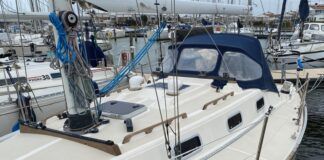
Tartan 31 Piper: Used Boat Review
The Tartan 31 is one of the new line of performance cruising yachts from the venerable-and durable--Grand River, Ohio boatbuilder. In the last few years, Tartan Marine has come out with a range of new models, including the T-28, the 3500 and the 4600. A 41-footer is in the works. Both the 28 and the latest version of the 31 are part of the new Piper series, which are marketed in sailaway condition. Tartan has a reputation for solid construction and good workmanship and that's what the 31 is: solid and well put together. The hull is hand-laminated with alternating layers of chopped strand mat and unidirectional E glass. Behind the NPG/ISO gelcoat there's a layer of vinylester resin, which so far appears to provide the best osmotic blister protection available.