


Tips for Riding Out the Storm in Your Marina
Practical Sailor has covered storm preparation on several occasions. The two most extensive articles appeared in July 2008 Gear for Battening Down Ahead of Storms, and Tropical Storms Dos and Donts, from November 2011. We also have an online article How to Help Your Boat Survive a Major Storm. What follows are just a few tips relevant to securing your boat in a marina when you have exhausted all other safer alternatives.
Raising the Bar on Lifelines
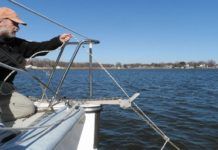
Lifelines are often disparaged as nothing more than tripping hazards, mounted so far below our center of gravity that they are more likely to launch a sailor over the side than to save him. While larger boats occasionally fit taller stanchions and solid-tube railings, the vast majority follow the International Sailing Federations (ISAF) offshore regulations, which require lifelines to be no less than 24 inches high on boats 28 feet or longer. This is effectively the bare minimum developed for racing on fully crewed boats where higher lines interfere with deck-sweeping genoas, and crew lost overboard has a reasonable hope for recovery. Cruisers have different priorities.
Hitches to Grip Anchor Chain
When researching Changing Views on Chain Hooks (see PS, March 2016 online), we were surprised to discover that some chain hooks greatly reduced the breaking strength of a chain. Unless the hook itself broke, we assumed its effect on chain strength would be very minor.
Resources for Cruising to Cuba
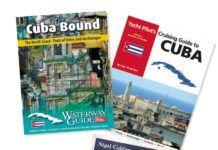
Although Cuba is terra incognita for many Americans, it has been a popular destination for Canadian and European cruisers for more than a decade. Here, we look at some resources for cruisers planning-or dreaming of-a cruise to Cuba.
Cuba Trip and a Sailors Musings
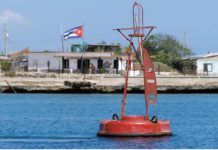
Plans are shaping up for my first passage to Cuba this summer, and already, Ive been getting some flack from the friends and family in Miami. My stepmother is from Cuba, so most of my growing up was steeped in the traditions of La Isla, as well as the ire of a generation uprooted by the revolution.
In the Perfect Position to Fail
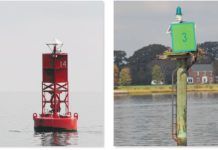
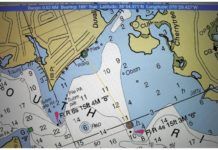
For centuries, navigators have been coping with two key variables that convey major consequence. The first is the quest for an accurate position fix, and the second is the hope that the chart theyre using is an accurate representation of their surroundings. Up until a couple of decades ago, cartographers were winning out and chart accuracy trumped sextant-derived fix accuracy. The tide has turned.

USCG Now Allows Digital Instead of Print Charts
Heralding in a new era for electronic navigation, the U.S. Coast Guard recently published guidance that allows mariners to satisfy chart-carriage requirements using electronic charts and electronic publications instead of paper ones.
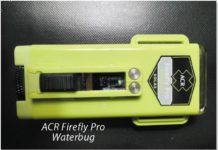
Which MOB Lights Shine Bright?
When a man-overboard (MOB) incident occurs at night, the odds of recovery become slimmer. The fate of the person in the water hinges on how fellow crewmembers respond and what the victim has intentionally or inadvertently taken with them into the water. A well-prepared offshore sailor will carry essential personal safety gear on him at all times while standing watch during a passage. At the top of the must-have list are a combination harness/inflatable personal flotation device (PFD) and a tether that can be clipped to a jackline to prevent you from being launched over the lifeline. (For an in-depth look at gear and techniques associated with an MOB incident, our downloadable e-book, Man Overboard Prevention and Recovery, is available through our online bookstore at www.practical-sailor.com/books.)
Stated Output Doesnt Always Match Real Life
Practical Sailors testing of man-overboard lights involved both lab and on-the-water testing. Our main interest was each lights brightness (radiance), but we also wanted to see how strobe patterns might hasten or delay the recovery of a man overboard.
Can Portable Flashlights Serve as MOB Lights?
During our man-overboard light testing, we also looked into the effectiveness of using a waterproof flashlight as a man-overboard signal. Most offshore sailors already carry a compact flashlight or wear a headlamp during night watches-why not choose one that can do double-duty? A dual-purpose flashlight would be in some ways similar to a cellphone-a device designed primarily for everyday use, but also capable of serving a lifesaving role in the event of an emergency.
Video: Beneteau 361 – Full Review
Should you buy an older Beneteau sailboat? In this Practical Sailor boat review and yacht tour, we examine the Beneteau Oceanis 361 to see...



Latest Sailboat Reviews
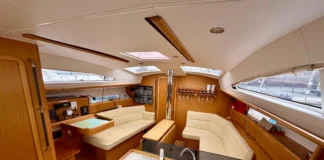
Jeanneau Sun Odyssey 42 DS Used Boat Review
This boat is dangerous for one simple reason—it looks like the answer. It’s big enough, pretty enough, modern enough, and suddenly, somehow, almost affordable...