

Some Charts More Clearly Indicate Accuracy
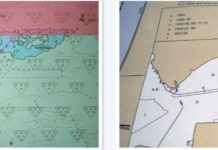
The International Hydrographic Office has a six-level rating system that indicates the accuracy of the data used to create a charted area. This zone of confidence (ZOC) layer is included in all digital charts approved by the International Maritime Organization for use in Electronic Chart Display and Information System (ECDIS). By selecting the overlay (a pattern of small asterisks, see photo), the user sees a graphic representation of the accuracy in a charted area. Most charts rely on numerous surveys, each with a different degree of accuracy, so these overlays provide vital information.
GPS Precision Cant Replace the Navigator
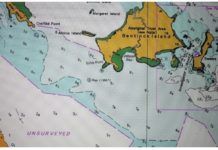
Pinpoint navigation is a pipedream that the industry has been silent about for way too long. Just read the I accept contract on your multifunction display (MFD) screen, and youll run across phrases like electronic charts are inadequate as a primary means of navigation. Or, if you don't believe the chart makers disclaimer, just listen to what the U.S. Air Force, the owner of GPS, has to say about a system that was never intended to be a standalone navigation alternative. And yet thats just what we recreational sailors have accepted it as.
Reading the Weather
The air surrounding us on the surface of the earth weighs about 1.2 kilos per cubic meter, and when we stack up these invisible building blocks of the atmosphere, they add up to tons of pressure pushing down upon us. Its little wonder that when air at the surface starts moving sideways, it has a profound effect on sails and the sea surface.
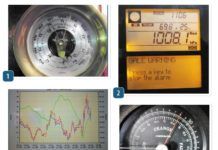
Barometers Usefulness Varies by Latitude
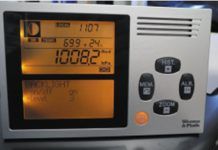
Many electronic barometer/barographs feature an auto alarm that warns of pending bad weather, and we found them to be accurate enough to heed. But whats most interesting is how an instrument that only tracks pressure and temperature can make such accurate calls. It all boils down to how rapidly atmospheric pressure is changing, and according to Alan Watts in his Weather Handbook (a longtime favorite among cruisers), a change of 3 millibars or more per hour is a reliable indicator that gale-force conditions are likely to be headed your way.

Fathers Rite of Passage
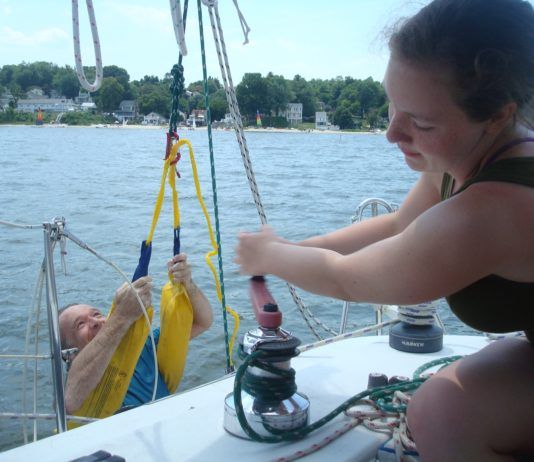
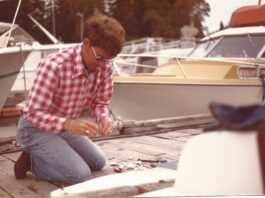
Last summer, I asked my father to join me and my two boys for an overnight passage to the Keys. At the last minute, he decided not to go. Too unsteady on his feet anymore, he said. So you will understand, as I try to explain how sailing-especially around Fathers Day-stirs up mixed emotions. …

Whats the Frequency, Kenneth?
Earlier last month, I had the chance to join renowned sailing author Lin Pardey and survival expert Steve Callahan (author of Adrift: 76 Days Lost at Sea) for a round table discussion at the Port Townsend Wooden Boat Show, in Port Townsend, Washington. Since my own approach to cruising was shaped by the philosophy of self-sufficiency that Callahan, Lin, and her husband Larry have long advocated, I wasnt surprised by their responses when discussion turned toward two categories of safety equipment weve covered extensively: the combined inflatable life jacket/harness and electronic devices used to signal distress.
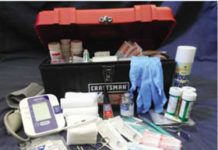
Creating a Custom Med Kit
Sailors know the most about the things we use the most. We check our amp hours every day, our standing rigging frequently, our sails every time theyre up, the anchor shackle before settling in for the night. After all, these are the things that keep us comfortable and safe on a daily basis. The corollary is that we know the least about the things we use the least. How often do we check the chain on the backup anchor, the lines on the drogue, the clew of the storm sail? After all, its human nature to not think about things we hope we never have to use.

Performing First-aid Feats When There is No Kit
If you reach for the onboard first-aid kit and find out there isn't one, don't panic during an emergency. Some out-of-the-box thinking will help put the needed medical tools in your hands. The guiding rule to survival is to use whats available and improvise.
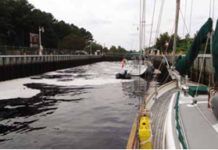
Where to Steer, Eat, Anchor on the ICW
Most sailors find entering a new anchorage or harbor after a long day on the ICW an adventure. However exciting it may be, most of us also find that it carries a considerable amount of stress, particularly if entering in fading daylight or deteriorating weather. Not only do you have to contend with navigational issues, but there are other burning questions like wheres the best place to anchor; where can I get supplies or fuel; is tonight all you can eat ribs at Hawg Heaven Restaurant; or is there a dinghy dock nearby? To help you navigate all these questions and concerns-not to mention the unknown waterway-you need a good ICW guide that has all the facts, figures, and the right array of local knowledge.
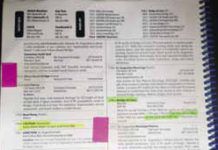
Doin the Ditch, Frank style
The key to safe, stress-free ICW cruising (or less-stress at least) is proper planning. Get the most up-to-date ICW guidebooks and charts, and study them well in advance. When planning the field-test trip down the ICW for this article, PS tester Capt. Frank Lanier came up with a general timeline and lists of major stops he wanted to make along the way, but he let his day-to-day progress drive his schedule. He always planned out the next days run prior to heading out (typically the night before), which also gave him a chance to review the latest weather forecasts and its potential effect on travel plans.

Bahamas for $5000? The Watkins 27 foot Sailboat
Is the Watkins 27 the ultimate small cruising sailboat? In this video, we take a deep dive into the Watkins 27 — a classic...



Latest Sailboat Review

Jeanneau 55 Boat Review
This recent sailboat from Jeanneau may as well be a spaceship. They’ve taken all the time-honored designs of a monohull aft cockpit and turned...