


Doin the Ditch, Frank style
The key to safe, stress-free ICW cruising (or less-stress at least) is proper planning. Get the most up-to-date ICW guidebooks and charts, and study them well in advance. When planning the field-test trip down the ICW for this article, PS tester Capt. Frank Lanier came up with a general timeline and lists of major stops he wanted to make along the way, but he let his day-to-day progress drive his schedule. He always planned out the next days run prior to heading out (typically the night before), which also gave him a chance to review the latest weather forecasts and its potential effect on travel plans.
Testing EZ Splice Finds a Knot is a Better Choice
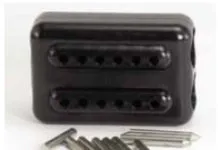
Rope splicing is a sailorly art form that has many boaters scared skinny. They havent learned the skill, and they fear that using a knot instead displays their ignorance and is perhaps less secure. The EZ Splice (www.ezspliceusa.com) promises a means of splicing a rope in minutes without any special skill. The lines are trimmed to length, inserted into the EZ Splices tough plastic housing with just a little tail sticking out, and 12 stainless pins are pounded in with a hammer. We found it to be fast and easy, and the result was a consistently neat splice. But the million-dollar question remained: How secure was it?
What to Pack in a Ditch Kit?
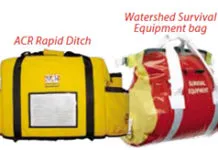
Any suggested references or sources that I might check for an abandon-ship checklist? Its not the most pleasant of topics, and I know it will vary from boat to boat, but I would like any information on the basics that should be on any such list. We appreciate any help you might provide.

Beaming Down Satcom Surgeons
Telemedicine, the ability to remotely treat patients in far-flung corners of the world, was still in its infancy in 1998 when it was put to a highly publicized test aboard a storm-tossed sailboat in the Southern Ocean. Russian competitive sailor Viktor Yazykov was participating in the solo Around Alone Race. His boat was about 900 miles below the tip of South Africa when his rig began falling apart. While Yazykov was repairing a broken shroud, an elbow he had injured earlier in the race grew inflamed with infection.

Testing Telemedicines Limits
Early into the 645-mile race between Marion, Mass., and the island of Bermuda in 2009, trouble brewed aboard the C&C 40 Corsair. The bizarre situation that the crew of Corsair faced is described in detail in a 2011 article, Lost at Sea, written by Diane Kelly in Ocean Navigator magazine. It all began when the navigator, 75-year-old Ron Chevrier, started acting strangely.
Seeing Beyond Polarization
Has Practical Sailor reviewed sunglasses since the 2009 article? The feature wed really like to have is to be able to read our chartplotters screen without removing sunglasses. A review of that particular feature would be extremely helpful.
Comparing Medivac Services
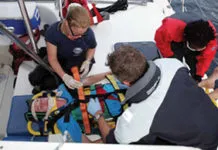
If your cruising plans include bluewater voyaging or sailing to the far-reaches of the world, then packing a first-aid kit and getting travel insurance may not be enough. Should you contract a company that offers tele-medical advice, air-ambulance, and remote evacuation contract services? To help you decide, Practical Sailor submitted questionaires to three medivac companies-Global Rescue, International SOS, and Remote Medical International-to find out what services are available and how to decide which suits your needs.
Comparing Class B AIS Transceivers
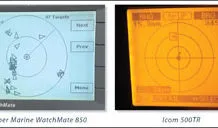
The popularity of Automatic Identification Systems (AIS) has grown exponentially in recent years. Lower costs have played a big hand in this; however, the primary driver remains boat owners looking to increase safety. Our latest evaluation compared Class B transceivers from two key players in the AIS market. From Icom, we tested the MA-500TR. New Zealand-based Vesper Marine submitted its WatchMate 850 for testing. We rated the products on AIS functions, control capabilities, user-interface, filtering capability, display quality, and screen visibility.
The ODEO Laser Flare
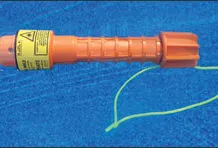
Like winning lottery tickets and accurate head shots during the zombie apocalypse, visual distress signals are one of those things you just can't have too many of. To meet safety and legal carry requirements, most sailors have handheld, pyrotechnic flares onboard, but these have some drawbacks. Pyrotechnic flares generate molten slag that can injure a user if not handled properly; they have a short burn time (less than 3 minutes for U.S. Coast Guard-approved flares); and can be used only once. Also, they have a 42-month service life, so replacing them can add up, and they are made of hard-to-dispose-of hazardous materials.
Financing Good Ole Boats
Here is a question that has puzzled me for a long time. Many financial institutions offer financing on mature vessels but have a boat age limit of 15 to 20 years. But, if a 1978 classic-plastic boat underwent a major refit in, say 1999, does that make the boat a 1999 in the eyes of the financiers? Id like to hear tales on how others may have gotten around this rule.

Video: Beneteau 361 – Full Review
Should you buy an older Beneteau sailboat? In this Practical Sailor boat review and yacht tour, we examine the Beneteau Oceanis 361 to see...



Latest Sailboat Reviews
Brewer 12.8/44 Used Boat Review
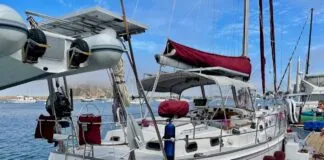
The Brewer 12.8 and the Brewer 44 are developments of the Whitby 42, a cruising boat from the board of Ted Brewer. Brewer is one of the great modern cruising boat designers. His boats are well-mannered, attractive and practical. To improve windward performance, a high aspect ratio centerboard extends through the bottom of the 12.8's shallow keel. Since the board is not ballasted, it does not affect stability, but can be used when reaching to shift the center of lateral resistance.