


PS Advisor: Rope Coatings to Prolong Cordage Life
New lines run fast. They fly through tackles and tangles fall right out. But they are also hard to hold in our hands, on...
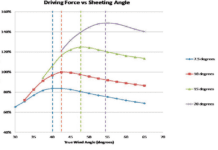
Setting Up Your Own ‘Floating’ Genoa Lead
When setting up a floating lead system, you need to establish the maximum range of positions you may need. With a track system, the...

Solid Rings in Running Rigging
Ball bearing blocks are the low-friction answer for most tackle on board. However, racers and even cruisers, are increasingly making the switch to low...

Do Cruisers Need Jib Leech Telltales?
Telltales on the body of the jib and leech of the main are commonplace, and most of us learned to sail using them. They...
PS Advisor: North-up Versus Heading-up Navigation
When a vigorous debate broke out recently at a local boat show over the ideal orientation of a chartplotter (north up vs. heading up),...

Bungee Lanyards Take the Shock Out of Tools Dropped from the Mast
Iput a nice dent in the deck several decades ago when I dropped a wrench from the masthead. It scared the crew too.
I haven’t...
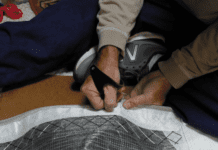
Stitching Awl vs. Leather Palm for Sail Repair
Got a small sail or canvas repair? “Get a Speedy Stitcher!” is common advice, though rarely from someone experienced in sail repair.
Sure, it seems...

PS Advisor: Belaying Safety for Mast Climbing
Mast climbing accidents have occurred because the crew member either misunderstood or did not perform their duties attentively and properly. Belaying should be considered...

Designing a Dump Line for the Multihull Mainsheet
Many of Practical Sailor's previous reports have explored the risks of multihull capsize, and what sailors and designers are doing to reduce this risk, which, though generally low, increases as designers push for more speed. One detail that we have not explored in great depth is the engineering of a “dump line,” which allows the helmsman (or automatic system) to quickly release the mainsheet in case a capsize is imminent. Simon Angus, a Canadian sailboat designer and builder who recently launched a new 40-foot catamaran that fits into a shipping container, has a manual system that involves the clever use of Ronstan’s constrictor textile rope clutches, which allows a person at the helm to quickly release the mainsheet with the swift tug on a parachute cord.

Drogues to Dampen Yaw
A leading cause of anchor dragging is yawing so vigorously that either the soil around the anchor is liquefied, or the anchor simply capsizes....
Latest Logbook

Practical Sailor Logbook – September 2026
In September we tour the Hans Christian 48T — the offshore cruiser many sailors call the holy grail — walk the custom Antigua 60...

Video: The BEST Sailboat You Can Buy for $35,000 – Catalina...
If you’re searching for a mid-30-foot sailboat, affordable cruising sailboat, liveaboard sailboat, first sailboat, or a capable used sailboat for coastal cruising, the Catalina...



Latest Sailboat Reviews

Learning by Doing on a $5,000 Catalina 30 Mk II
When Davis’s mother started talking about wanting to do something “big” for retirement, Davis and Gloria half-jokingly threw out an idea that seemed suitably...