


The Science of Headsails Part II
The right roller-furling headsail is as beneficial to a sailor as a good zoom lens is to a photographer. But just as the zoom lens has limits, even the best furling headsail is challenged at the extreme ends of its range. In the October 2015 issue, we explored the basic sail needs of a daysailor. For this report, the second and final in our series on headsails, we asked five professional sailmakers from around the country to weigh in on the ideal sail inventory for coastal cruising.
Tame Bigger Breezes with a Forestaysail
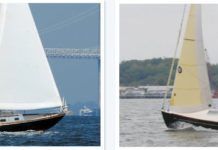
Getting rid of the big genoa is usually easy thanks to roller furling, but what do you do then? Changing sails on the furling unit is a daunting task when short-handed, and sailboats don't power particularly well in a big sea. Heres an easy, safe, and seamanlike solution: Set your boat up with an inner forestay, and when these conditions arise, roll your big genoa up, set your forestaysail, and away you go.
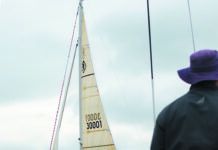
Adding a Solent Stay
Whether you view it from the top down or the bottom up, a Solent rig needs to be carefully thought out, well-engineered, and strategically located. Some sailors add a short bow sprit or U-shaped, tubular extension that includes a bobstay and supports the attachment of a new headstay. The old headstay chainplate becomes the new tack point for the Solent stay. Another approach is to retain the existing headstay and simply attach a new tang just a bit below the headstay sheave box. Then add a deck fitting to attach the Solent stay and tack the sail(s). The deck must be reinforced with a transverse member, or a tie rod must be mechanically fastened to the stem so that the tension loads don't damage the deck.
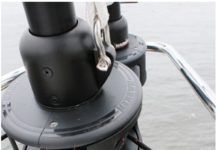
Untangling Furling-line Fairlead Logistics
Headsail furling on sailboats 40 feet and shorter should be able to be accomplished with a hand-over-hand pull on the furling line. If a large genoa is set and the breeze fills in abruptly, it may take a little coaxing with a winch to get things going, but when its a fairly light-wind day and you need to start cranking away on a primary winch to instigate the furl, something is wrong with the system.
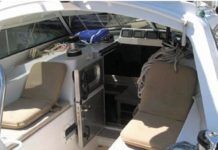
Bulletproof Companionways
The used boat review of the Tartan 37 in the January 2015 issue mentioned that several companies specialize in producing bullet-proof companionway door arrangements that can be customized to fit almost any boat. I would like the names of such companies in the U.S. as I am looking for ways to improve my boats current companionway arrangement.

Editors Tap Top Sailing Gear of the Year
Each fall, Practical Sailor editors sort through the best test products of the past year to pick those deserving of a spot on our PS Editors Choice roster. To be named to the list, products must earn the Best Choice rating among their respective peers and clearly stand out above others in their field.

The Best of Bottom Paints
Our Editors Choice roster would not be complete without the top performers in our semiannual bottom paints tests (PS October 2014 and April 2015). The most recent test looked at 55 different paints from Blue Water Paints, Interlux, Epaint, Pettit, and Sea Hawk. This years hard paint standouts were Interluxs Micron Extra with Biolux and West Marines Bottomshield. Made by Pettit, the West Marine-branded PCA Gold was the top ablative paint. Micron Extra and PCA Gold tied for best performance of the bunch.
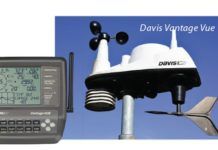
VHFs, SSBs, and Reading the Weather
In the April 2015 issue, Practical Sailor evaluated four handheld VHF radios loaded with all the bells and whistles, including longer battery life, positive flotation, internal GPS, and digital selective calling (DSC) capabilities. Out performing VHFs from Icom, West Marine, and its own product line was the Standard Horizon HX870, which grabbed a spot on our Editors Choice list.
Fishing Rigs for Sailors
The low-cost, space-saving yo-yo hand reel is the most basic, efficient fishing gear you can find-its essentially a handline modernized with a molded plastic reel wrapped with monofilament.
Pull it Until it Breaks
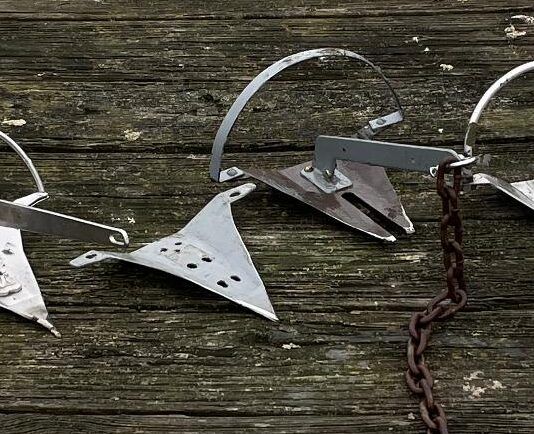
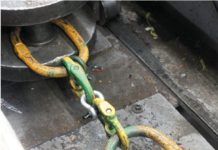
All testing was carried out at an approved test facility in Newcastle, Australia: J.L. Robertsons, which is adjacent to one of Australias large coal-mining areas. The test rig is used to certify lifting components for the local mining industry on a daily basis. The facility can test up to 95 tons, far more than we require. This is the same facility where we tested all of our anchor chains. (See PS June 2014, November 2014, January 2015, and March 2015 online.)
Latest Logbook

Practical Sailor Logbook – September 2026
In September we tour the Hans Christian 48T — the offshore cruiser many sailors call the holy grail — walk the custom Antigua 60...

Video: RIB vs Inflatable Catamaran Dinghy
For decades, the standard cruising setup has been something like a 10-foot RIB with a 15-horsepower outboard, but lightweight cat dinghies are challenging that...



Latest Sailboat Reviews
Learning by Doing on a $5,000 Catalina 30 Mk II
When Davis’s mother started talking about wanting to do something “big” for retirement, Davis and Gloria half-jokingly threw out an idea that seemed suitably...