

Replacing Teak Decks, the DIY-er’s Way
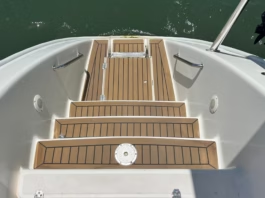
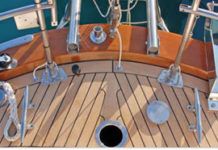
Practical Sailor contributor and world cruiser Joe Minick details the steps he and his wife took to replace the wornout teak deck aboard their Mason 43, Southern Cross. Minick breaks down the major tasks of the three-month project and explains how they saved a lot of money by doing some of the work themselves. The article looks at the pros and cons of a do-it-yourself teak deck refit; planning and budgeting; step-by-step removal of hardware and the old deck; and the detailed installation process of the new deck.
West Marine Updates Recalled Tether
West Marine has released a new, improved version of the safety tethers it voluntarily recalled last summer. As we reported in the August 2010 issue, West Marine recalled its model 9553512 (single) and 9553504 (double) safety tethers—which featured Kong hooks on the boat end and snap shackles on the user end—over concerns about the durability of the split ring connecting the snap shackle’s release pin and the lanyard.
PS Advisor: Rotten to the Core
Do you have any suggestions on a book or manual that explains how to replace a cored deck where most of it is soaking wet? I replaced a 1.5-square-foot area and was surprised to see that it was so wet and rotten that I could grab the wood core and squeeze it like a sponge.
Improve Your Catalina 30: Upgrading the World’s Most Popular 30-Footer
The Catalina 30 is a remarkable success story. We suspect that more Catalina 30s have been built than any other boat of that size anywhere in the world. While the basic boat has remained unchanged since it was introduced in 1975, there have been dozens, perhaps even hundreds, of minor developments in the boat in the course of a production run that is approaching 4,000 hulls. The advantage of a boat in production for so long is a high degree of product refinement over the years. The challenge for the owner of an early version of the boat is to upgrade his boat to the standards of models currently in production.

How To Help Your Boat Survive A Major Storm
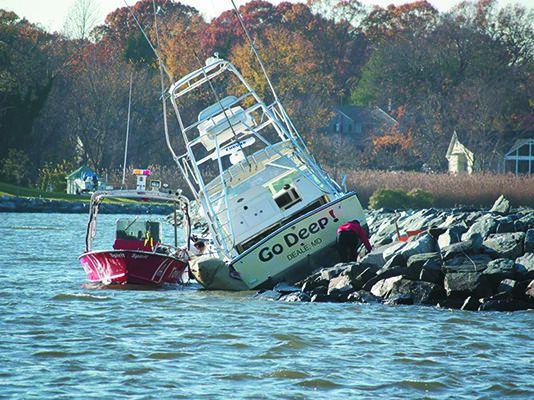
Hurricane Gloria was a most impolite lady. She barreled up the Atlantic coast, scaring the heck out of people from Florida to Massachusetts. Despite the fact that the storm didn’t live up to its billing, hundreds of boats in New York, Connecticut, Rhode Island, and Massachusetts were destroyed or severely damaged. In some cases, the boats were lost through no fault of the owner. No amount of preparation will save your boat if another boat drags down on it in the middle of a hurricane. In other cases, however, lack of proper preparation was a major cause of a damaged boat. There’s no excuse for that type of loss.
Small Boats in the New Economy
A critique of conventional Western economics, Schumachers Small is Beautiful argues for a simpler, decentralized economy that puts the focus on individual productivity and general well-being, rather than gross domestic product. Although Schumachers critics associate some of his proposals to the radical back-to-nature movement of the 1960s, many of his ideas are as relevant today as they were when Small is Beautiful was published. Prime Minister David Cameron is among several contemporary leaders whose economic vision has been influenced by Schumachers work.
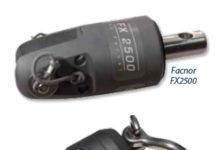
Foil-less Furlers Test
Practical Sailor compares two new continuous-line furlers, the Seldn CX15 and Profurls new NEX 2.5, with the Facnor FX2500, which was named the PS Best Choice foil-less furler in the March 2008 issue. Testers unfurled the test boats sails then sailed a 120-degrees reach, and with the mainsheet blanketing the drifter, eased the sheet and hauled away on the roller furlers endless line. A spring scale measured the initial tension it took to start the process. If improving your boats light-air sailing performance is a priority, a foil-less furler could be a user-friendly, roller-furling solution.

Light-air Sailing with a Twist
Today’s breed of well-engineered, conventional, slotted-luff headsail furlers affords a wonderful home for the compromise genoa—a 12- to 25-knot, easy to handle, 120-135 percent sail. The compromise genny is neither working jib nor light-air-optimized headsail—and the idea of making it a 4-ounce, 150-percent genoa defies both shape concerns and material constraints. The setup leaves many boat owners, in their quest to optimize power under sail, seeking a light-air solution.
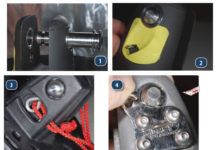
Furling Gear Break Down
All of the latest endless-line furlers that we’ve seen have greatly improved on older designs’ latch-and-catch systems.
PS Advisor: Pondering the Keel-ectomy
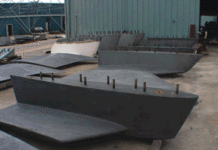
My wife and I have moved our O’Day 39 to the Oriental area of North Carolina. We have the three-cabin version without the formal nav station. Our draft with our lead-ballast keel is 6-feet, 4-inches. Since we are going to be sailing in the Pamlico Sound, Neuse River, and the Intracoastal Waterway, we are being told we should modify our keel to better cope with the shallower water.
Latest Logbook

Practical Sailor Logbook – October 2026
This month leans into used-boat value and hands-on maintenance: Tim Labute tours the traditional, shoal-draft Bayfield 32, Nick Nicholson revisits the much-requested Morgan 38/382,...
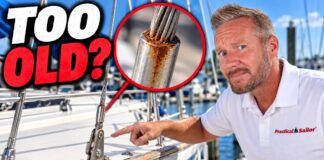
Video: How Old Is Too Old for Standing Rigging?
If you own an older sailboat, are shopping for a used sailboat, or are trying to understand the true cost of sailboat ownership, standing...



Latest Sailboat Reviews
Tartan 31 Piper: Used Boat Review
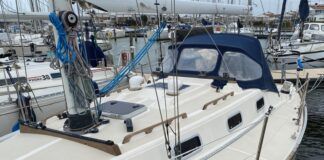
The Tartan 31 is one of the new line of performance cruising yachts from the venerable-and durable--Grand River, Ohio boatbuilder. In the last few years, Tartan Marine has come out with a range of new models, including the T-28, the 3500 and the 4600. A 41-footer is in the works. Both the 28 and the latest version of the 31 are part of the new Piper series, which are marketed in sailaway condition. Tartan has a reputation for solid construction and good workmanship and that's what the 31 is: solid and well put together. The hull is hand-laminated with alternating layers of chopped strand mat and unidirectional E glass. Behind the NPG/ISO gelcoat there's a layer of vinylester resin, which so far appears to provide the best osmotic blister protection available.