

Anchor Lockers Part I
The contemporary anchor locker setup favors clear-deck convenience. This compromise can have some serious disadvantages. As with most things on sailboats, boat owners/buyers have to weigh the pros and cons and find a balance that meets their needs.
Sealing Anchor Chain Spill Pipes
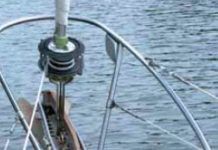
Anchor lockers are a convenience to coastal cruisers but no friend to offshore sailors. Passagemakers often forgo a deck-clearing locker for a belowdecks anchor-chain well. An angled spill pipe leads the anchor chain from the deck to the well, which often is under the forepeak and behind a watertight bulkhead. The setup not only eliminates the flooded-bow worries inherent with an on-deck locker, but it also moves the chain and anchors’ weight lower and further aft, where it should be to avoid hobby-horsing.
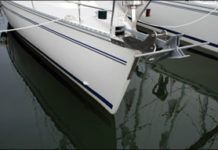
A Look At Anchor Lockers
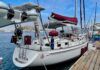
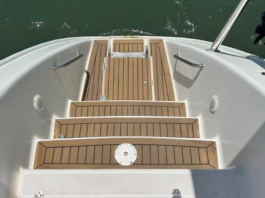
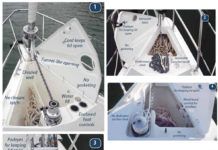
For several years, Practical Sailor has peeked into anchor lockers at the Miami and Annapolis boat shows and recorded the good, the bad, and the just plain poorly designed. This photo essay highlights some of the highs and lows of locker design, and shows examples. If you're looking to buy a sailboat or to make sure your foredeck is properly set up, then checkout this report. A few points that we look at: all points of locker access should be able to be made watertight; cleat leads and opening the locker do not conflict; the bitter end of the chain is tied (rather than shackled) to a hard point; and on-deck anchor locker versus belowdecks anchor well.
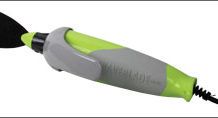
Chandlery: March 2011
More and more boat bottoms are being coated with low-biocide and biocide-free antifouling as environmental regulations and boater eco-consciousness continue to evolve. As a result, those bottoms are being cleaned more frequently, and boat owners are seeking out tools that will make the job less work.

The Pitfalls of Eco-nice Antifouling
As much as I enjoy messing around with boats, the job of prepping a hull and applying antifouling paint is one I could live without. A do-it-yourself paint job is not as loathsome as it used to be, but it’s still one of my least favorite tasks. In recent years, paint makers have begun adding a range of water-based antifouling paints to their lineups. These new paints eliminate most or all of the strong solvents that make painting unpleasant and that, over time, can be harmful to our health and the environment.
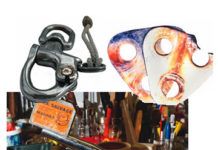
The Problem with Stainless Steel
One of the biggest hits to a boater’s wallet is the high price of 316 stainless-steel hardware. But trying to sort the good from the bad in a bin full of mystery-grade stainless-steel screws and bolts is like rolling dice.
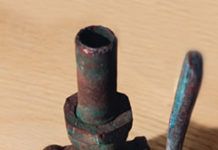
More Marine Treasures To Buy Used
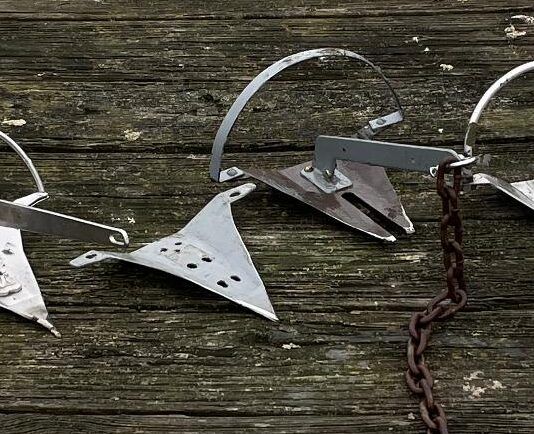
As the economy has withered, the market for secondhand boat gear has flourished. Used marine-gear stores such as Fort Lauderdale’s Sailorman and Newport Beach’s Minney’s have seen both the supply and demand of used boat gear on the rise. Buying secondhand is typically easier on your wallet and on the environment, but used gear shopping certainly has its ups and downs. In this report, Practical Sailor talks to those in the know—the friendly faces running the secondhand marine stores—and takes a look at what used gear to look for and what to steer clear of. Deck gear—snatch blocks, winches, bronze cleats—can be worth the bin-digging at a boating consignment shop. Ground tackle, if it has a shank stamped with a recognizable brand name, also can be a smart buy. However, purchasing used marine electronics, safety gear, or an anonymous anchor can be iffy. As with any gear purchased secondhand, it's buyer beware. Sailors should do their research before heading to a consignment store, and always take with you a list and a budget.
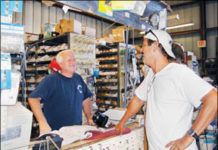
A Treasure Hunting Guide to Secondhand Boat Gear
As the economy has withered, the market for secondhand boat gear has flourished. Used marine-gear stores such as Fort Lauderdales Sailorman and Newport Beachs Minneys have seen both the supply and demand of used boat gear on the rise. Buying secondhand is typically easier on your wallet and on the environment, but used gear shopping certainly has its ups and downs. In this report, Practical Sailor talks to those in the know-the friendly faces running the secondhand marine stores-and takes a look at what used gear to look for and what to steer clear of. Deck gear-snatch blocks, winches, bronze cleats-can be worth the bin-digging at a boating consignment shop. Ground tackle, if it has a shank stamped with a recognizable brand name, also can be a smart buy. However, purchasing used marine electronics, safety gear, or an anonymous anchor can be iffy. As with any gear purchased secondhand, it's buyer beware. Sailors should do their research before heading to a consignment store, and always take with you a list and a budget.
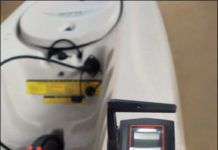
Hobie Mirage: Paddle, Pedal, Power, or Sail
The Hobie Mirage Tandem Island, a mouthful we’ll refer to as the HMTI, is the latest incarnation of Hobie’s capable and creative engineering team. This triple-play trimaran can be paddled, pedaled, and sailed using dozens of Hobie’s in-house designed parts. A specialized Torqeedo electric outboard (www.torqeedo.com), which can be dropped into a drive slot, adds a forth dimension to this multi-tasking multihull.

Sailboat Design Conference Part I
Beyond the text and photos contained in a sailboat manufacturing company’s brochures, and the words of a dealer or salesperson, and absent an understanding of yacht design, discerning the actual capabilities of today’s production boats is a major task. Gone are the days of Herreschoff et. al., when the conventional wisdom held that a long, deep keel was the best method of producing good tracking, displacement produced a seakindly ride, and performance (straightforward speed) was a simple matter of adding sail area. Prior to the age of fiberglass, most yachts used similar raw materials (wood and metal), and construction methods, so those variables were not generally a consideration.
Latest Logbook

Practical Sailor Logbook – September 2026
In September we tour the Hans Christian 48T — the offshore cruiser many sailors call the holy grail — walk the custom Antigua 60...
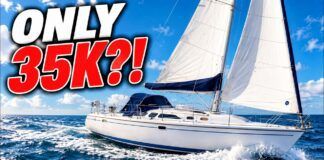
Video: The BEST Sailboat You Can Buy for $35,000 – Catalina...
If you’re searching for a mid-30-foot sailboat, affordable cruising sailboat, liveaboard sailboat, first sailboat, or a capable used sailboat for coastal cruising, the Catalina...



Latest Sailboat Reviews
Learning by Doing on a $5,000 Catalina 30 Mk II
When Davis’s mother started talking about wanting to do something “big” for retirement, Davis and Gloria half-jokingly threw out an idea that seemed suitably...