
Marine Wiring: Are the Pricey Options Worth the Cost?
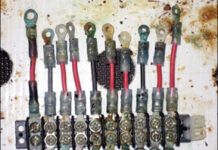
This article launches Practical Sailors long-term test of electrical wires, electrical connections, and corrosion inhibitors for electrical applications onboard sailboats. Ultimately, the goal of this ongoing project is to examine corrosion in wires and connectors in a marine environment. More concisely, it could be presented as a closer look at three common elements in marine wiring to answer some basic questions: What is the best wire to use on a sailboat? Is it tinned wire, automotive wire, or stranded machine tool wire? What are the best corrosion preventatives? Do you apply the anti-corrosion treatment to every connection and every crimp, or just certain types of connections? What are the longest-lasting connections? Which were most prone to electrolysis? We made observations during the six-month test period without disturbing the samples. At the end of the full one-year test period, we will unbolt all of the fittings from the terminal strips and look for corrosion under the fittings.

Extra Anchor Lighting
When summer comes, a dozen or more sparkling white lights will adorn every popular anchorage. Visible from miles away, they promise to provide good...
DIY Electrical System Survey and Inspection
So, you’ve finally purchased that new (or new-to-you) boat of your dreams. Now is a great time to familiarize yourself with its systems—a good...
A Smart, Easy Way to Rewire
Running the wires for new electronics requires your best cursing vocabulary, lots of sweat, twisting body contortions, luck, and the occasional bandage. For tips on how to make this job easier, we turned to PS contributor Bill Bishop. A professional marine-electronics installer, Bishop has many ingenious ways to thread a wire from point A to point B.
Small Wire Connections: Best Methods
Connecting two standard-size wires is pretty straightforward: Grab a ratchet crimper, adjust it to fit the crimp connector, strip the two wires to fit into the butt connector, slide the wires into the connector, and squeeze the crimper. The required materials are readily available: butt connectors for inline splices, ring connectors for terminal blocks, and a dab of anti-corrosive grease for the bolts and rings. Done right, these connections can survive some extremely tough conditions. In a recent test of anti-corrosion greases and connections, we demonstrated how these connections can last up to five years in the worst bilge conditions.
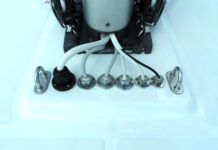
Watertight Connector Test
If only there was a good standardized 12-volt electrical connector. I’ve never had a boat without multiple connector failures, and most of them involved...
Electric Outboard Charging Tips
Somewhere around the third carburetor rebuild for our 3.3 hp four stroke dinghy outboard, I decided enough is enough. Four stroke outboards are supposed...
House Battery Bank Replacement: What to Consider
Replacing a battery bank on a cruising sailboat requires a myriad of choices—driven by one overriding goal. What are you hoping to power with...

Simple Lithium for Outboard-Powered Tenders, Daysailers, and Sport Boats
Lithium is cool. Your cell phone uses it. Cameras, laptops, flashlights … everything. But “cool” is not a reason. Fire is not a big...
Ensuring a Safe Space for Batteries
When charging, lead acid batteries generate hydrogen from the electrolysis of water, and some acid gases, the amount of which vary with the battery...
Latest Logbook

Practical Sailor Logbook – September 2026
In September we tour the Hans Christian 48T — the offshore cruiser many sailors call the holy grail — walk the custom Antigua 60...

Video: The 11.5 Knot Cruiser – Bavaria Match 42 Yacht Tour
Could this be the fastest family cruiser you’ve never heard of? The Bavaria Match 42 is a genuine performance sailboat hiding beneath the interior...



Latest Sailboat Reviews
Cal 2-27 Used Boat Review
Our story begins in 1970, with the introduction of the Cal 29. Looking for something similar but a bit smaller, the company asked designer Bill Lapworth for a 27-footer, which at first was the Cal 27, a fin keel, spade rudder design with a convertible pop top; another incarnation of this basic hull was the T/2. But the concept of the 29 found its full expression in the Cal 2-27, which began production in 1975 and continued to 1977, after which it was again modified and called simply the Cal 27...again. Production of it ceased in 1986.