

Updating Onboard Electronics with N2K
A sailboat is no place for unnecessary complexity, which was the direction PS contributor Dan Corcoran was headed on his Beneteau 393, when it came to how data was passed between various marine electronics. The worst offender was a spaghetti network of point-to-point wiring that utilized the familiar National Marine Electronics Association (NMEA) 0183 standard. A few years ago, he embarked on a gradual replacement of NMEA 0183 wiring and components with the new standard, NMEA 2000. Here he offers his account of the upgrade and answers the oft-asked refit question: Was it worth it?

Mailport: September 2013
In response to Whats in the Practical Sailor Toolbag? (PS, January 2012): How about a list of tools that a live-aboard cruiser should carry? Given storage, power, and workspace limitations, many of the suggested tools are not feasible and may require alternatives. For instance, I carry a major Dremel toolkit, and it cuts the very occasional holes I need for switch installation, etc., plus helps me with sanding and minor refinishing work. I use my Dewalt 18-volt right-angle drill probably twice a month for repairs and upgrades. I also use my cordless screwdriver several times per year, especially when removing and reinstalling my headliner while chasing wires. Most others are tools that don't require electricity, but there are many.
Spreader Light Test
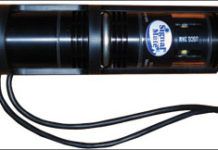
Sailors often have a love-hate relationship with spreader lights. They can turn a dark deck into broad daylight, making foredeck tasks much easier, but the downside is the pitch-black abyss that extends beyond the deck. Testers reviewed 10 LED and xenon lights designed for mast, deck, and spreader mounting. We considered useful light output, power draw, durability, and price. The test field included lights from Dr. LED, Forespar, Hella, Scandvik, and Signal Mate.
Where Credit Is Due: July 2013
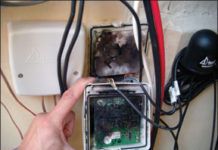
After reading your article, A Sailor's Guide to Marine Insurance, I wanted to give a shout-out to Progressive Insurance (www.progressive.com), which has insured our Stiletto catamaran and our dinghy, outboard motors, and trailers. Customer service is extremely friendly and efficient on the phone any time we want to check or change our policy. And when lightning struck the mast of our catamaran, they sent an adjuster out within two days, took care of the paper work, and had a payment sent to us within two weeks. Thats an incredible turn-around time.
Where Credit Is Due: May 2013
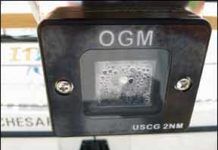
Two years ago, I replaced my incandescent stern light with a waterproof, sealed LED unit from OGM (www.miseagroup.com). This winter, while the boat was on the hard, I noticed that the seal had failed and drops of water fogged the lens. Although the LED continued to work, I was concerned that the moisture would reduce the visibility, or that the light would fail when I needed it most.
Marine Systems Standouts
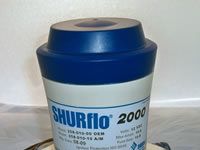
Practical Sailor spent much of the last 12 months testing marine-systems products—flushing toilets loaded with faux poo and cycling bilge pumps till they would pump no more. So it was no surprise to us that the bulk of our top gear picks for the year were systems related. PS tapped three marine heads—Raritan’s Marine Elegance, Planus’ Artic Standard, and Dometic/Sealand’s SailVac—and two Shurflo electric bilge pumps for the 2011 Gear of the Year (GOTY) list.
Bilge Setup Keeps Electrical Bits High and Dry
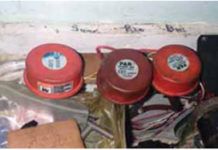
In your continuing review of bilge pumps and automatic switches, you may want to include a somewhat atypical approach that has worked very nicely on my 1964 Rhodes Reliant. It is based on the simple premise that any electrical components (pumps, wires, connectors) in the bilge are at risk of corrosion and galvanic action. Bilge electrical components can be unreliable and may cause serious damage. Hence, there should be no electrical components below the floorboards. Here’s how I did it.
Solar-powered Bilge Pumps Bail Out Small Boats
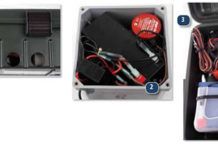
Practical Sailor tested two small solar-powered bilge pumps: the Easy Bailer (500 gallons per hour) and the SeaJoule Solar Bilge Pump (360 gallons per hour). Each self-contained unit has a small re-chargeable 12-volt battery, a fused low-capacity electric pump, and a pump switch, all housed in a plastic box with a 3/4-inch discharge hose and a remote solar panel. Testers evaluated each product’s performance and its components' quality of construction, features, how easily the unit could be maintained, and how well the electrical bits were wired and protected.
Design for: Through-Deck Fittings for Coaxial Cable
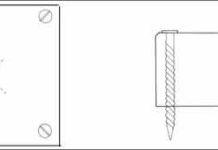
Sealing the holes in decks where Loran and VHF antenna cables penetrate is a fairly common problem on modern boats. If there were only the cable to be considered, a hole of the appropriate size plus a dab of sealant would do an adequate if tacky looking job. But these cables inevitably include sizable end connectors which require holes much larger than those required for the cable itself. Solutions include removal and reinstallation of the connector each time the cable is removed during storage or servicing, and any number of commercially available through-deck fittings or plugs. None of these solutions is simpler or better than the wood fitting shown here. It is attractive and can be made in a few minutes for a few cents.
A Permanent Mount for the Sensibulb LED Reading Light
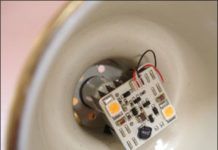
I have always been a big fan of brass berth lights, but have never really liked the halogen bulbs commonly used in them. The little halogen bulbs run hot, use a lot of power, and are prone to vibrating loose. When Sailor's Solutions (www.sailorsolutions.com) introduced the Sensibulb, I quickly ordered a couple to test in our custom built boat Suzy. They worked so well that I converted all six of our berth lights. The original Sensibulbs were nice units, but the mounting system was iffy. I elected to bypass the mounting system by removing the ceramic bulb holder and directly gluing the bulb support post to the back of the Sensibulb.
Latest Logbook

Practical Sailor Logbook – September 2026
In September we tour the Hans Christian 48T — the offshore cruiser many sailors call the holy grail — walk the custom Antigua 60...

Video: If You See This on a Used Sailboat, Walk Away
If you’re searching the used sailboat market, comparing sailboats for sale, or learning how to inspect a sailboat before buying, these are the red...



Latest Sailboat Reviews
Cal 2-27 Used Boat Review
Our story begins in 1970, with the introduction of the Cal 29. Looking for something similar but a bit smaller, the company asked designer Bill Lapworth for a 27-footer, which at first was the Cal 27, a fin keel, spade rudder design with a convertible pop top; another incarnation of this basic hull was the T/2. But the concept of the 29 found its full expression in the Cal 2-27, which began production in 1975 and continued to 1977, after which it was again modified and called simply the Cal 27...again. Production of it ceased in 1986.