
Troubleshooting AC Units
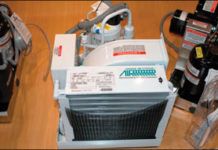
I have an air-conditioning unit with more than 14,000 BTUs. Here in Florida, with a 38-foot boat, that just doesn’t hack it. The unit’s been checked for efficiency by a technician. My prior boat (also 38 feet) had two units totaling over 20,000 BTUs. Those were effective, but that output is enough to cool a small store ashore. How are boat A/C BTUs determined? I suspect the temperature of coolant water is a major factor. Also, what is the effect when coolant water is suppressed by a clogged filter? Are they built to automatically shut down the compressor?
Solo Sailor’s Gear Box
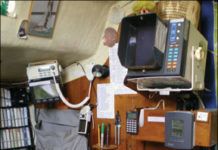
First sailed in 1978, the Singlehanded TransPac (SHTP) crosses 2,120 miles of Pacific Ocean from San Francisco Bay, Calif., to Hanalei Bay, Kauai. Practical Sailor contributor and SHTP competitor Skip Allan took time out from his race preparations onboard Wildflower—his Thomas Wylie-designed 27.5-foot sloop/cutter—to open his notes on solo sailing. Last month, the veteran offshore racer and singlehanded cruiser discussed his gear, sail inventory, storm tactics, and his approach to provisioning. This month, Allan focuses on the electronics, safety gear, and routing tactics he employs when racing alone. Allan’s onboard systems include two deep-cycle wet-cell batteries that total 165 amp hours, two solar panels, and a 35-amp alternator on Wildflower’s10-horsepower Yanmar single-cylinder diesel. He has a fixed and handheld VHF, an Icom SSB radio, a Pactor modem for weather charts and weather faxes, and Winlink email. Other electronics include handheld GPS, LED lighting, and a small portable radio.
Solo Sailors Gear Box
First sailed in 1978, the Singlehanded TransPac (SHTP) crosses 2,120 miles of Pacific Ocean from San Francisco Bay, Calif., to Hanalei Bay, Kauai. Practical Sailor contributor and SHTP competitor Skip Allan took time out from his race preparations onboard Wildflower—his Thomas Wylie-designed 27.5-foot sloop/cutter—to open his notes on solo sailing. Last month, the veteran offshore racer and singlehanded cruiser discussed his gear, sail inventory, storm tactics, and his approach to provisioning. This month, Allan focuses on the electronics, safety gear, and routing tactics he employs when racing alone. Allan’s onboard systems include two deep-cycle wet-cell batteries that total 165 amp hours, two solar panels, and a 35-amp alternator on Wildflower’s10-horsepower Yanmar single-cylinder diesel. He has a fixed and handheld VHF, an Icom SSB radio, a Pactor modem for weather charts and weather faxes, and Winlink email. Other electronics include handheld GPS, LED lighting, and a small portable radio.
Tinned Wire Myth Busted
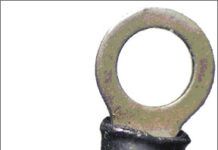
I recently purchased an older boat. Not long before the purchase, the previous owner had the wiring replaced. All the workmanship seems to be in good order, with all connections and terminations made with Ancor crimped connectors and sealed in shrink tubing. All the wiring is the proper gauge (AWG) stranded wire. The only problem is that the wire used was not marine-gauge tinned wire. I am wondering what the risks are to leaving it as it is. Clearly to rip it all out and do it again would be very expensive. I am not using the boat that much and don’t intend a circumnavigation any time soon. If the connections are well made and the wire sheathing remains intact, what is my risk of wire corrosion with the un-tinned wire in a marine environment?
Freezer Safe Tracks Fridge Temps
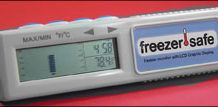
No bigger than a pack of gum, Freezer Safe is a digital recording thermometer that collects temperature data and displays it graphically. The battery-operated (two AAA cells) unit can optimize boat refrigeration systems by storing high and low temps for 100 minutes, 100 hours, or 100 days (though the batteries might not last that long). The data lets you adjust thermostat settings in order to reduce power use. The thermometer can also track warm and cold spots and help you find the best trade-off between food longevity and temperature. Freezer Safe can warn you if food may have thawed and refrozen, helps reduce the risk of accidentally freezing refrigerated foods. For holding-plate refrigeration systems to operate efficiently, the temperature cutoff on the compressor must be carefully set. Freezer Safe can help identify the ideal eutectic point for this system.
Multi-stage Battery Regulators
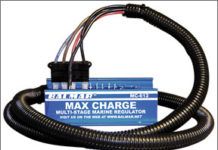
I am building an electrical system that will hopefully support wife and two teenage daughters. With this objective, I am planning approximately 1,000-amp hour battery bank. I see lots of hype about the external three-stage voltage regulators. Do they really provide more amp hours during the limited engine running time? If so, I have not found any definitive side-by-side comparisons that convince me that three-stage regulation is more efficient than a single-stage constant voltage regulator.
Fuel Filtering Systems
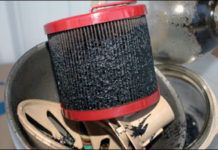
I am the new owner of a 1979 Tayana Vancouver 42 with a Volvo D2-55B diesel engine installed in 2004. Fuel is held in two 80-gallon fiberglass tanks and filtered via a Racor 500 utilizing No. 2010 filters. I use 2-micron filters and Biobor JF Anti-Fungal additive. Despite fuel scrubbings, I continue to have to change primary fuel filters with each fueling. I have been told that I don't need as fine a filter as the 2-micron, but I don't want to risk increased maintenance of the diesel. What do you recommend?
Two Marine Toilets go Head to Head in Practical Sailors Test of Simple, Manual-Flush...
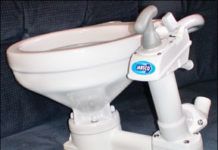
Practical Sailor contributor Mike Slinn installed two heads, the Raritan PHII and the Jabsco Compact Marine manual head, on his Beneteau First 435 and tested them during the summer cruising season in British Columbia. Two other brands of marine toilet were considered but for various reasons (fit in the head, et.), they werent chosen. The test looks at how both heads performed during the all-too-short Canadian summer and whether or not an expensive marine head does better in a long-term, real life test of marine heads. Our previous tests have shown that if you are looking for long-term reliable service from your head, you have to pay for it. Is the Raritan, at twice the price of the Jabsco, worth the investment? We also looked at fighting head odor and how it can be controlled and eliminated by the use of proper hose and proper hose connections.
A Trio of Sailboat Lighting Options
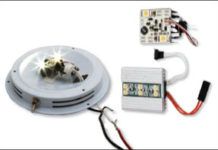
One of the fastest moving targets in boating equipment is LED lighting. While researching products for a larger test, we stumbled across three products that struck us as potential stocking-stuffers worthy of mention this month. The Lightship Solar Light, manufactured in China and introduced by Simply Brilliant in the fall of 2006, weighs only 5.5 ounces and sells for $15. Its powered by the sun, but stores that energy in a rechargeable, nickle-metal hydride (NiMH) battery. The battery, circuitry, 2x2-inch photovoltaic panel, and three LEDs (two white, one red) that produce the light are all mounted to a polycarbonate plate that fits snugly inside a housing of the same material, with a silicone O-ring to keep out moisture. That housing has three legs fitted with small suction cups, enabling the Lightship to stick easily to the underside of a hatch or inside of a portlight. Wed like to see the product modified for easier mounting in more locations.
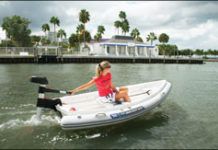
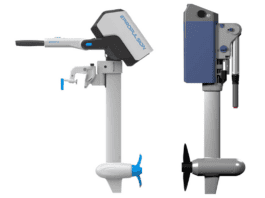
The future of marine propulsion? Practical Sailor sea-trials the portable Torqeedo Travel 801L electric...
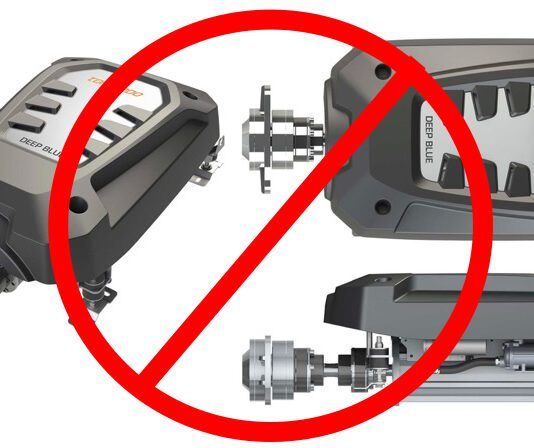
Three things attracted us to the long-shaft Torqeedo: It is a light motor; it is a portable motor; and it is an electric motor. The dream of being able to easily tuck the daysailers engine in the cuddy cabin, or tool around silently in our dinghy, is alluring. And the Torqeedos detachable, rechargeable battery makes that possible. Unfortunately, two of the features that we find so attractive are also potential trouble spots.
Latest Logbook

Practical Sailor Logbook – September 2026
In September we tour the Hans Christian 48T — the offshore cruiser many sailors call the holy grail — walk the custom Antigua 60...

Video: The BEST Sailboat You Can Buy for $35,000 – Catalina...
If you’re searching for a mid-30-foot sailboat, affordable cruising sailboat, liveaboard sailboat, first sailboat, or a capable used sailboat for coastal cruising, the Catalina...



Latest Sailboat Reviews
Learning by Doing on a $5,000 Catalina 30 Mk II
When Davis’s mother started talking about wanting to do something “big” for retirement, Davis and Gloria half-jokingly threw out an idea that seemed suitably...