
The Fight Against Head Odors Continues
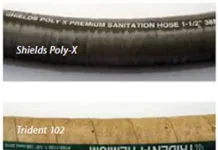
A few years ago, we launched a series of holding tank odor tests, including evaluations of holding-tank vent filters and sanitation hoses. After 30 months of testing, weve reached some solid conclusions on the hoses and vent filters. The sanitation hoses we tested were Trident Marines 101/102 EPDM hose; SeaLands OdorSafe Plus, a PVC and acrylonitrile butadiene rubber hose; Raritan Engineerings butyl rubber Sani/Flex Odor Shield; and Shields Marines Poly-X polyurethane sanitation hose. The four holding-tank vent filters we tested were our homemade system, Dometic SeaLand SaniGard, Big Oranges 5/8-inch filter, and the Vetus No-Smell NSF16.
The Results of our Mini Test Tank Autopsies
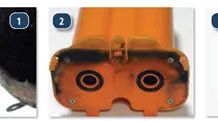
When we wrapped up the testing of the miniature holding tanks after 30 months, we were tempted to just pitch the whole lot in the dumpster after draining their contents, but we thought taking the faux holding tanks apart and examining the components up close might yield some interesting findings. (The things we do in the name of product testing-yuck!) Heres a breakdown of testers observations.
Joker Valves for Marine Heads
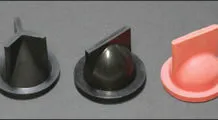
We tested nitrile and neoprene valves from marine toilet makers Groco, Jabsco, and Raritan. The Raritan and Groco are straight duckbill valves, while the Jabsco is a tricuspid valve that opens slightly wider. Bench tests and real-world testing aboard a cruising catamarn helped determine the valves chemical resistance and durability. Each valve was exposed to cleaners, oils, and other liquids that marine toilets are commonly exposed to, including urine and antifreeze.

Mailport: June 2013
How thick is too thick for the buildup of old layers of bottom paint? This question arises because I have just finished painting the bottom of my boat. Even though I diligently sought out potential flaking spots with my knife, while rolling on the paint (Pettit Ultima Eco), I would frequently get a mess caused by the paint flaking off. I have only owned this boat for three years, so I really do not know how many layers there are.
Portable Marine Toilets for Small Boats
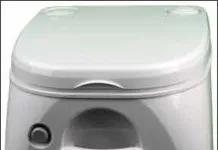
A few steps above the old cedar bucket, portable marine toilets are essentially glorified waste containers, but a good one offers more comfort than a bucket, wont leak, and can be emptied and cleaned with limited hassle. We tested three porta potties made by Thetford-the Porta Potti 260, the Porta Potti 550P, and the Porta Potti Curve-and two West Marine-brand port potties made by Dometic/SeaLand, the Runabout 962 and the Cruiser 976. Testers rated performance, features, and construction quality.
Stainless-steel Hose Clamps
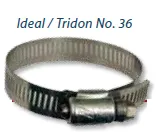
Practical Sailor evaluated stainless-steel hose clamps from 11 manufacturers, including Shields, ABA, Murray, AWAB, Breeze, American Valve, Ideal/Tridon, Trident, Koehler, and Norton. The test clamps, both T-bolt and worm-drive designs, were all size 28 (for hose sizes 1 5/16 to 2 1/4 inches) and 32 (for hoses 1 1/2 to 2 1/4 inches). Bench tests included torque to compression and torque to failure tests, and a magnet test and long-term saltwater bath test to determine corrosion resistance. All clamps were closely examined for quality of construction and workmanship, and price was considered in final ratings.

Y-valve Installation Advice and Troubleshooting
All waste plumbing hoses should be kept as short and straight as possible with no dips where waste could collect. The diverter valve should be located for easy access to the selector handle and free of other stored “stuff” that could bump the handle. The handle positions should be clearly marked for no confusion as to tank or overboard. Before mounting, make sure there is enough room for all three hose fittings and hose bends. Use 120- or 90-degree hose fittings where necessary to prevent tight bends in discharge hoses, and make sure to use the correct reinforced hose designed for sanitation systems.
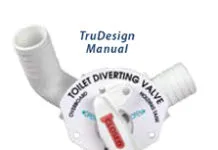
Y-valves Under Pressure
Continuing with our most recent evaluations of marine sanitation systems, Practical Sailor tested eight marine-grade diverter valves (Y-valves), the valves that control the flow of liquid from one source to two different outlets or from two sources to one outlet. The test field comprised seven manual diverter valves and one electric valve from seven manufacturers. Testers looked at construction, performance, ease of use and install, price, and warranty. The manual Y-valves tested included products from Bosworth Co., Jabsco, Forespar, Groco, Johnson, Whale, and Trudesign (distributed in the U.S. by Raritan). Testers also looked at an electric Y-valve from Trudesign.
Marine Sanitation Hose Test
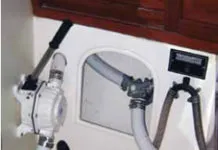
Sanitation hoses are specifically designed to contain odorous gases. They are made of very different materials than the many similar-looking hoses used for fuel, coolant, and potable water—and they are not interchangeable. In a home, sewage is contained by rigid metal and PVC pipes, materials that are not practical on a boat. So what are the best hoses to use in an onboard waste system? Practical Sailor tested hoses made of butyl rubber, white vinyl, and polyurethane from Raritan, SeaLand, Shields Marine, and Trident to find. This report covers the test results at the one-year mark.
Installing Hoses Highlights Their Differences
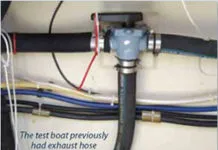
While model holding-tank testing allows side-by-side comparisons, there’s nothing like on-the-boat testing to sort out practical differences. Our test boat, a PDQ 32, had been plumbed with a mix of low-end vinyl sanitation hose and water exhaust hose; the rubber hose was permeated, cracked, and discolored, and the sanitation hose was permeated to the point of having a thin film of sticky goo that had condensed on the external surface. A textbook case of time showing the weaknesses of poor material selection.
Latest Logbook

Practical Sailor Logbook – September 2026
In September we tour the Hans Christian 48T — the offshore cruiser many sailors call the holy grail — walk the custom Antigua 60...

Video: The BEST Sailboat You Can Buy for $35,000 – Catalina...
If you’re searching for a mid-30-foot sailboat, affordable cruising sailboat, liveaboard sailboat, first sailboat, or a capable used sailboat for coastal cruising, the Catalina...


Latest Sailboat Reviews

Learning by Doing on a $5,000 Catalina 30 Mk II
When Davis’s mother started talking about wanting to do something “big” for retirement, Davis and Gloria half-jokingly threw out an idea that seemed suitably...