




Testers Check Growth in the Lab and on the Boat
When testing a chemicals toxicity and its ability to biodegrade, a common procedure is to dilute each target chemical at various ratios of interest, and then to inoculate each with an acclimated microbiological seed. For our test, the seed was developed by filling a five-gallon bucket with several gallons of water and a weak mixture (two percent total glycol content) of all of the winterizing agents to be tested.
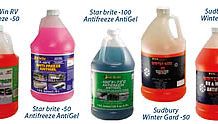
PSs Top Picks for Winterizing
Protecting marine water systems from freeze damage is a deceptively simple goal. The terminology and various product claims can be confusing, and what seems like a good common-sense decision can lead to trouble. We tend to think that all water systems are the same; that boats as well as RVs can be protected by the same pink antifreeze without any further thought. However, many of the problems we associate with age, or normal wear and tear-stiff impellers, cracked pipes, ruined joker valves, and foul-tasting tap water-can often be attributed to errors during winterization.
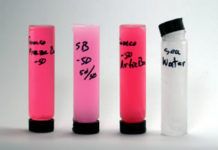
Test Checks Burst Point and Freeze Protection
We tested each product for glycol content using a refractometer and either the ethylene glycol or propylene glycol scale, as appropriate. In the case of Camcos Arctic Ban and Sudburys Winter Stor, some portion of the freeze protection is provided by ethanol, and such mixtures cannot be easily evaluated by any field method (test tape, gravity, refractometer) unless the exact proportion is known, which we find troublesome.
Step-by-step Winterizing Tips
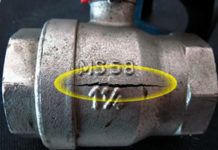
Winterizing agents should never be used in freshwater tanks or hot-water tanks. Doing so will greatly increase the chances of biological growth, which can result in foul-smelling, bad-tasting water. If your boats water system does not have bypass fittings that allow you to add glycol to waterlines, install them. The addition of a few simple fittings can reduce the annual process from hours to minutes for the cost of a few jugs of glycol.

Refractometer Takes Out All the Guesswork
What matters most, our testing confirms, is not so much which brand of pink stuff you choose, but how you use it. Even the best product, mixed with too much water left in the line, results in a blend with unknown and perhaps unsatisfactory performance. While this may not be critical in North Carolina, sailors in Wisconsin need to get it right.
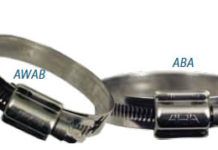
AWAB, ABA Top Long-term Test
General-purpose, relatively inexpensive hose clamps are all over most boats, but there are some applications where using a higher quality, corrosion resistant clamp is critical-such as engine hoses and through-hulls. Most quality clamps are stamped stainless steel, but there are many grades of steel, and making an alloy stainless and corrosion resistant is complicated and costly. You start with iron, which rusts easily, and through multiple processes, you add proportions of elements such as nickel, manganese, molybdenum, and chromium. Different percentages of these elements will improve the desired strength, hardness, and flexibility, as well as corrosion resistance, of the steel.
Marine Water Heater Test
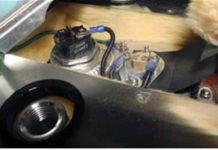
In the December issue PS evaluates four water heaters that are new or have been significantly updated since our last test in 1999. Water heaters are one of those silent heroes that rank high on the list of comforts on a boat. The test field included the Kuuma 11842, an 11-gallon tank; the stainless-steel Quick Nautique BX2012; Raritans 1706; and the 30-liter Compact from Sigmar Marine. Testers considered each heaters efficiency (using AC and engine-driven power), power consumption, construction quality, and ability to keep hot water hot.

Mix of Water, Amps, and Heat Calls for Caution
It is surprising to see equipment with no moving parts carry such an array of safety warnings. But any time water and higher-voltage AC electricity are mixed, there are details worth thinking about. The risk of shock can be lessened through a firm commitment to three-conductor wiring that follows the American Boat and Yacht Councils guidelines. This includes maintaining the continuity of the green grounding that links the boiler and metal housing to the boats ground. Strict adherence to high-quality crimp connectors, appropriate wire gauge, and care in keeping the neutral and hot wires consistent with the vessels and docks power supply are paramount.
Installing Water Heaters
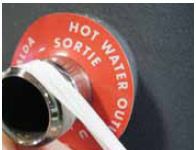
The physical installation of a water heater may seem pretty straightforward, but the devil is indeed in the details. It starts prior to purchase with a search for adequate space thats relatively near the engine and vertically as low as possible. Next is bonding in a well-reinforced surface to mount the water heater onto. The empty tanks are relatively light, but if you add 45 to 88 pounds of water, you can see why a sound support base is important in a rough seaway.

Construction Quality Draws Testers Attention
Our testers began the evaluation with a close inspection of how each unit was assembled and what materials were used in their manufacture. The test field included stainless-steel, aluminum, and mild-steel boilers. When it comes to water tanks in sailboats, stainless-steel is favored over the other two metals, so we naturally asked ourselves why the water tanks in water heaters would be any different? To answer the question, we embarked on a series of bench tests and a long-term corrosion test to see how stainless steel, aluminum, and mild steel water heater tanks handle use in a salt-laden bilge-like environment.
Latest Logbook

Practical Sailor Logbook – September 2026
In September we tour the Hans Christian 48T — the offshore cruiser many sailors call the holy grail — walk the custom Antigua 60...

Video: The BEST Sailboat You Can Buy for $35,000 – Catalina...
If you’re searching for a mid-30-foot sailboat, affordable cruising sailboat, liveaboard sailboat, first sailboat, or a capable used sailboat for coastal cruising, the Catalina...



Latest Sailboat Reviews
Learning by Doing on a $5,000 Catalina 30 Mk II
When Davis’s mother started talking about wanting to do something “big” for retirement, Davis and Gloria half-jokingly threw out an idea that seemed suitably...